databufflabs/databuff
An APM that dispatches bots to fix production
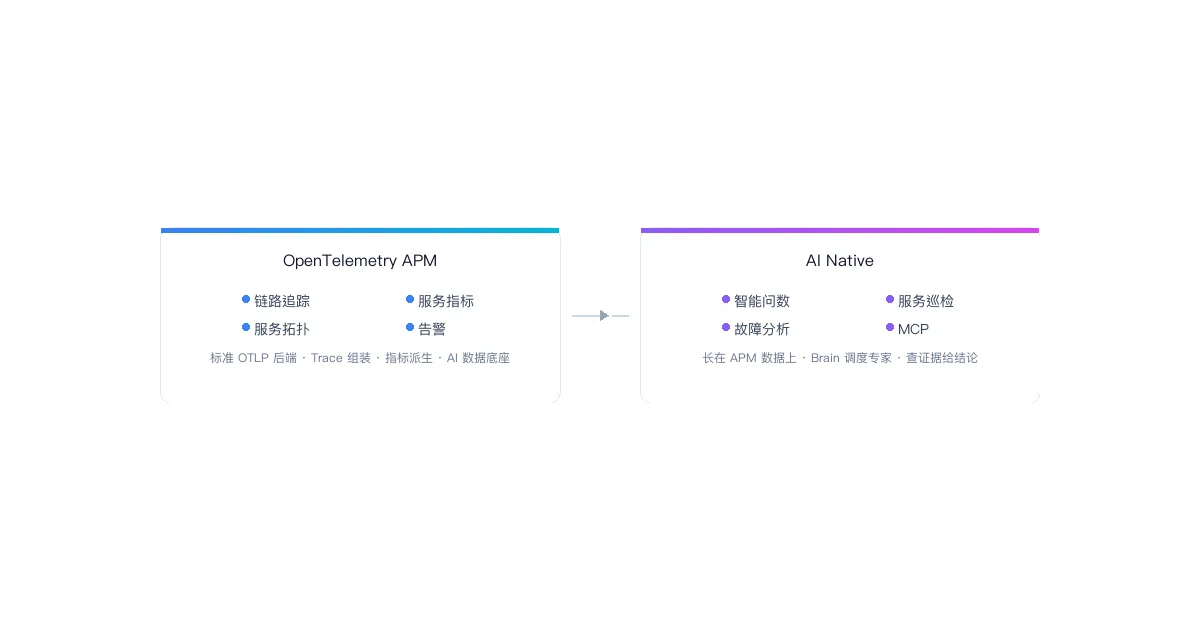
DataBuff is an AI-native OpenTelemetry APM that orchestrates multiple specialized agents to query traces, diagnose topology, and even SSH into hosts to repair issues rather than just paging you.
Not currently ranked — collecting fresh signals.
star history
What it does
DataBuff collects traces, metrics, and logs via standard OpenTelemetry OTLP or SkyWalking gRPC, stores them in Doris, and surfaces both conventional APM views and an AI layer. You can ask it plain-language questions like “which service was slowest in the last hour,” and it queries the telemetry directly to produce ranked answers backed by real data. The web UI also provides the usual topology maps, service lists, and flow diagrams when you want to verify the AI’s conclusions yourself.
The interesting bit
The system is built around a dispatching “AI brain” that fans complex questions out to specialized agents in parallel—one queries telemetry, another runs service inspections, an ops expert can SSH into hosts to run commands and remediate problems, and a QA agent reads the project docs to answer integration questions. It also exposes an MCP server so external AI clients like Cursor or Claude can call the platform, while the platform itself can consume external MCP tools such as Prometheus.
Key highlights
- Dual-protocol ingestion: native OTLP (gRPC
4317, HTTP4318) plus SkyWalking gRPC (11800), so existing SkyWalking agents switch over by changing the exporter endpoint. - Multi-agent root-cause analysis that attributes bottlenecks across service topology with percentage breakdowns.
- Built-in support for OpenAI-compatible, Anthropic, Kimi, DeepSeek, GLM, and Ollama model endpoints.
- Bidirectional MCP integration: serves an MCP server to external AI clients while also consuming external MCP tools.
- Conventional APM UI included—service list, global topology, service detail, and service flow—for human verification.
Caveats
- AI application monitoring (LLM call chains, token analysis) and eBPF-based zero-code instrumentation are explicitly marked as roadmap items, not shipped.
- The README and primary documentation are in Chinese; English docs are referenced but not shown in the provided source.
- Access to the online demo requires joining a WeChat community group for credentials.
Verdict
Evaluate this if you run OpenTelemetry or SkyWalking and want an APM that can answer natural-language questions, generate inspection reports, and attempt hands-on fixes; skip it if you need fully shipped eBPF or LLM-observability features, which are still on the roadmap.
Frequently asked
- What is databufflabs/databuff?
- DataBuff is an AI-native OpenTelemetry APM that orchestrates multiple specialized agents to query traces, diagnose topology, and even SSH into hosts to repair issues rather than just paging you.
- Is databuff open source?
- Yes — databufflabs/databuff is open source, released under the AGPL-3.0 license.
- What language is databuff written in?
- databufflabs/databuff is primarily written in Java.
- How popular is databuff?
- databufflabs/databuff has 599 stars on GitHub.
- Where can I find databuff?
- databufflabs/databuff is on GitHub at https://github.com/databufflabs/databuff.