chiphuyen/aie-book
A 150,000-word reality check for AI engineers
This repo hosts chapter summaries, case studies, and evaluation frameworks for Chip Huyen's book on shipping foundation-model applications beyond the demo stage.
Velocity · 7d
+17
★ / day
Trend
↘cooling
star history
What it does
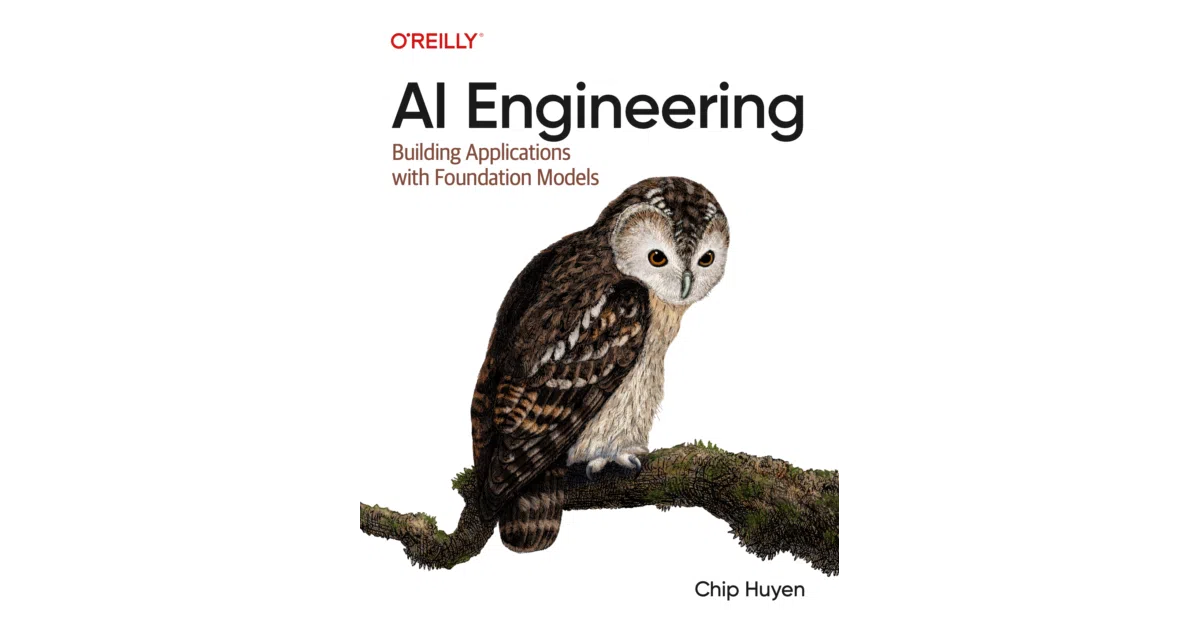
This repository hosts supplementary materials for Chip Huyen’s AI Engineering, a 150,000-word book on adapting foundation models to production problems. Inside you’ll find chapter summaries, study notes, case studies, prompt examples, and a curated resource list—plus a single Jupyter notebook that generates conversation heatmaps from ChatGPT and Claude logs. It is explicitly not a tutorial repository; think of it as the footnotes and cheat sheets for the printed text.
The interesting bit
The book itself focuses on fundamentals—hallucination mitigation, RAG strategies, evaluation metrics, and when not to fine-tune—rather than whichever framework is trending this week. That makes this repo unusually durable: the markdown files and case studies are meant to outlast the current OpenAI API version.
Key highlights
- Covers the full lifecycle from “should I build this?” to production feedback loops, with an emphasis on evaluation and cost control.
- Chapter summaries and study notes for quick reference without reading all 150,000 words.
- Case studies drawn from the author’s own work, reviewed by practitioners from OpenAI, Google, and Fortune 500 AI teams.
- A lone Jupyter notebook that turns ChatGPT and Claude conversation logs into heatmaps.
- Explicitly pairs with Designing Machine Learning Systems to distinguish traditional ML engineering from foundation-model work.
Caveats
- The repository is a work in progress; the README warns that more resources are coming in the next few weeks.
- There is minimal executable code here—just one notebook and a lot of reading material—so don’t clone it looking for a starter template.
Verdict
Worth bookmarking if you’re an engineer or technical PM trying to move past the prototype phase with LLMs. Skip it if you need copy-paste code snippets or a quickstart tutorial; the book itself admits it isn’t one.
Frequently asked
- What is chiphuyen/aie-book?
- This repo hosts chapter summaries, case studies, and evaluation frameworks for Chip Huyen's book on shipping foundation-model applications beyond the demo stage.
- Is aie-book open source?
- Yes — chiphuyen/aie-book is an open-source project tracked on heatdrop.
- What language is aie-book written in?
- chiphuyen/aie-book is primarily written in Jupyter Notebook.
- How popular is aie-book?
- chiphuyen/aie-book has 18k stars on GitHub and is currently cooling off.
- Where can I find aie-book?
- chiphuyen/aie-book is on GitHub at https://github.com/chiphuyen/aie-book.