caiyuanhao1998/Open-DiffusionGS
Adobe's diffusion-splatting recipe, reimplemented and retrained
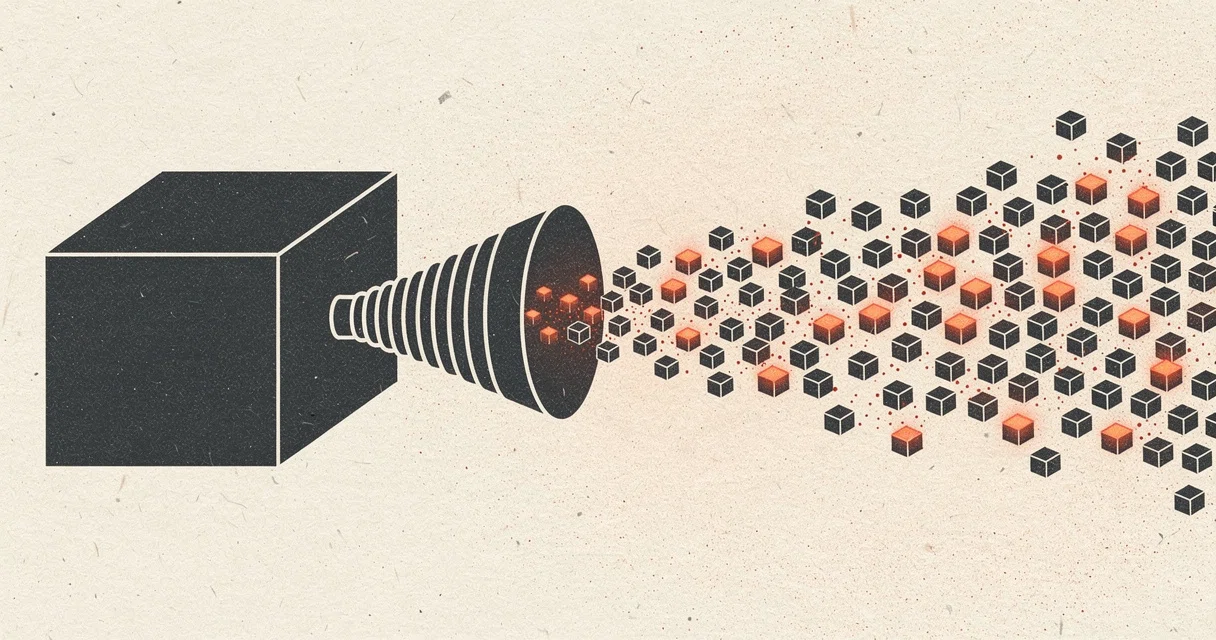
It turns a single image into a 3D object or scene in one stage by baking Gaussian Splatting into the diffusion denoiser, skipping the usual multi-view diffusion bottleneck.
Not currently ranked — collecting fresh signals.
star history
What it does
Open-DiffusionGS is an open-source re-implementation of an ICCV 2025 method that generates 3D objects and reconstructs scenes from a single image. It drops the typical 2D multi-view diffusion intermediary and instead learns to denoise directly into 3D Gaussian splats, producing exportable meshes and novel views in seconds. The released checkpoint runs inference in 24 seconds according to the published comparison, and the codebase supports both object-centric and scene-level tasks.
The interesting bit
The pipeline collapses generation and reconstruction into a single stage: the diffusion model does not emit RGB views for later photogrammetry, but outputs Gaussian parameters directly. The authors note this is roughly 7.5× faster than Hunyuan3D-v2.5 on the same hardware, and the open-source model was trained on a comparatively modest cluster of 16–32 GPUs.
Key highlights
- Single-stage architecture: the denoiser outputs Gaussian splats directly, removing the need for a separate multi-view diffusion model.
- Dual-mode capability: it handles single-view object generation (with mesh export) and scene reconstruction from one input image.
- Speed claim: 24-second inference versus roughly 180 seconds for Hunyuan3D-v2.5 in the repo’s comparison.
- Training scale: the public checkpoints were trained on 16–32 GPUs, which is lighter than some industrial alternatives.
- Open re-implementation: the authors explicitly state this repo is a re-training effort that differs from the original Adobe research.
Caveats
- This is a re-implementation and re-training; the authors explicitly warn it differs from the original Adobe version, so paper results may not transfer directly.
- Scene-level metrics are only reported for 256×256 resolution; the 512×512 checkpoint has no published benchmark scores yet.
- Training from scratch still requires significant GPU resources and nontrivial dataset preparation for Objaverse or RealEstate10K.
Verdict
Researchers who want a unified, fast single-image-to-3D pipeline without gluing together multi-view diffusion models should look here. Casual users or anyone without a multi-GPU cluster will likely find the training setup prohibitive.
Frequently asked
- What is caiyuanhao1998/Open-DiffusionGS?
- It turns a single image into a 3D object or scene in one stage by baking Gaussian Splatting into the diffusion denoiser, skipping the usual multi-view diffusion bottleneck.
- Is Open-DiffusionGS open source?
- Yes — caiyuanhao1998/Open-DiffusionGS is open source, released under the MIT license.
- What language is Open-DiffusionGS written in?
- caiyuanhao1998/Open-DiffusionGS is primarily written in Python.
- How popular is Open-DiffusionGS?
- caiyuanhao1998/Open-DiffusionGS has 871 stars on GitHub.
- Where can I find Open-DiffusionGS?
- caiyuanhao1998/Open-DiffusionGS is on GitHub at https://github.com/caiyuanhao1998/Open-DiffusionGS.