bghira/SimpleTuner
The diffusion trainer that ships with LDAP and a job scheduler
SimpleTuner makes fine-tuning diffusion, video, and audio models approachable for solo hackers, then hands you a full enterprise training platform—SSO, quotas, audit logs—for free.
Not currently ranked — collecting fresh signals.
star history
What it does
SimpleTuner is a Python fine-tuning framework for generative models that covers image, video, and audio diffusion architectures under one pipeline. It supports more than twenty model families—including Flux.1, Stable Diffusion 3, LTX Video, Wan Video, HiDream, and the music-focused ACE-Step—with LoRA, LyCORIS, full-rank, and ControlNet training modes. The README emphasizes readable code and sensible defaults, positioning the project as a shared academic exercise rather than a black-box product.
The interesting bit
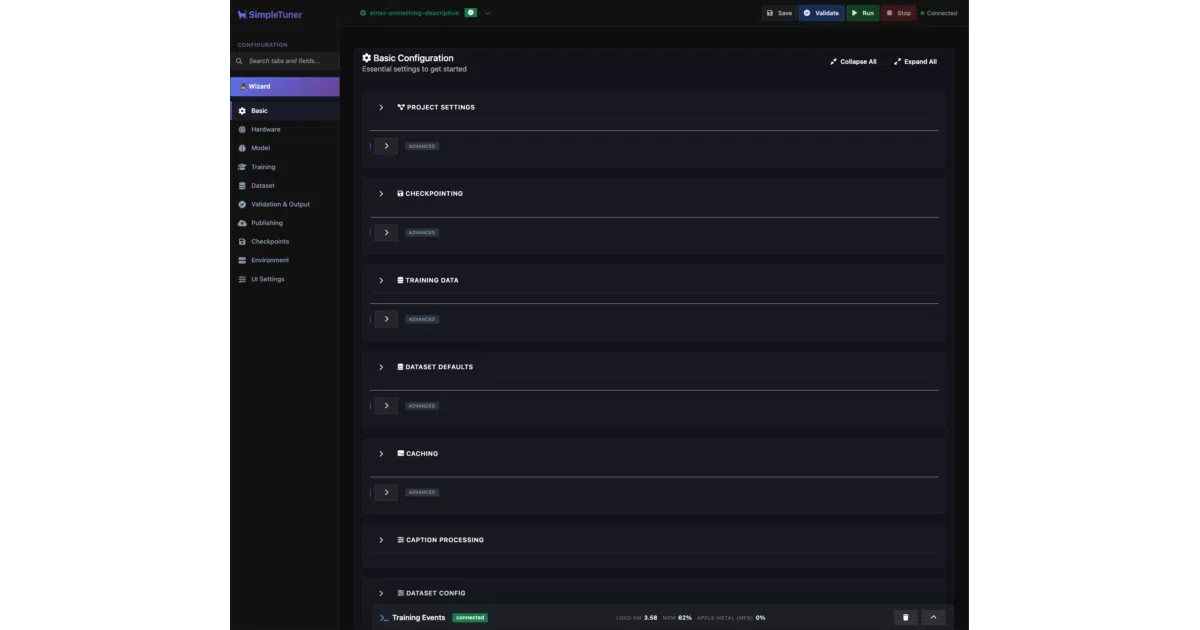
The twist is a fully fledged enterprise server layer—complete with LDAP/OIDC SSO, role-based access control, worker orchestration, job queues with priority scheduling, spending quotas, and audit logging—that the authors explicitly promise will stay “free and open source, forever.” It is unusual to find quota enforcement and SSO integration in the same repository as a Flux LoRA trainer.
Key highlights
- Broad architecture coverage: 20+ supported models from 0.6B to 32B parameters, with quantization and DeepSpeed/FSDP2 sharding for memory-constrained GPUs.
- Multi-modal by default: unified training pipeline for image, video, and audio generative models, including autoregressive audio.
- Enterprise-grade multi-user platform: org/team hierarchies, RBAC with 17+ permissions, API keys, approval workflows, and email notifications.
- Hardware realism: most models train on a 24 GB GPU, many fit into 16 GB with optimizations.
- Privacy-first defaults: no external data transmission unless you explicitly opt in via flags or webhooks.
Caveats
- Several full-rank training modes require DeepSpeed, which adds configuration overhead.
- The enterprise server features are marked as experimental and live under a separate documentation path.
- The README is sprawling; finding the right quickstart guide among the dozens of linked markdown files takes patience.
Verdict
Individual researchers and hobbyists who want to fine-tune the latest diffusion models without writing boilerplate will find a well-documented ally. Small teams and startups should also take a hard look, since it offers multi-user controls that commercial platforms usually charge for—provided they are willing to navigate an experimental server layer.
Frequently asked
- What is bghira/SimpleTuner?
- SimpleTuner makes fine-tuning diffusion, video, and audio models approachable for solo hackers, then hands you a full enterprise training platform—SSO, quotas, audit logs—for free.
- Is SimpleTuner open source?
- Yes — bghira/SimpleTuner is open source, released under the AGPL-3.0 license.
- What language is SimpleTuner written in?
- bghira/SimpleTuner is primarily written in Python.
- How popular is SimpleTuner?
- bghira/SimpleTuner has 2.9k stars on GitHub.
- Where can I find SimpleTuner?
- bghira/SimpleTuner is on GitHub at https://github.com/bghira/SimpleTuner.