beita6969/ScienceClaw
An AI research assistant that actually does the homework
ScienceClaw forces itself to check sources, persist memory across sessions, and evolve new skills on the fly—because fabricated citations kill careers.
Velocity · 7d
+0.7
★ / day
Trend
↘cooling
star history
What it does
ScienceClaw is a research-specialized fork of the OpenClaw agent engine. It connects to 25+ academic databases (PubMed, UniProt, arXiv, World Bank, and others), runs literature searches, performs analyses, and generates structured outputs. The system enforces minimum research depth—quick tasks require 5 tool calls, systematic reviews require 100+—and won’t stop until it has cross-referenced findings across at least three sources.
The interesting bit
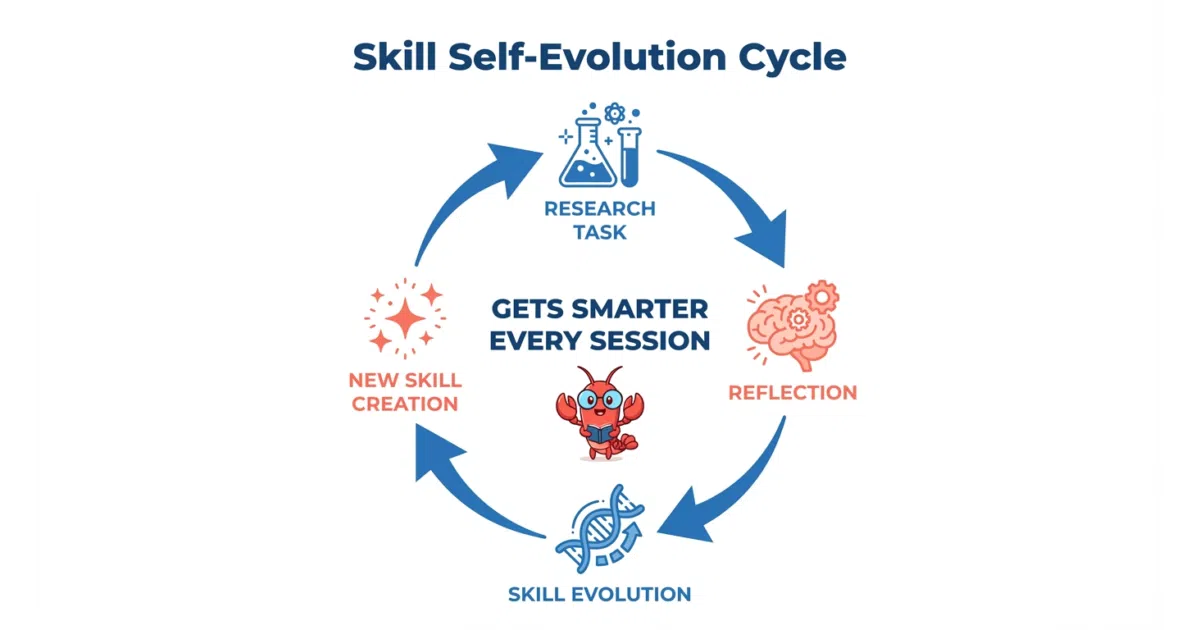
The project treats hallucination as a protocol-level bug, not a user-experience annoyance. Its 629-line SCIENCE.md forbids citing anything not returned by a tool in the current conversation; unsure claims must be explicitly labeled “not verified.” Meanwhile, the agent writes new SKILL.md files at runtime to capture your preferences—search templates, statistical methods, citation formatting—without redeployment.
Key highlights
- Self-evolving skills: Starts with 285 skills, grows via runtime skill generation based on your research patterns
- Persistent memory: Four-layer system with LanceDB vector storage, temporal decay weighting, and cross-session pattern retrieval
- Long-session architecture: 1-hour timeout with heartbeat monitoring, smart context compaction that preserves statistics and citations
- Discipline coverage: Biomedicine, chemistry, genomics, physics, economics, psychology, linguistics, and others
- Anti-hallucination enforcement: Hard protocol rules, not suggestions; every claim needs tool-derived evidence
Caveats
- The “zero hallucination” claim is aspirational protocol, not empirical guarantee—no benchmark data or third-party validation is provided
- Self-evolution mechanics are described narratively (“Week 1… Month 3”) without technical detail on how skill generation actually works
- Built on OpenClaw, so much of the core agent infrastructure is inherited rather than original
Verdict
Worth exploring for researchers drowning in literature reviews who need structured, source-backed output and don’t mind babysitting an agent for an hour. Skip it if you want a drop-in chatbot; this is deliberately slow and pedantic by design.
Frequently asked
- What is beita6969/ScienceClaw?
- ScienceClaw forces itself to check sources, persist memory across sessions, and evolve new skills on the fly—because fabricated citations kill careers.
- Is ScienceClaw open source?
- Yes — beita6969/ScienceClaw is open source, released under the MIT license.
- What language is ScienceClaw written in?
- beita6969/ScienceClaw is primarily written in TypeScript.
- How popular is ScienceClaw?
- beita6969/ScienceClaw has 1k stars on GitHub and is currently cooling off.
- Where can I find ScienceClaw?
- beita6969/ScienceClaw is on GitHub at https://github.com/beita6969/ScienceClaw.