automl/auto-sklearn
AutoML that plugs into your sklearn workflow
It automates model selection and tuning so you don't have to leave the scikit-learn estimator API behind.
Not currently ranked — collecting fresh signals.
star history
What it does
auto-sklearn automates the grunt work of machine learning—algorithm selection and hyperparameter tuning—by presenting itself as a standard scikit-learn estimator. You swap your typical classifier for an AutoSklearnClassifier, call .fit(), and get back a model that plays nicely with the rest of the sklearn ecosystem. It is essentially AutoML dressed in sklearn clothing.
The interesting bit
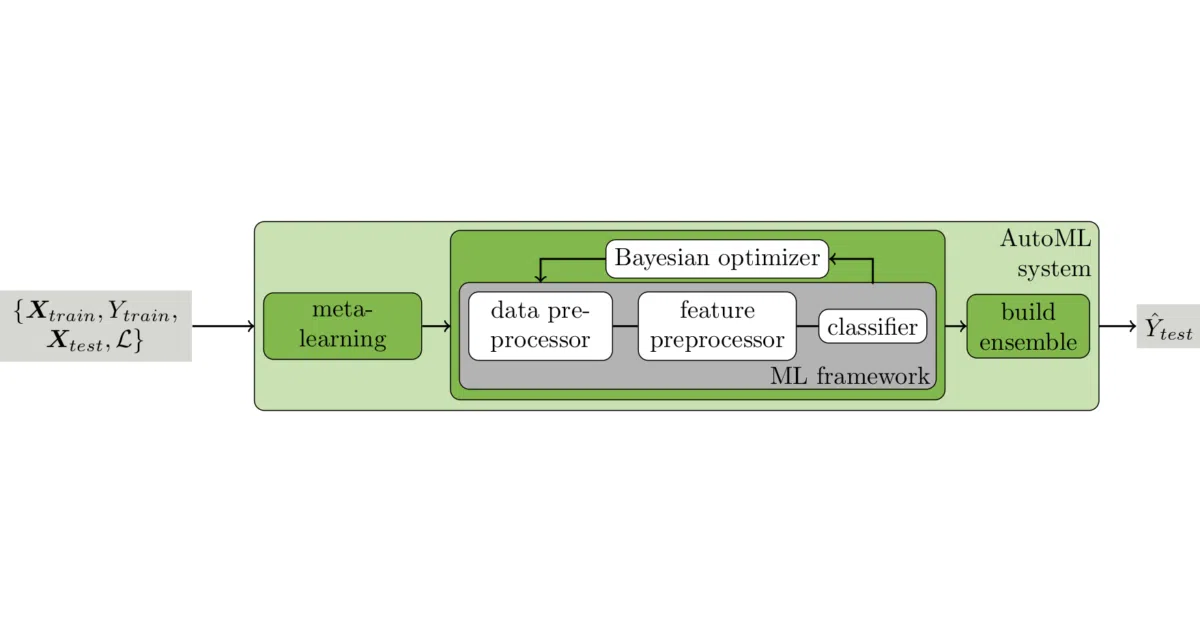
The library does not ask you to learn a new paradigm. It hijacks the familiar sklearn estimator interface to hide a sophisticated optimization backend, an approach validated by a NeurIPS 2015 paper and refined in a 2020 follow-up with meta-learning. That research pedigree is unusual for a drop-in library.
Key highlights
- True drop-in replacement: works as a scikit-learn estimator without restructuring your pipeline
- Published academic foundation: NeurIPS 2015 origin and a 2020 meta-learning extension
- Meta-learning support: leverages prior dataset experience to warm-start the search process
- Familiar API surface: uses standard
.fit()and.predict()patterns that sklearn developers already know
Verdict
Worth a look if you want automated model selection but refuse to leave the sklearn ecosystem. Skip it if you prefer hand-tuning every hyperparameter or need a non-Python stack.
Frequently asked
- What is automl/auto-sklearn?
- It automates model selection and tuning so you don't have to leave the scikit-learn estimator API behind.
- Is auto-sklearn open source?
- Yes — automl/auto-sklearn is open source, released under the BSD-3-Clause license.
- What language is auto-sklearn written in?
- automl/auto-sklearn is primarily written in Python.
- How popular is auto-sklearn?
- automl/auto-sklearn has 8.1k stars on GitHub.
- Where can I find auto-sklearn?
- automl/auto-sklearn is on GitHub at https://github.com/automl/auto-sklearn.