apple/ml-ane-transformers
A PyTorch recipe for ANE-friendly Transformers
Reference implementations and Hugging Face patches that restructure Transformer models to exploit the Apple Neural Engine on A14 and M1 chips.
Not currently ranked — collecting fresh signals.
star history
What it does
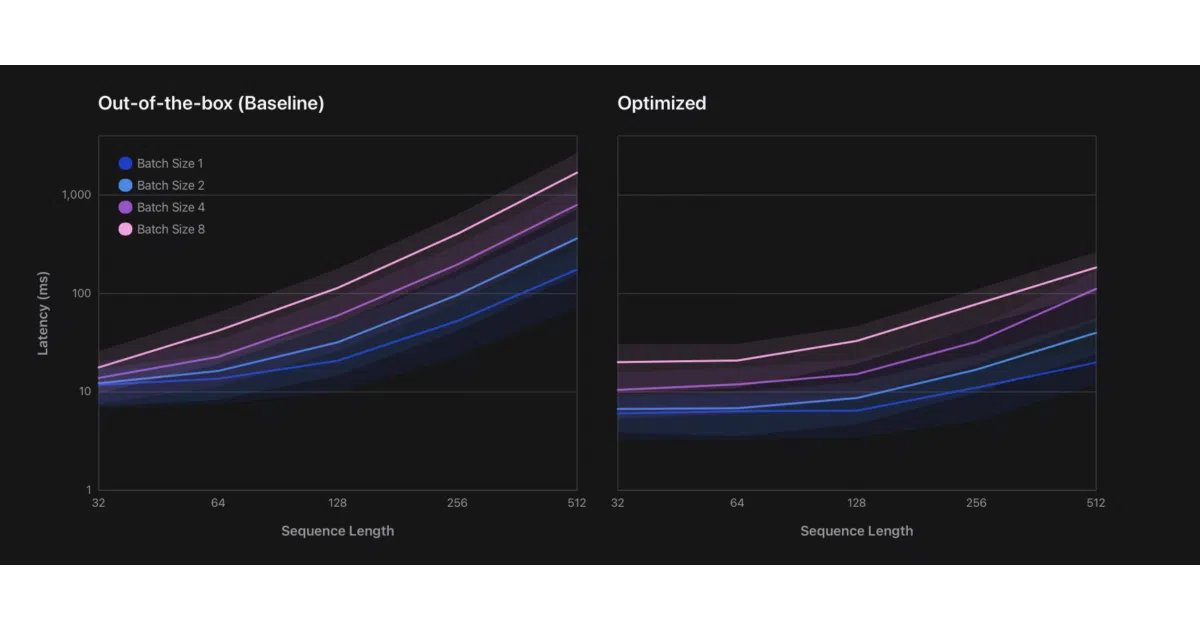
ane_transformers is Apple’s reference PyTorch cookbook for restructuring Transformer models so the Apple Neural Engine (ANE) will actually run them efficiently. It offers both a standalone reference implementation and patched Hugging Face classes—demonstrated on distilbert—that the README claims hit up to 10× lower latency and 14× lower peak memory than baseline PyTorch on A14-or-newer and M1-or-newer chips.
The interesting bit
The trick is that the optimized graph is mathematically identical but intentionally fatter: it increases the operation count to better match ANE bandwidth quirks, then leaves the embedding lookups (4 of 606 ops) on the CPU because that is oddly faster for this specific model shape.
Key highlights
- Claims up to 10× speedup and 14× lower peak memory on in-spec Apple silicon (A14/iPhone, M1/Mac) versus unoptimized baselines.
- Ships both
ane_transformers.referenceand Hugging Face drop-ins likeane_transformers.huggingface.distilbert. - Embedding lookups stay on the CPU (4 of 606 ops) as a hardware-specific trade-off.
- Unit tests warn if run on out-of-spec hardware, though models built on older Macs still deploy fine to target devices.
Caveats
- Load and compilation times increase because the optimized model contains more operations; the README treats this as a one-time tax best paid asynchronously.
- The walkthrough and published benchmarks center on DistilBERT, so adapting the recipe to other architectures is left as an exercise.
Verdict
Grab it if you are squeezing Transformer inference onto iPhones or Macs and care about milliseconds and megabytes. Ignore it if you are not targeting Apple silicon or need a drop-in optimizer for arbitrary models.
Frequently asked
- What is apple/ml-ane-transformers?
- Reference implementations and Hugging Face patches that restructure Transformer models to exploit the Apple Neural Engine on A14 and M1 chips.
- Is ml-ane-transformers open source?
- Yes — apple/ml-ane-transformers is an open-source project tracked on heatdrop.
- What language is ml-ane-transformers written in?
- apple/ml-ane-transformers is primarily written in Python.
- How popular is ml-ane-transformers?
- apple/ml-ane-transformers has 2.7k stars on GitHub.
- Where can I find ml-ane-transformers?
- apple/ml-ane-transformers is on GitHub at https://github.com/apple/ml-ane-transformers.