TOM88812/xiaozhi-android-client
A Flutter voice client that interrupts itself and controls your IoT
A cross-platform Flutter front-end for the Xiaozhi voice-server ecosystem that squeezes real-time voice chat, Live2D avatars, and IoT device management into one app.
Not currently ranked — collecting fresh signals.
star history
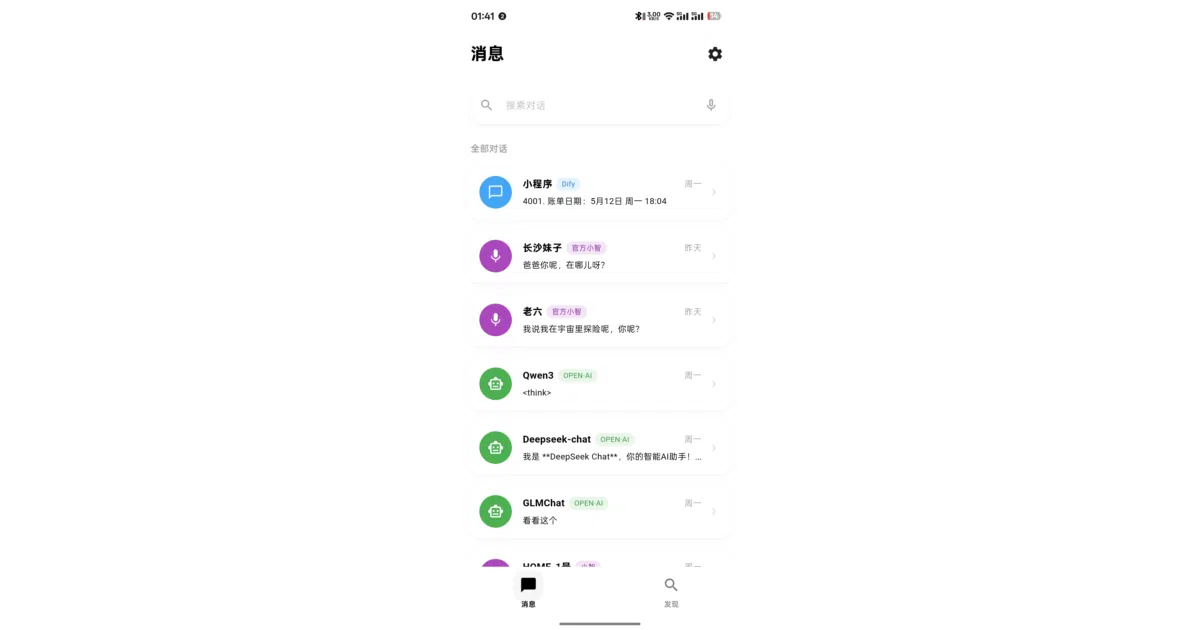
What it does This is a Flutter front-end for the Xiaozhi voice-server ecosystem, targeting Android, iOS, and desktop. It pipes real-time voice and text over WebSocket and MQTT, while doubling as a remote for connected hardware. The app also handles user accounts, device binding, voiceprint enrollment, and conversation memory—essentially acting as a full operating panel for the assistant.
The interesting bit The feature list reads like someone kept saying “yes” in a product meeting: Live2D avatars, HTML code preview, OpenAI speed tests, MCP tool calls, and phone-native IoT triggers (navigation, music) all live inside a chat client. The README openly blurs the line between the open-source client and a separate commercial server backend, so many of those shiny V3 capabilities appear to depend on pairing with their paid backend.
Key highlights
- Real-time bidirectional voice with echo cancellation and mid-speech interruption on iOS and Android.
- Live2D avatar support with model switching, plus HTML preview for code generated by the LLM.
- MCP client integration and multiple AI service backends (OpenAI, MiniMax, Dify with image support).
- Device and role management, voiceprint recording, and long-term memory browsing from the phone.
- Cross-platform Flutter build targeting Android, iOS, Web, Windows, macOS, and Linux.
Caveats
- The README heavily intermingles open-source client features with a “commercial version server”; it is unclear which bells and whistles work with the standard
xiaozhi-serverversus their closed, paid backend. - Documentation and UI cues are overwhelmingly Chinese-language, so non-Chinese speakers may need translation help.
- The project page spends significant real estate requesting stars, donations, and WeChat contacts for custom development.
Verdict Grab it if you are building or self-hosting a Xiaozhi voice assistant and need a ready-made, feature-dense mobile remote. Skip it if you are looking for a generic, server-agnostic voice chat client or if un-siloed English documentation is a hard requirement.
Frequently asked
- What is TOM88812/xiaozhi-android-client?
- A cross-platform Flutter front-end for the Xiaozhi voice-server ecosystem that squeezes real-time voice chat, Live2D avatars, and IoT device management into one app.
- Is xiaozhi-android-client open source?
- Yes — TOM88812/xiaozhi-android-client is open source, released under the Apache-2.0 license.
- What language is xiaozhi-android-client written in?
- TOM88812/xiaozhi-android-client is primarily written in Dart.
- How popular is xiaozhi-android-client?
- TOM88812/xiaozhi-android-client has 1.6k stars on GitHub.
- Where can I find xiaozhi-android-client?
- TOM88812/xiaozhi-android-client is on GitHub at https://github.com/TOM88812/xiaozhi-android-client.