SecretiveShell/MCP-Bridge
When your chat client speaks OpenAI but your tools speak MCP
MCP-Bridge translates between OpenAI API clients and MCP tools, though the author now considers it soft-deprecated after Open WebUI added native MCP support.
Not currently ranked — collecting fresh signals.
star history
What it does
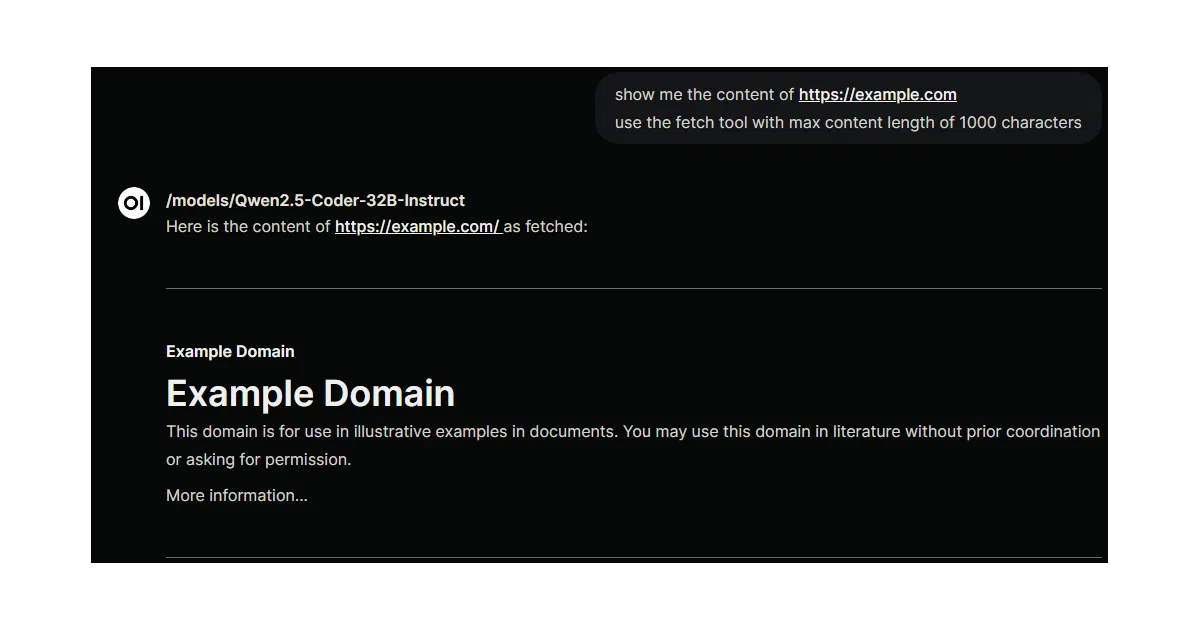
MCP-Bridge sits between an OpenAI API client and an inference engine, injecting available MCP tool definitions into requests so the LLM can generate tool calls. It then executes those calls against configured MCP servers and feeds the results back to the inference engine before returning the final response. It also exposes an SSE endpoint so external MCP-native clients can browse and use the same tool collection.
The interesting bit
The project is essentially protocol glue: it translates MCP tool schemas into OpenAI-compatible function definitions and manages the round-trip traffic that most clients would rather not handle. The README notes that Open WebUI now supports MCP natively as of v0.6.31, which is why the author considers this soft-deprecated.
Key highlights
- Supports both streaming and non-streaming chat completions with MCP tool use
- Provides an SSE bridge so MCP-native applications can consume the same tool pool
- Exposes REST endpoints for native MCP primitives (tools, sampling) via OpenAPI
- Requires an inference engine with explicit tool-call support (tested on vLLM, expected to work with Ollama)
- API key authentication is optional and configured through
config.json
Caveats
- The project is soft-deprecated and actively looking for new maintainers
- Streaming completions without MCP are not yet implemented
- MCP resources are planned but not yet supported
Verdict
Worth a look if you are stuck with an OpenAI-only client that needs to reach MCP infrastructure, but probably skip it if your stack already speaks native MCP or if you need actively maintained middleware.
Frequently asked
- What is SecretiveShell/MCP-Bridge?
- MCP-Bridge translates between OpenAI API clients and MCP tools, though the author now considers it soft-deprecated after Open WebUI added native MCP support.
- Is MCP-Bridge open source?
- Yes — SecretiveShell/MCP-Bridge is open source, released under the MIT license.
- What language is MCP-Bridge written in?
- SecretiveShell/MCP-Bridge is primarily written in Python.
- How popular is MCP-Bridge?
- SecretiveShell/MCP-Bridge has 923 stars on GitHub.
- Where can I find MCP-Bridge?
- SecretiveShell/MCP-Bridge is on GitHub at https://github.com/SecretiveShell/MCP-Bridge.