QuivrHQ/quivr
A RAG framework that picks the stack so you don't have to
Quivr wraps retrieval-augmented generation in a Python library with YAML-configurable workflows, letting you swap LLMs and vector stores without rewriting plumbing.
Not currently ranked — collecting fresh signals.
star history
What it does
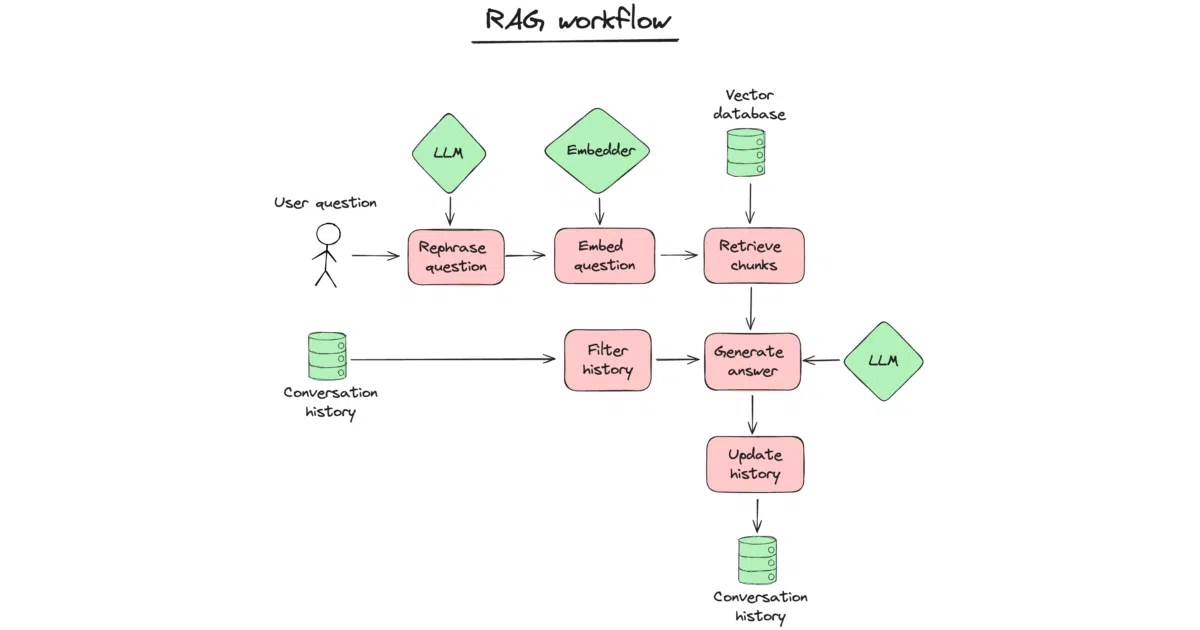
Quivr is a Python package (quivr-core) that ingests files, indexes them, and answers questions through a configurable RAG pipeline. You instantiate a Brain, point it at PDFs or text files, and call brain.ask(). The heavy lifting—chunking, embedding, retrieval, reranking, generation—is handled behind a YAML workflow file.
The interesting bit The “opinionated” part is the real pitch. Quivr doesn’t just expose raw LangChain-style primitives; it ships a default node graph (START → filter_history → rewrite → retrieve → generate_rag → END) that you can tweak without touching Python. Swap Cohere for a local Ollama model, change the reranker, or adjust history window—all in config. It’s RAG as infrastructure, not RAG as craft project.
Key highlights
- Pluggable LLMs: OpenAI, Anthropic, Mistral, Gemma, or local via Ollama
- Pluggable vector stores: PGVector, Faiss (per description; README focuses on usage)
- File ingestion through partner project Megaparse, with custom parser support
- Workflow nodes include history filtering and query rewriting before retrieval
- Apache 2.0 licensed, YC-backed
Caveats
- The README’s “any vector store” claim isn’t demonstrated in the quickstart; the examples lean on default configurations without showing store selection
- The 5-line example is slightly aspirational (tempfile boilerplate plus a typo in the question)
- Documentation lives externally at core.quivr.com; the repo itself is sparse on deep architectural detail
Verdict Good fit if you want RAG in production without assembling twelve micro-libraries yourself. Less compelling if you need fine-grained control over embedding models or retrieval strategies—the YAML abstraction is a ceiling as much as a floor.
Frequently asked
- What is QuivrHQ/quivr?
- Quivr wraps retrieval-augmented generation in a Python library with YAML-configurable workflows, letting you swap LLMs and vector stores without rewriting plumbing.
- Is quivr open source?
- Yes — QuivrHQ/quivr is an open-source project tracked on heatdrop.
- What language is quivr written in?
- QuivrHQ/quivr is primarily written in Python.
- How popular is quivr?
- QuivrHQ/quivr has 39.3k stars on GitHub.
- Where can I find quivr?
- QuivrHQ/quivr is on GitHub at https://github.com/QuivrHQ/quivr.