KoljaB/Linguflex
Building Jarvis in Python, one fragile dependency at a time
Linguflex exists to turn a local language model into a voice-controlled butler that manages your smart home, calendar, and email.
Not currently ranked — collecting fresh signals.
star history
What it does
Linguflex is a modular Python voice assistant framework. It listens via microphone, processes commands through a local or OpenAI language model, and speaks back using real-time neural text-to-speech. Out of the box it can query weather, read IMAP email, search the web, manage Google Calendar appointments, and control Tuya-compatible smart home gear.
The interesting bit
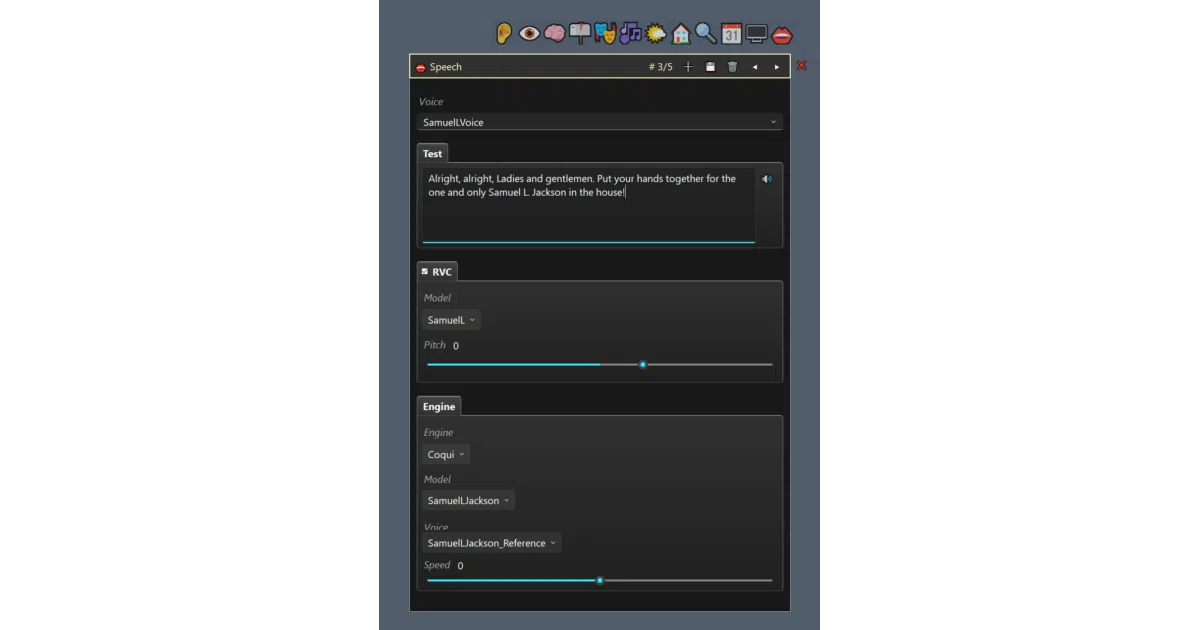
The project aggressively chases low latency and local operation: it supports Ollama for offline LLM inference, and its speech pipeline chains fine-tuned XTTS with fine-tuned RVC post-processing to approximate Elevenlabs quality without leaving your machine. A keyword pre-parser offloads function selection from the LLM, which is a pragmatic hack to keep small models from getting confused.
Key highlights
- Runs fully offline if desired: local STT, local TTS, and local LLM inference via Ollama.
- Voice quality relies on chained local models—XTTS plus RVC fine-tuning—to clone and synthesize speech.
- Modular architecture with drop-in expansion modules for mail, weather, search, music, and smart-home control.
- Developer framework claims a minimalistic API for adding new capabilities.
- Code is MIT-licensed, though the bundled TTS engines carry their own commercial-use restrictions.
Caveats
- Installation is explicitly described as fragile: the author notes dependency conflicts across Python environments, CUDA, and CuDNN versions, and warns that transitive dependencies can break over time.
- Several headline features—visual input, memory, news, finance, and DALL-E image generation—are listed as “coming soon” rather than shipping.
- Commercial use is murky: while the framework code is MIT, the default TTS engines (Coqui, Elevenlabs, Azure) are open-source only for noncommercial projects, so swapping voices is effectively required for business use.
Verdict
Tinkerers who want a privacy-first, local voice assistant and don’t mind wrestling with Python dependency hell should take a look. If you need a polished, one-click install or a production-ready smart-home hub, this is not it yet.
Frequently asked
- What is KoljaB/Linguflex?
- Linguflex exists to turn a local language model into a voice-controlled butler that manages your smart home, calendar, and email.
- Is Linguflex open source?
- Yes — KoljaB/Linguflex is an open-source project tracked on heatdrop.
- What language is Linguflex written in?
- KoljaB/Linguflex is primarily written in Python.
- How popular is Linguflex?
- KoljaB/Linguflex has 812 stars on GitHub.
- Where can I find Linguflex?
- KoljaB/Linguflex is on GitHub at https://github.com/KoljaB/Linguflex.