Justin-Tan/generative-compression
GANs that compress images by hallucinating the details back
A TensorFlow implementation of extreme learned image compression that trades exact reconstruction for tiny file sizes by letting a generator dream up the textures.
Not currently ranked — collecting fresh signals.
star history
What it does
This repo implements Agustsson et al.’s method for squeezing images down to roughly 0.072 bits per pixel using a GAN. The encoder tosses most information into a narrow bottleneck (C=4 to 16 channels), then a decoder—fed with sampled noise—reconstructs something that looks plausible to human eyes but may swap greenery into buildings. It includes both global compression and a conditional variant that uses semantic label maps to guide reconstruction.
The interesting bit
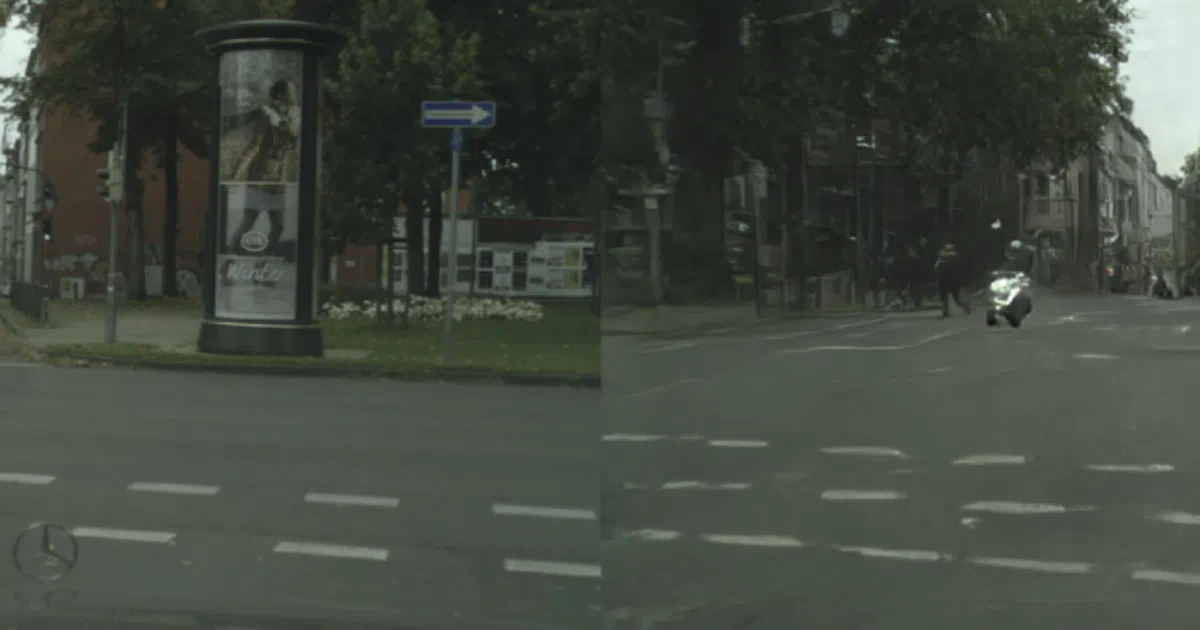
The project openly leans into the hallucination problem: the README notes the decoder “hallucinates greenery in buildings, and vice-versa,” and the noise-sampling step explicitly increases this “hallucination factor.” Rather than fighting it, the method treats perceptual plausibility as the goal, not pixel-perfect fidelity. There’s also a frank admission that the authors’ paper leaves some implementation details unspecified, so the author made reasonable guesses.
Key highlights
- Pretrained models provided for C=8 bottleneck (0.072 bpp) with both noise-sampled and conditional-GAN variants
- Conditional compression uses semantic maps from Cityscapes
gtFineannotations - Training scripts, single-image compression, and TensorBoard logging included
- Hyperparameters live in
config.pyinstead of a sprawling argparse block—opinionated but readable - Author also maintains a follow-up repo for higher-bitrate, higher-fidelity compression
Caveats
- Stuck on TensorFlow 1.8; pretrained models were trained on TF 1.3 with a warning that they “appear to load without problems”
- Batch size is hardcoded to 1, which will make training leisurely on modern hardware
- The conditional GAN implementation is labeled “experimental” and yields the best visual results
- Several planned features remain in the TODO list: VGG loss, WGAN-GP, spectral normalization, and selective compression
Verdict
Worth a look if you’re researching perceptual compression or need a concrete baseline for extreme bitrate regimes. Skip it if you need bit-exact reconstruction or a production-ready pipeline—this is research code with known rough edges, not a drop-in replacement for JPEG.
Frequently asked
- What is Justin-Tan/generative-compression?
- A TensorFlow implementation of extreme learned image compression that trades exact reconstruction for tiny file sizes by letting a generator dream up the textures.
- Is generative-compression open source?
- Yes — Justin-Tan/generative-compression is open source, released under the MIT license.
- What language is generative-compression written in?
- Justin-Tan/generative-compression is primarily written in Python.
- How popular is generative-compression?
- Justin-Tan/generative-compression has 533 stars on GitHub.
- Where can I find generative-compression?
- Justin-Tan/generative-compression is on GitHub at https://github.com/Justin-Tan/generative-compression.