JustGlowing/minisom
Self-organizing maps without the framework bloat
A NumPy-only SOM implementation that trades kitchen-sink features for code you can actually read and extend.
Not currently ranked — collecting fresh signals.
star history
What it does
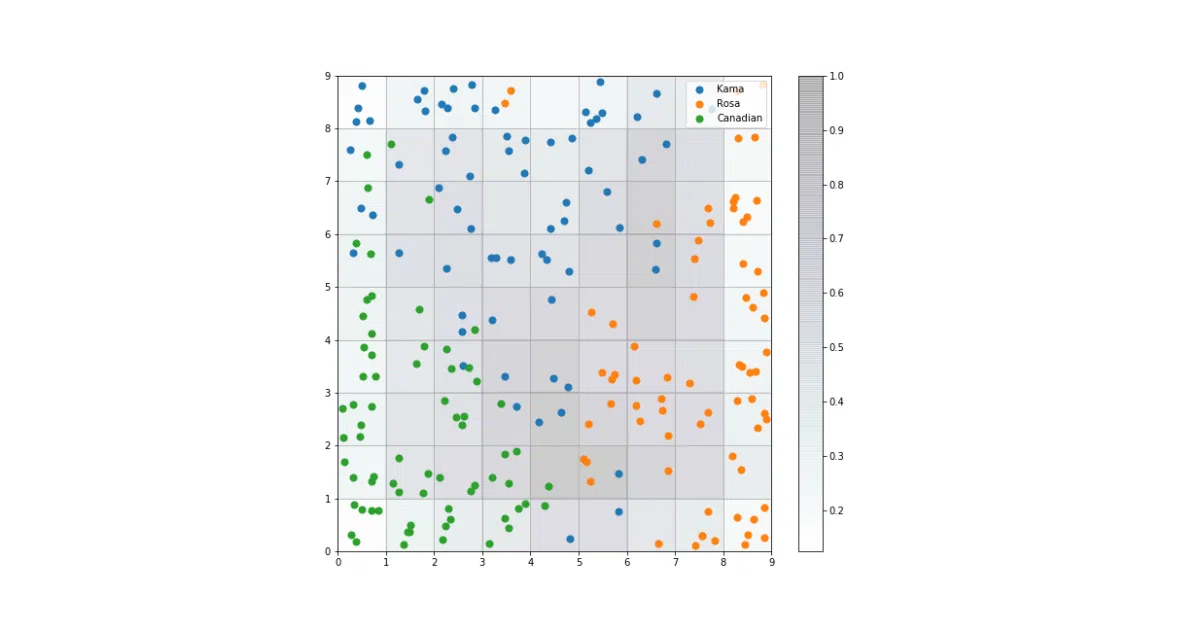
MiniSom trains Self-Organizing Maps—Kohonen networks that squish high-dimensional data onto a 2-D grid so you can eyeball clusters and outliers. It takes NumPy matrices, runs standard or batch training, and hands back neuron coordinates for your samples. Optional Numba JIT acceleration is available via train_batch_offline_fast if you install the [fast] extras.
The interesting bit
The whole thing leans on NumPy alone—no TensorFlow, no PyTorch, no scikit-learn dependency tree. That deliberate minimalism is the selling point: the author explicitly targets researchers who need to hack on the algorithm and students who need to see how SOMs actually work under the hood. The code is vectorized throughout, and the project has accumulated 400+ academic citations, so it has escaped the “toy example” gravity well.
Key highlights
- Single dependency: NumPy (Numba optional for JIT)
- Supports hexagonal and rectangular topologies
- Pickle-based model serialization (with a documented lambda caveat)
- 97.76% test coverage per the repo badge
- Extensive example gallery: color quantization, handwritten digits, outlier detection, TSP solving
- Google Colab notebook for immediate experimentation
Caveats
- Pickle serialization breaks if you use lambda functions for decay factors
- The “fast” path requires a separate install and only covers batch offline training
- No native GPU support; Numba JIT is CPU-only
Verdict
Grab this if you need to teach, tweak, or publish with SOMs and want to avoid dragging in a full ML framework. Skip it if you need distributed training, automatic hyperparameter search, or production pipelines that demand sklearn-compatible APIs.
Frequently asked
- What is JustGlowing/minisom?
- A NumPy-only SOM implementation that trades kitchen-sink features for code you can actually read and extend.
- Is minisom open source?
- Yes — JustGlowing/minisom is open source, released under the MIT license.
- What language is minisom written in?
- JustGlowing/minisom is primarily written in Python.
- How popular is minisom?
- JustGlowing/minisom has 1.6k stars on GitHub.
- Where can I find minisom?
- JustGlowing/minisom is on GitHub at https://github.com/JustGlowing/minisom.