JoePenna/Dreambooth-Stable-Diffusion
A filmmaker's Dreambooth fork for training actors and props
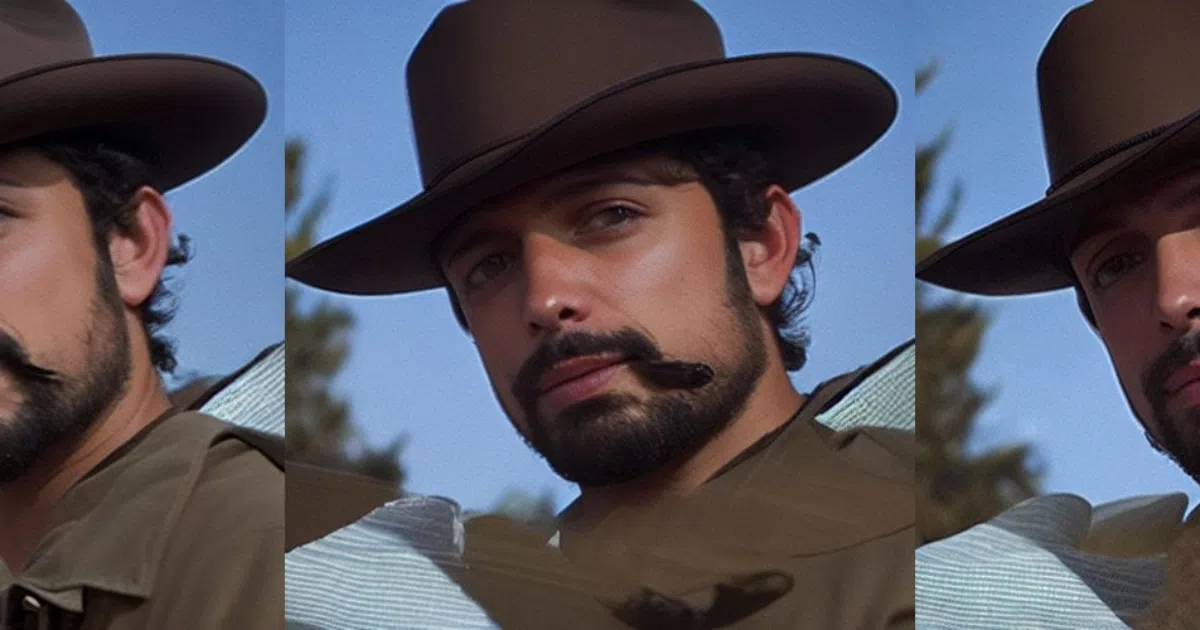
This repo exists because a filmmaker needed to train Stable Diffusion on specific faces and props for movie pre-production.
Not currently ranked — collecting fresh signals.
star history
What it does
This is a Dreambooth implementation for Stable Diffusion that finetunes a base model on a handful of images to learn specific faces, objects, or styles. It packages the training loop in Jupyter notebooks aimed at both local workstations and cloud GPU rentals, with a focus on practical creative workflows rather than research fidelity.
The interesting bit
The project was started by Joe Penna—a YouTuber turned feature-film director—who needed to iterate on actors and locations for movie concept art and openly admits he is “not really a coder.” The codebase intentionally sacrifices Google’s latent-space preservation techniques for harder subject fidelity, which means if you train a person, the model tends to drag unrelated people toward that likeness.
Key highlights
- Built for pre-production pipelines: explicitly aimed at filmmakers, concept artists, and comic designers who need visual seeds to share with hired artists
- Requires a GPU with 24GB VRAM (e.g., RTX 3090/4090) for local training, but provides notebooks for cloud platforms like RunPod, Vast.ai, and Google Colab
- Ships with a pruner that compresses the raw 11–12GB checkpoint down to roughly 2GB
- Supports captions and multi-concept training, though the README notes there is “no easy way to train two subjects consecutively”
- Recommends setting the unique token to a celebrity name rather than a random string for better results
Caveats
- Does not fully preserve the latent space, so training a subject can bleed into its broader class (e.g., all generated people may start looking like your trained actor)
- RunPod setup videos are periodically out of date because the platform upgrades its base Docker images, so the provided instructions may need manual adjustment
- Local training basically requires the GPU to be running this and only this
Verdict
Artists and filmmakers who need to jam a specific face or prop into Stable Diffusion for rapid concept iteration will get the most value; ML practitioners looking for clean, composable latent spaces or efficient multi-subject training should keep browsing.
Frequently asked
- What is JoePenna/Dreambooth-Stable-Diffusion?
- This repo exists because a filmmaker needed to train Stable Diffusion on specific faces and props for movie pre-production.
- Is Dreambooth-Stable-Diffusion open source?
- Yes — JoePenna/Dreambooth-Stable-Diffusion is open source, released under the MIT license.
- What language is Dreambooth-Stable-Diffusion written in?
- JoePenna/Dreambooth-Stable-Diffusion is primarily written in Jupyter Notebook.
- How popular is Dreambooth-Stable-Diffusion?
- JoePenna/Dreambooth-Stable-Diffusion has 3.2k stars on GitHub.
- Where can I find Dreambooth-Stable-Diffusion?
- JoePenna/Dreambooth-Stable-Diffusion is on GitHub at https://github.com/JoePenna/Dreambooth-Stable-Diffusion.