HIPS/autograd
Backprop through loops, ifs, and plain NumPy
It automatically differentiates ordinary Python and NumPy code—including loops, ifs, and recursion—so you can compute gradients without a heavy framework.
Not currently ranked — collecting fresh signals.
star history
What it does Autograd wraps NumPy to compute exact derivatives of native Python functions. It supports both reverse-mode (backpropagation) and forward-mode differentiation, and the two can be composed arbitrarily. The main goal is gradient-based optimization, and it will happily differentiate through loops, conditionals, recursion, and closures.
The interesting bit Rather than restricting you to a static tensor API, Autograd differentiates native Python as written. Dynamic control flow is treated as a first-class citizen—fluid simulations and neural Turing machines are included as examples.
Key highlights
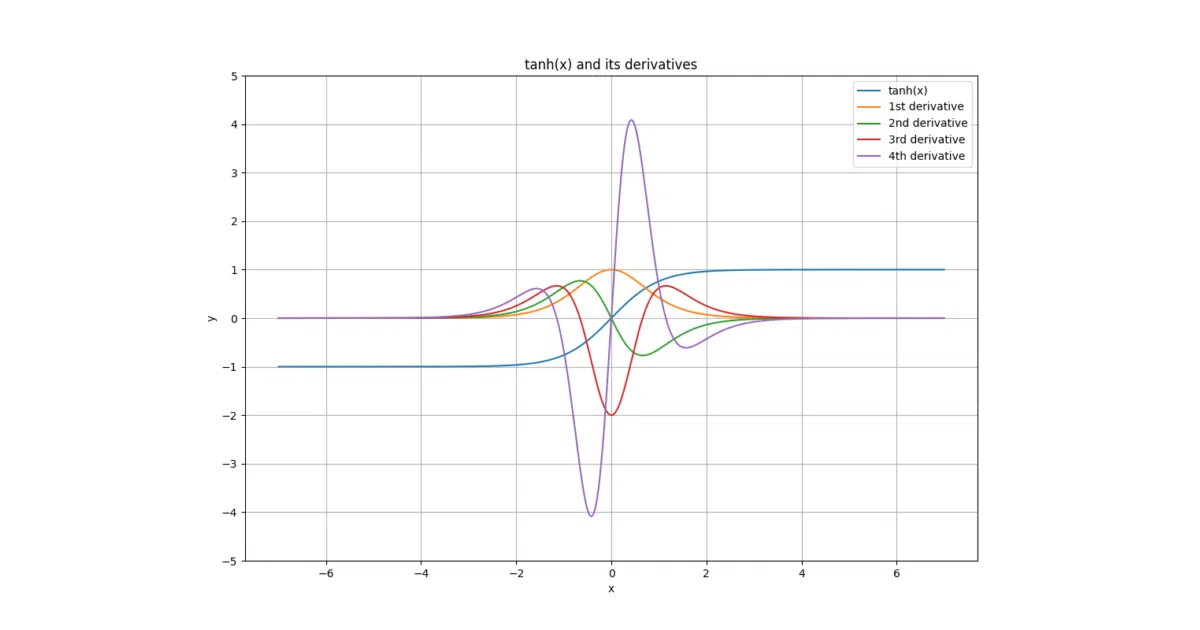
- Supports higher-order derivatives out of the box: you can differentiate the same function repeatedly.
- Reverse-mode and forward-mode differentiation can be mixed and matched arbitrarily.
- Handles a large subset of Python itself, including loops, if-statements, recursion, and closures.
- End-to-end examples cover convnets, LSTMs, Gaussian processes, and backpropagating through a fluid simulation.
Verdict Autograd suits researchers and tinkerers who want gradients for dynamic, NumPy-centric Python without adopting a heavyweight framework. If you are looking for a modern, production-grade deep-learning stack, you may find it too lightweight.
Frequently asked
- What is HIPS/autograd?
- It automatically differentiates ordinary Python and NumPy code—including loops, ifs, and recursion—so you can compute gradients without a heavy framework.
- Is autograd open source?
- Yes — HIPS/autograd is open source, released under the MIT license.
- What language is autograd written in?
- HIPS/autograd is primarily written in Python.
- How popular is autograd?
- HIPS/autograd has 7.5k stars on GitHub.
- Where can I find autograd?
- HIPS/autograd is on GitHub at https://github.com/HIPS/autograd.