FJNB5/fujiang-pojia
A pentest co-pilot that plugs straight into DeepSeek Harness
Fujiang Pojia turns DeepSeek's desktop harness into a security-assessment workstation with a bundled CVE/PoC knowledge base and a staged pentest task ledger.
Collecting fresh signals — velocity needs a few days of history.
collecting data…
star history
What it does
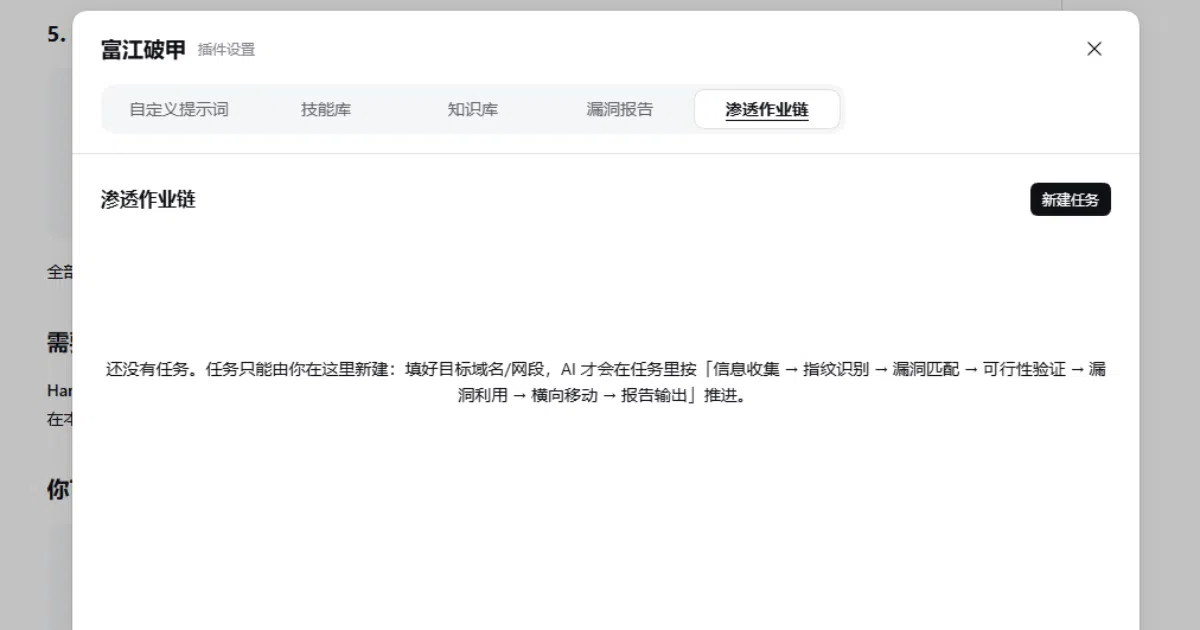
It’s a plugin (JavaScript) for DeepSeek Harness Desktop, activated by the word “富江” (Fujiang). Once installed, it injects a custom system prompt, ships a built-in CVE/PoC knowledge base organized into nine categories (Java deserialization, edge devices, Exchange/AD, cloud/container, Linux privesc, and more), and can download external skill libraries — REA for reverse engineering and AboutSecurity for security assessment — on demand. It also manages a “penetration campaign” ledger that tracks assets, steps, and findings across a staged pipeline from reconnaissance through exploitation to reporting.
The interesting bit
The campaign system is the real novelty: each task binds to one session, and the plugin feeds the model task context via campaign:context so the AI can record findings, advance stages, and get next-step suggestions — with auto-continuation capped at 8 rounds and stall detection. The knowledge base entries carry metadata like verified: false and sources:, so the system at least tries to distinguish “public info” from “confirmed on this target.”
Key highlights
- Local fingerprint matching API (
POST /api/dsh-prompt-custom/match) that ranks CVE candidates by port, product, keyword, and severity weights. - Nine-category knowledge base ships with the plugin — no download needed — and entries are re-read on load so updates take effect without reinstalling.
- Skill libraries (REA, AboutSecurity) are fetched from upstream on demand, not bundled; REA’s npm install disables lifecycle scripts, so Frida’s optional native bindings aren’t built that way.
- Vulnerability reports are persisted locally and browsable by severity (critical/high/medium/low/info).
- Uses only public Harness extension points (
systemPrompt,skills,tools,webServer) — no patching of Harness binaries.
Caveats
- The README states plainly that full runtime verification hasn’t been redone — file structure and install logic were checked, but not every skill, CVE entry, or automated flow.
- Known bug: after closing the disclaimer dialog, Enter/Esc listeners can still interfere with input and shortcuts.
- Knowledge entries are curated public material, not verified conclusions; the project itself says exploitation steps need re-checking against target versions.
Verdict
Worth a look if you already run DeepSeek Harness and want a structured, knowledge-backed assistant for authorized pentest work. If you’re not in that ecosystem — or you need verified, production-grade tooling — this is an ambitious hobbyist project with honest disclaimers, not a commercial product.
Frequently asked
- What is FJNB5/fujiang-pojia?
- Fujiang Pojia turns DeepSeek's desktop harness into a security-assessment workstation with a bundled CVE/PoC knowledge base and a staged pentest task ledger.
- Is fujiang-pojia open source?
- Yes — FJNB5/fujiang-pojia is an open-source project tracked on heatdrop.
- What language is fujiang-pojia written in?
- FJNB5/fujiang-pojia is primarily written in JavaScript.
- How popular is fujiang-pojia?
- FJNB5/fujiang-pojia has 645 stars on GitHub.
- Where can I find fujiang-pojia?
- FJNB5/fujiang-pojia is on GitHub at https://github.com/FJNB5/fujiang-pojia.