Evianis/travel-photo-abstraction
A Codex skill that treats vacation snapshots like geometry homework
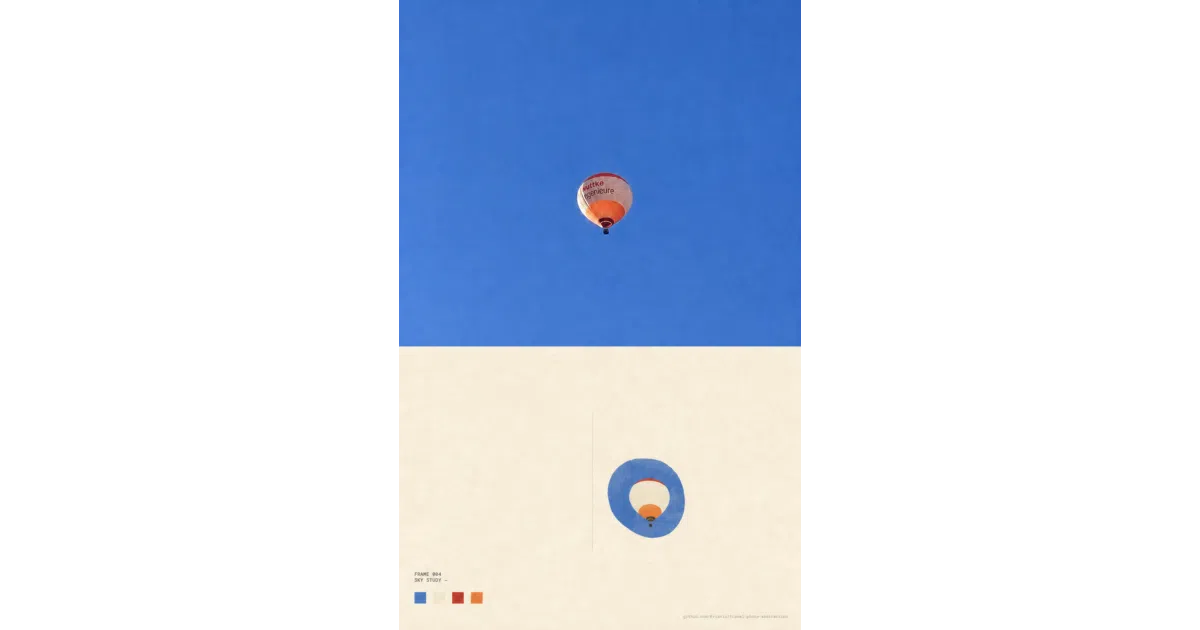
It inventories the shapes, counts, and spatial rhythm of a photograph, then renders only the observable facts as sparse editorial abstractions.
Collecting fresh signals — velocity needs a few days of history.
collecting data…
star history
What it does
This Codex skill analyzes a travel or everyday photograph as a visual system, cataloging its distinctive shapes, counts, positions, proportions, colors, and depth. It then maps each retained fact to a minimal abstract mark, preserving spatial relationships and negative space without adding decorative filler or invented content. The final output is a composed editorial study pairing the untouched original with the generated abstraction.
The interesting bit
Instead of generic filters, the skill selects 2–4 structurally relevant examples from a bundled 19-image reference library; the README describes their relationship logic as binding, meaning generation is constrained by precedent rather than free-form invention. It also deliberately stops if the built-in image generation tool is unavailable—a rare generative pipeline that fails closed.
Key highlights
- Inventories observable visual evidence before generating; avoids generic filters and decorative filler
- Preserves source asymmetry, occlusion, count groups, and negative space in the abstract panel
- Uses a 19-image structural reference library with binding relationship logic to constrain output style
- Validates the final composition with
Pillowto ensure the original photograph remains untouched - Source-available, though the license prohibits modification, redistribution, and derivative works
Caveats
- Only runs inside Codex with skill support and the built-in image generation tool
- The source-available license explicitly bars modification, derivative works, and resale
- Showcase images are watermarked and the watermark must not be removed
Verdict
Useful for Codex users who want abstractions that respect the source image’s actual geometry. Everyone else—and anyone who needs to fork or redistribute—is locked out by design.
Frequently asked
- What is Evianis/travel-photo-abstraction?
- It inventories the shapes, counts, and spatial rhythm of a photograph, then renders only the observable facts as sparse editorial abstractions.
- Is travel-photo-abstraction open source?
- Yes — Evianis/travel-photo-abstraction is an open-source project tracked on heatdrop.
- What language is travel-photo-abstraction written in?
- Evianis/travel-photo-abstraction is primarily written in Python.
- How popular is travel-photo-abstraction?
- Evianis/travel-photo-abstraction has 776 stars on GitHub.
- Where can I find travel-photo-abstraction?
- Evianis/travel-photo-abstraction is on GitHub at https://github.com/Evianis/travel-photo-abstraction.