DresdenGman/AIGlasses_for_navigation
Glasses that would rather say nothing than guess
A sub-$35 open-source navigation aid for blind and low-vision users, built around a hard rule: below a confidence threshold, the system stays silent.
Too new to rank. Velocity needs a few days of history.
not enough history yet
star history
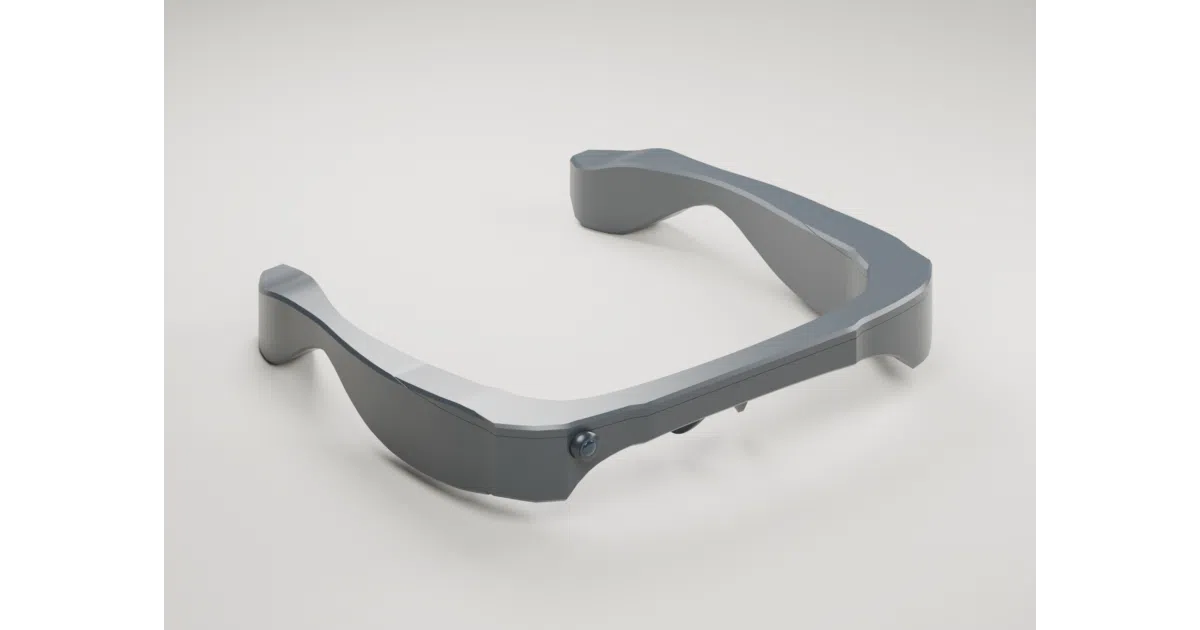
What it does: AI Glasses for Navigation is a research prototype wearable plus a companion memory app, aimed first at blind and low-vision people. The navigation half speaks guidance aloud, reads labels and signs, and refuses to issue any command when its confidence score falls below a 0.70 internal threshold. The second half, Lifelog, records a day on the owner’s own hardware and answers questions like “what did the doctor say” by citing timestamped evidence, labelling weak answers as uncertain instead of filling gaps. A full pair of glasses builds for US$32.29 in the US, itemised part by part, and under US$20 in China.
The interesting bit: The honesty mechanism lives in the architecture, not the disclaimers. The navigation package stores no frames, audio or location; Lifelog stores media but cannot touch navigation guidance; a CI test enforces that neither package imports the other. The project also keeps its evidence unusually clean: 20 donated units, 64 field users across 3 communities, and an 85-response survey published with raw data.
Key highlights
- Confidence gate at 0.70: below it, output is “uncertain”, never a command. The README is careful to note this is a decision threshold, not a calibrated probability.
- Complete replication kit: priced BOM, printable enclosure (v0.4 as editable geometry), build guide mirrored on OER Commons, MERLOT, Instructables and Thingiverse.
- Lifelog app v0.1.1 ships installers for Windows, macOS, Linux and Android, with frozen OpenAPI and SQLite contracts to build against.
- Designed from the hardest case outward: what a blind user needs (hands-free, voice-first, explicit uncertainty) becomes a convenience for everyone else.
- The repo separates what is real, demo, or planned in an explicit status table, including which images are renders rather than photographs.
Caveats
- Everything the Lifelog website and app display runs on fictional showcase data; real capture, sync and inference are planned, not built.
- The v0.4 enclosure exists only as digital geometry and renders; the units people actually used were an earlier prototype, and fabrication and fit validation are still pending.
- It is a research prototype, explicitly not a medical device, and the README says it must not replace a white cane, guide dog or mobility training.
Verdict: Worth a look for anyone building assistive tech, open hardware or uncertainty-aware systems; the confidence-gate design and the honest status table are the takeaways. Skip it if you want a finished product you can wear tomorrow.
Frequently asked
- What is DresdenGman/AIGlasses_for_navigation?
- A sub-$35 open-source navigation aid for blind and low-vision users, built around a hard rule: below a confidence threshold, the system stays silent.
- Is AIGlasses_for_navigation open source?
- Yes — DresdenGman/AIGlasses_for_navigation is open source, released under the MIT license.
- What language is AIGlasses_for_navigation written in?
- DresdenGman/AIGlasses_for_navigation is primarily written in TypeScript.
- How popular is AIGlasses_for_navigation?
- DresdenGman/AIGlasses_for_navigation has 508 stars on GitHub.
- Where can I find AIGlasses_for_navigation?
- DresdenGman/AIGlasses_for_navigation is on GitHub at https://github.com/DresdenGman/AIGlasses_for_navigation.