DerrickXuNu/OpenCOOD
Multiplayer mode for autonomous vehicle perception
It gives autonomous vehicles a shared LiDAR pipeline so researchers can benchmark exactly how much bandwidth and accuracy cost when cars sense together.
Not currently ranked — collecting fresh signals.
star history
What it does
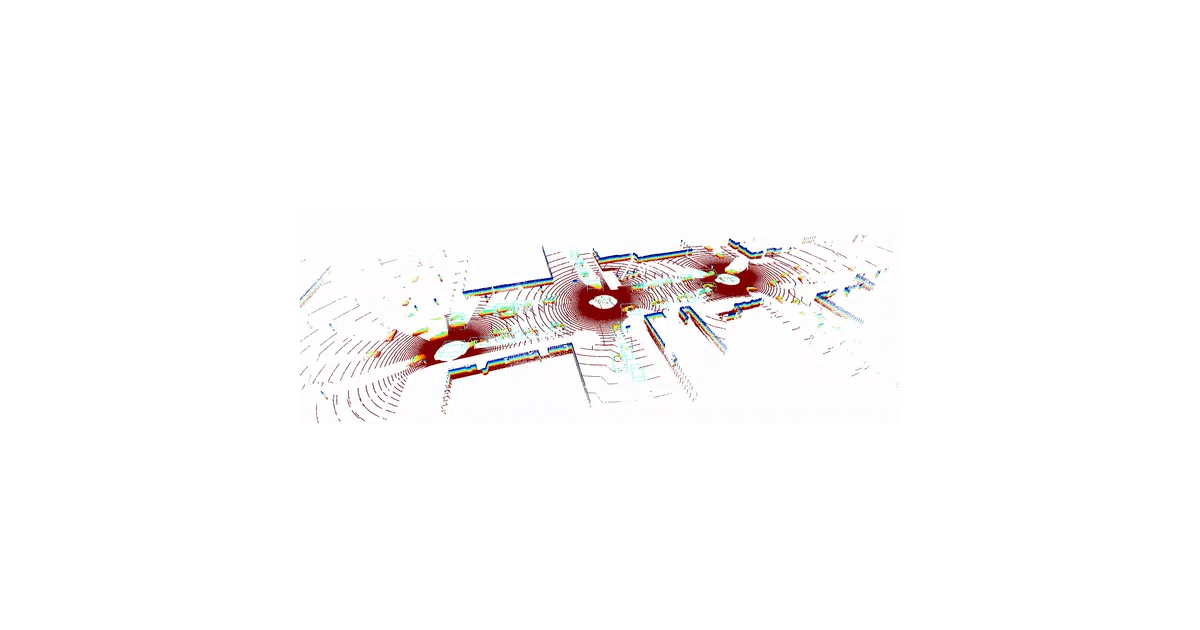
OpenCOOD is a research framework for cooperative autonomous driving perception. It standardizes how multiple vehicles share LiDAR data to detect objects, wrapping a growing roster of recent conference papers into a single training and evaluation pipeline. The project also maintains a model zoo with pre-trained weights and tracks both detection accuracy and communication bandwidth for each method.
The interesting bit
Most autonomous driving stacks treat each car as an island; OpenCOOD treats perception as a network problem. It bakes bandwidth budgets directly into the benchmark tables, showing which fusion strategies stay under the roughly 2.7 Mbit-per-frame limit implied by a 27 Mbit/s channel and 10 Hz LiDAR. That makes the cost of collaboration explicit instead of hand-waved.
Key highlights
- Ships with unified APIs for OPV2V and V2XSet datasets, plus a log-replay toolbox that can reconstruct and modify recorded sensor streams.
- Implements a laundry list of recent multi-agent fusion papers—Attentive Fusion, V2VNet, CoBEVT, Where2comm, and others—using shared backbones like PointPillar and SECOND.
- Benchmark tables report AP@0.7 alongside pre- and post-compression bandwidth, making it easy to see which methods are too chatty for real-world V2X links.
- Supports both spconv 1.2.1 and 2.x, which matters because sparse convolution versioning in this ecosystem is historically brittle.
Caveats
- Camera and Radar APIs are still on the roadmap; right now the framework is LiDAR-only.
- Several advertised datasets (DAIR-V2X, V2V4Real) and models (DiscoNet, AdaFusion) remain unchecked on the feature list, so the “unified” claim currently applies to a subset of the literature.
Verdict
Worth a look if you are building or comparing V2X perception algorithms and need a common yardstick. Skip it if your work is monocular or radar-centric, since those modalities are not yet wired in.
Frequently asked
- What is DerrickXuNu/OpenCOOD?
- It gives autonomous vehicles a shared LiDAR pipeline so researchers can benchmark exactly how much bandwidth and accuracy cost when cars sense together.
- Is OpenCOOD open source?
- Yes — DerrickXuNu/OpenCOOD is an open-source project tracked on heatdrop.
- What language is OpenCOOD written in?
- DerrickXuNu/OpenCOOD is primarily written in Python.
- How popular is OpenCOOD?
- DerrickXuNu/OpenCOOD has 839 stars on GitHub.
- Where can I find OpenCOOD?
- DerrickXuNu/OpenCOOD is on GitHub at https://github.com/DerrickXuNu/OpenCOOD.