CosmosShadow/gptpdf
For $0.013 a page, GPT-4o reads your PDFs so you don't have to
It farms out the hard parts of PDF extraction—tables, math, layouts—to a vision model instead of brittle heuristics.
Not currently ranked — collecting fresh signals.
star history
What it does
gptpdf converts PDFs into Markdown by rendering each page, marking non-text regions with bounding boxes via PyMuPDF, and asking a multimodal LLM like GPT-4o to transcribe the annotated result. The tool extracts both the structured text and any embedded images, returning a Markdown file plus a list of image paths. The authors claim it handles typography, math formulas, tables, pictures, and charts, and cite an average cost of about $0.013 per page.
The interesting bit The whole pipeline is just 293 lines of code. Rather than building a complex document engine, the project treats PDF parsing as a computer-vision task: point the model at the tricky bits and let it infer the layout.
Key highlights
- Exposes a single function
parse_pdfwith tunable prompts (prompt,rect_prompt,role_prompt) to guide how the model interprets text and marked regions. - Supports any OpenAI-compatible vision endpoint, including GPT-4o, GLM-4V, Qwen-VL-Max, Yi-Vision, and Azure OpenAI.
- Returns extracted images alongside Markdown output, keeping figures and diagrams separate from the text stream.
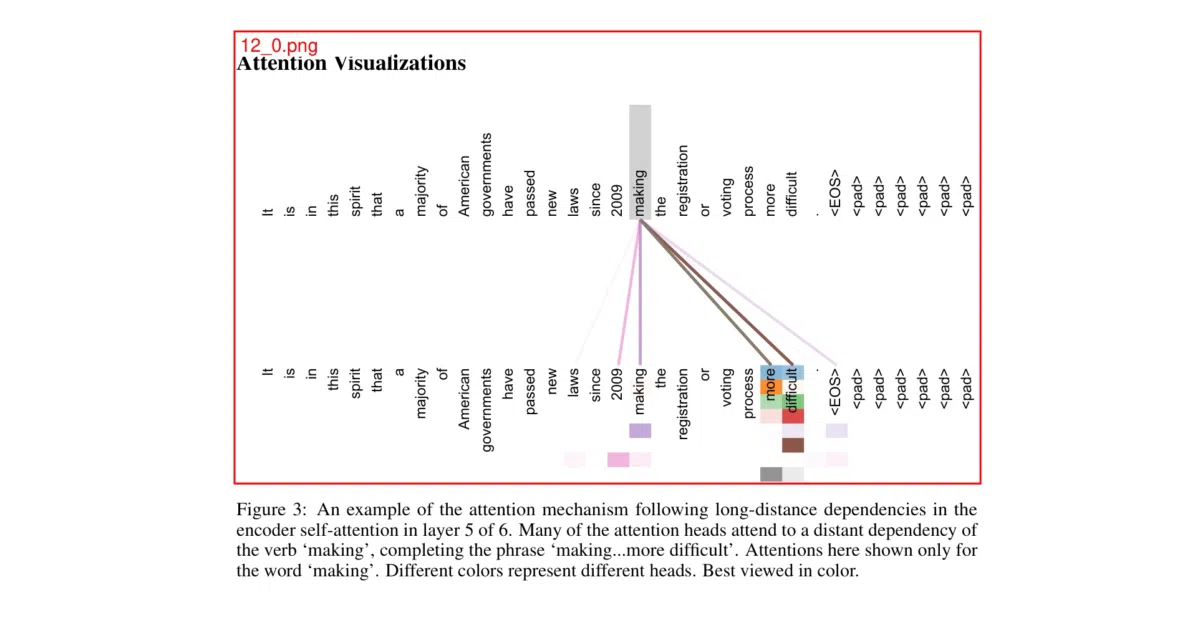
- Ships with example conversions of real academic papers, such as Attention Is All You Need.
Caveats
- Requires an external vision-LLM API; the README does not mention support for fully local or offline execution.
- The “almost perfect” parsing claim is qualitative; no benchmarks or error rates are provided against traditional extractors.
Verdict Useful if you need readable Markdown from complex, layout-heavy PDFs and can justify per-page API spend. Look elsewhere if you need deterministic, offline extraction.
Frequently asked
- What is CosmosShadow/gptpdf?
- It farms out the hard parts of PDF extraction—tables, math, layouts—to a vision model instead of brittle heuristics.
- Is gptpdf open source?
- Yes — CosmosShadow/gptpdf is open source, released under the MIT license.
- What language is gptpdf written in?
- CosmosShadow/gptpdf is primarily written in Python.
- How popular is gptpdf?
- CosmosShadow/gptpdf has 3.6k stars on GitHub.
- Where can I find gptpdf?
- CosmosShadow/gptpdf is on GitHub at https://github.com/CosmosShadow/gptpdf.