Azure-Samples/miyagi
Microsoft's kitchen-sink demo for building AI copilots
A sprawling reference architecture that wires together every Azure AI service so you can see what actually sticks.
Not currently ranked — collecting fresh signals.
star history
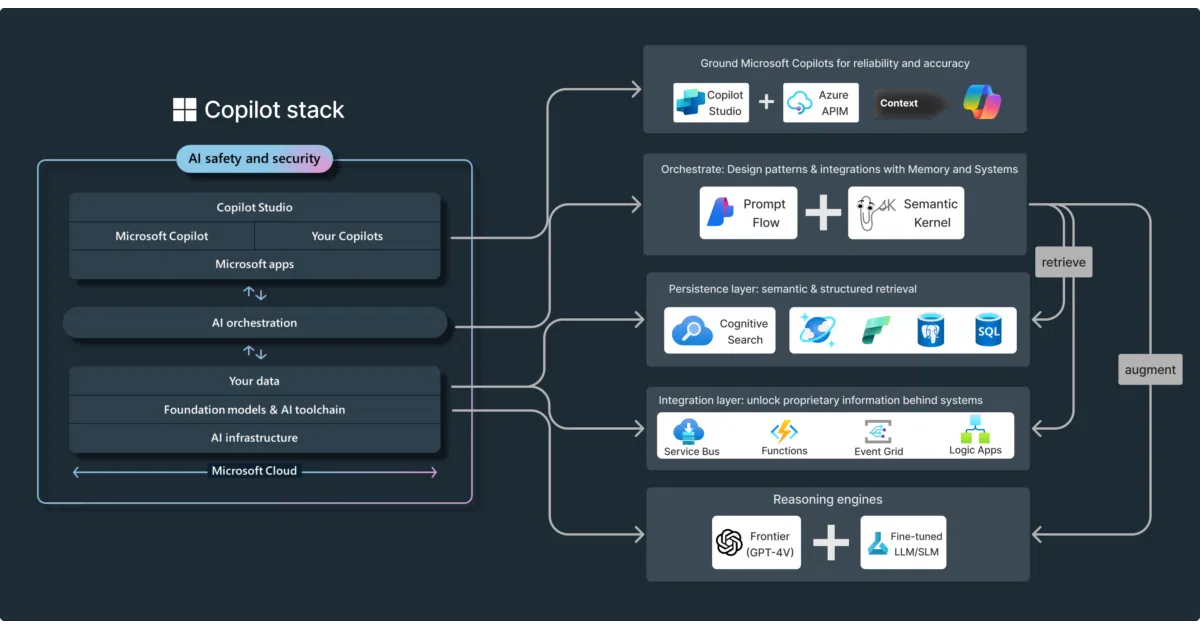
What it does Project Miyagi is Microsoft’s own envisioning workshop for its Copilot stack—a polyglot, microservices-heavy sample app meant to show enterprise developers how to weave generative AI into real products. It covers personalized financial coaching, summarization, image generation, and agent-like orchestration across a cloud-native, event-driven backbone.
The interesting bit Rather than picking one framework and calling it a day, Miyagi deliberately piles them all in: Semantic Kernel, LangChain, LlamaIndex, PromptFlow, AutoGen, TypeChat, even a GitHub Copilot Agent VSCode extension. The chaos is the point—it’s a living comparison shop for which Azure AI pieces fit which problems.
Key highlights
- Implements RAG, chain-of-thought prompting, vector memory, fine-tuning (Llama2, Phi-2), and plugin patterns side by side
- Runs on Azure Container Apps or AKS with Cosmos DB, Service Bus, and API Management in the mix
- Includes a working frontend, Jupyter notebook quickstarts, and a ChatGPT plugin sample
- Partial implementations are flagged honestly; the repo is explicitly “Work in Progress”
- Companion workshop materials live at iappwksp.com with a self-guided path
Caveats
- Many listed features are “coming soon” (DeepSpeed Chat/RLHF) or scattered across experiments folders
- The disclaimer repeats four times that this is “for demonstration purposes only” and not production-ready
- Scope creep is real: the tech stack list alone spans 20+ services, which may overwhelm before it educates
Verdict Worth a weekend if you’re an Azure shop architect deciding between Semantic Kernel and LangChain, or need internal buy-in slides with working code behind them. Skip it if you want a clean, minimal starter template—this is the opposite of minimal.
Frequently asked
- What is Azure-Samples/miyagi?
- A sprawling reference architecture that wires together every Azure AI service so you can see what actually sticks.
- Is miyagi open source?
- Yes — Azure-Samples/miyagi is an open-source project tracked on heatdrop.
- What language is miyagi written in?
- Azure-Samples/miyagi is primarily written in Jupyter Notebook.
- How popular is miyagi?
- Azure-Samples/miyagi has 751 stars on GitHub.
- Where can I find miyagi?
- Azure-Samples/miyagi is on GitHub at https://github.com/Azure-Samples/miyagi.