3DTopia/OpenLRM
Single-image 3D reconstruction escapes the paywall
OpenLRM exists to provide an open, hackable implementation of the LRM paper, turning a single photograph into a 3D mesh or video without multi-view capture.
Not currently ranked — collecting fresh signals.
star history
What it does
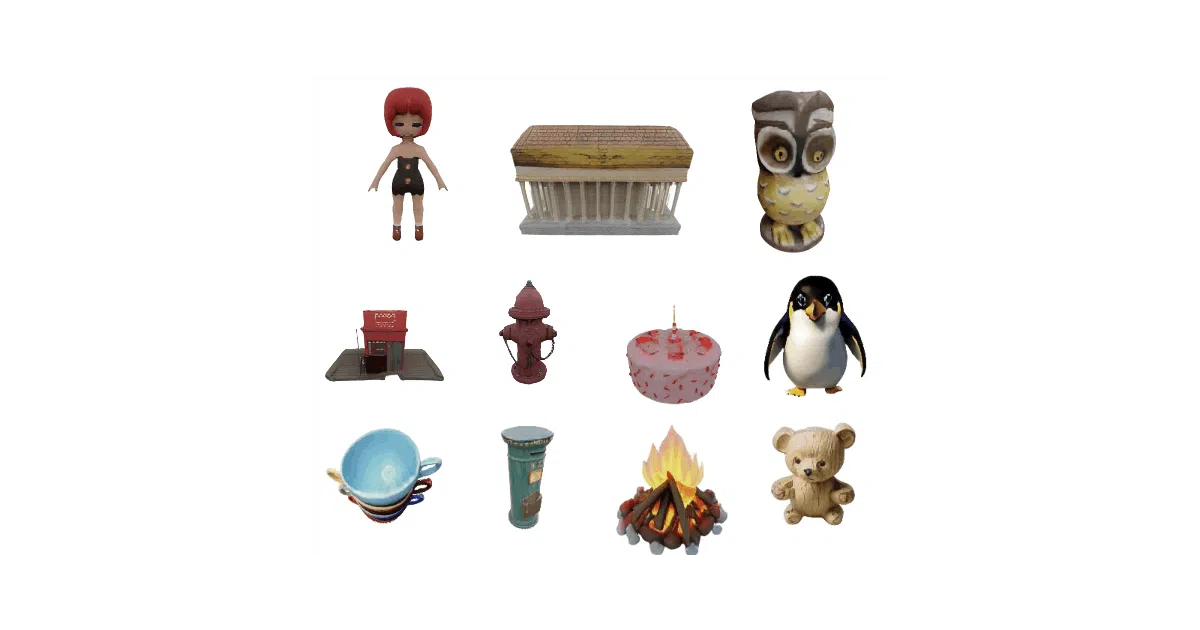
OpenLRM is an open-source reproduction of the LRM paper: feed it a single image—ideally RGBA or a masked RGB with a clean background—and it emits a 3D mesh and a rendered video. Under the hood it relies on a DINOv2 encoder, with pretrained weights ranging from small to large. The repository also includes training scripts and a Blender pipeline for rendering Objaverse images, so you can roll your own dataset if the pretrained mix isn’t enough.
The interesting bit
The authors release two weight families: “obj” variants trained only on Objaverse, and “mix” variants trained on Objaverse plus MVImgNet, with the latter acting as the better general-purpose default. The whole pipeline is HuggingFace-native, offering automatic weight downloads and a web demo, but the weights are locked under a CC BY-NC 4.0 license—fine for research, useless for products.
Key highlights
- Single-image inference to mesh or video via DINOv2-based reconstruction
- Six pretrained checkpoints (small / base / large, each in obj-only or mixed-data flavors)
- Memory-efficient attention via xFormers inside the DINOv2 encoder
- Training code and Blender data-rendering scripts for Objaverse
- HuggingFace demo and model-hub integration for quick experiments
Caveats
- Model weights are CC BY-NC 4.0 and certain components carry an NVIDIA proprietary license, so commercial use is off the table.
- Default training assumes 8 GPUs with
bf16mixed precision, and inference can run out of CUDA memory unless you shrinkframe_size. - PyTorch
>=2.1is recommended, and xFormers must be installed separately to unlock efficient attention in the DINOv2 encoder.
Verdict
Researchers and hobbyists building 3D generative pipelines should grab this; commercial teams and anyone without a decent GPU should look elsewhere.
Frequently asked
- What is 3DTopia/OpenLRM?
- OpenLRM exists to provide an open, hackable implementation of the LRM paper, turning a single photograph into a 3D mesh or video without multi-view capture.
- Is OpenLRM open source?
- Yes — 3DTopia/OpenLRM is open source, released under the Apache-2.0 license.
- What language is OpenLRM written in?
- 3DTopia/OpenLRM is primarily written in Python.
- How popular is OpenLRM?
- 3DTopia/OpenLRM has 1.3k stars on GitHub.
- Where can I find OpenLRM?
- 3DTopia/OpenLRM is on GitHub at https://github.com/3DTopia/OpenLRM.