garrytan/gstack · 13 Oct 2026 · Feature
The YC President Open-Sourced His Engineering Org

Nathan Brooks
Staff Writer
gstack is Garry Tan's bet that the scarce resource in AI-assisted software is no longer code — it's process, and one person running a disciplined pipeline of agents can now do the work of a team.
garrytan/gstack
★136.2k stars Velocity · 7d +303 ★/day ↗accelerating
star history
Garry Tan has an unusual problem for the president of Y Combinator: he is shipping too much software. By his own account — laid out in the README of his newly open-sourced project gstack — the last 60 days produced three production services and more than forty shipped features, part-time, while running the most famous startup accelerator in the world full-time. The claim that made the rounds is bigger: on logical code change rather than raw lines, his 2026 run rate is roughly 810 times his 2013 pace, the year he built YC’s internal social network Bookface. AI wrote most of it. His point, and the project’s entire reason for existing, is that the interesting question is no longer who typed the code but what shipped.
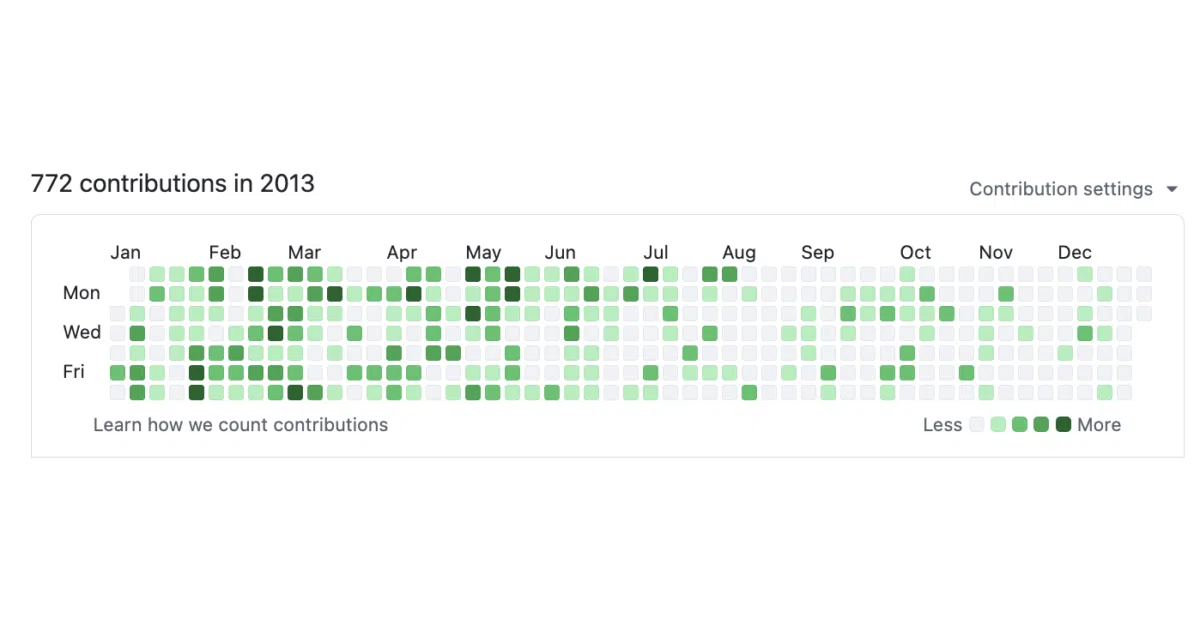
The trigger for all this was a quote. Andrej Karpathy, OpenAI co-founder, said on a podcast in March 2026 that he hadn’t typed a line of code since December. Tan read that and wanted to know how — not abstractly, but mechanically. What does a person actually do all day if they’re not writing code? gstack is his answer, published under an MIT license with no premium tier and no waitlist, and it arrives at a moment when a lot of people are asking the same question and getting vague answers.
What gstack actually is
Strip away the marketing and gstack is a collection of twenty-three slash commands — Markdown skill definitions that plug into Claude Code and, via a setup script, into nine other coding agents including OpenAI’s Codex CLI, Cursor, and OpenClaw. Each command plays a role: /office-hours interrogates a product idea the way a YC partner would, pushing back on framing and extracting capabilities you didn’t know you were describing. /plan-ceo-review challenges scope. /plan-eng-review forces architecture assumptions into the open. /review hunts for the bugs that pass CI but detonate in production. /qa opens a real browser, clicks through flows, and fixes what it finds. /ship runs tests, audits coverage, and opens the pull request.
This is, candidly, a lot of prompt engineering. The honest description is that gstack is glue — carefully authored Markdown, a browser harness, some TypeScript plumbing, and a setup script — rather than novel systems software. But dismissing it as glue misses what the glue is for. The genuinely interesting design decision is that the skills form a pipeline where each stage’s output becomes the next stage’s input. The design document written by /office-hours is read by the CEO review, which feeds the engineering review, whose test plan is picked up by QA, whose findings are verified by the release step. Tan frames it as a sprint: think, plan, build, review, test, ship, reflect. Nothing falls through the cracks, he argues, because every step knows what came before it.
That structure is the boring part, and the boring part is where the value lives. Anyone who has used a coding agent for more than a week knows the failure mode: a brilliant first hour, then a drift into confident nonsense, drive-by edits to unrelated files, and a diff you don’t trust. The field is converging on the same diagnosis from several directions. A Microsoft community blog post on modular agent workflows makes the identical argument — that generic prompting fails on real projects because it lacks project-specific architecture, validation, and staged refinement. A LinkedIn post by Oshri Cohen describes building a “CTO agent” that reviews every other agent’s work before commit, with findings fed back as context so mistakes don’t recur. Jack Marchant, writing about his 2025 agent workflow, puts it in terms of minimal context windows and treating specs like versioned code. gstack is the most complete packaged expression of this consensus I’ve seen — process-as-code, with the process borrowed from how a well-run startup actually operates.
The productivity claim, and the fight around it
Tan’s numbers invite scrutiny, and he knows it. Raw lines of code are a notoriously bad productivity metric, and AI inflates them — an agent will happily generate a thousand lines where a human would write eighty. Tan’s response is to measure logical code change instead, and he has published a methodology document with caveats and a reproduction script, which is more rigor than most people making 810× claims bother with. Still, the numbers are self-reported, measured across his own public and private repositories, and there is no independent verification. The comparison baseline — his 2013 self, building Bookface — is a single data point from a different life circumstance. The claim is plausible in direction and unverifiable in magnitude. What the README does establish, if you take it at face value, is that a busy executive is shipping real software part-time, which was not a thing that happened in 2013.
There’s also a fair reading of gstack as self-promotion. The README name-drops Coinbase, Instacart, and Rippling; it quotes Karpathy; it ends with a hiring pitch for YC. Tan is the CEO of an accelerator whose entire thesis right now is that one founder with AI tooling can do what a team used to — and gstack is that thesis, embodied and given away free. That doesn’t make the tool dishonest, but it means the project is simultaneously software and an argument. The argument is doing a lot of the work.
The browser is the unlock
The most technically substantive part of gstack is not the prompts. It’s the browser stack. Tan credits /qa — the skill that drives a real Chromium instance, finds bugs, fixes them with atomic commits, and generates regression tests — as the thing that let him go from six to twelve parallel workers. “The agent has eyes now” is his phrasing, and it points at something real: the gap between an agent that can write code and an agent that can observe the consequences of that code running has been the central bottleneck in agentic development.
The security engineering around this is more serious than the project’s breezy tone suggests. A sidebar agent that browses authenticated web pages on your behalf is a prompt-injection target, and gstack treats it as one: a bundled 22MB local ML classifier scans every page, a Haiku-based transcript check votes on conversation shape, a canary token in the system prompt catches exfiltration attempts, and a verdict combiner requires two classifiers to agree before blocking — a design choice specifically meant to avoid false positives on instruction-heavy pages like Stack Overflow. There’s an opt-in larger ensemble, an emergency kill switch, and a deny-by-default allowlist for raw Chrome DevTools Protocol access. Whether all of this works as advertised is untested by any third party, but the threat model is correct and the layered design is the right shape.
The parallel-sprints story is where gstack stops being a personal workflow and becomes a claim about organizational structure. Tan reports running ten to fifteen concurrent sprints, each in an isolated workspace, managed the way a CEO manages a team — checking in on decisions that matter, letting the rest run. The README is explicit that the sprint structure is what makes this possible: without a process, ten agents are ten sources of chaos. There’s independent corroboration that this pattern scales. OpenObserve wrote in January about their “Council of Sub Agents” — eight specialized Claude Code agents running a six-phase QA pipeline that grew their test suite from 380 to over 700 tests, cut flaky tests by 85 percent, and caught a silent production bug no customer had reported. Different company, different domain, same architecture: specialized roles, staged pipeline, quality gates that block instead of warn.
Limits, rough edges, and a name collision
For all its breadth, gstack has visible seams. The README is enormous and reads like a changelog that ate a manifesto — twenty-three skills, eight power tools, four standalone binaries, an iOS device-testing daemon, a persistent knowledge base called gbrain, taste-learning design tooling, cross-agent browser sharing. Some of this is clearly battle-tested daily driver; some of it has the unmistakable energy of a solo builder shipping features faster than anyone can document them, which is both the project’s proof of concept and its structural weakness. The troubleshooting section alone — Windows symlink fallbacks, stale Codex skill descriptions, a Bun bug with Playwright pipes — hints at how much incidental complexity a multi-agent, multi-platform tool accumulates.
Coverage of the project outside Tan’s own writing is thin and partly inaccessible. Two of the articles surfaced for this piece, from Augment Code and MindStudio, are walled behind cookie-consent interstitials and their substance couldn’t be reviewed. The Reddit discussions — one in r/ClaudeCode titled “Convince me that agent teams are not pointless” and one announcing the gstack release in r/machinelearningnews — are blocked by network security and unreadable, which is unfortunate because skeptical community reception is exactly what a project like this needs and exactly what can’t be assessed here. What the existence of the threads suggests, at minimum, is that the debate over whether multi-agent role-play actually beats a single well-prompted agent is live and unresolved.
One small irony worth noting: the name is taken. gstack has been a GNU debugger utility — a script that attaches GDB to a running process and prints stack traces for every thread — since long before Claude Code existed. Anyone searching for documentation on one will find the other. It’s a trivial collision, but it’s a reminder that the AI-tooling gold rush is now large enough to be stepping on thirty-year-old namespace.
The outlook
The open question for gstack is whether a process encoded by one person, for one person’s workflow, generalizes. Tan’s pipeline is saturated with his own taste — YC office hours as the entry point, a CEO review that hunts for the “10-star product,” a design review that scores dimensions zero to ten. That specificity is the project’s authenticity and its ceiling. A staff engineer at a bank and a solo game developer need different org charts. The MIT license and the fork-me framing acknowledge this: gstack is less a product than a published personal methodology, the way people used to publish dotfiles.
But the direction it points is hard to argue with. The industry’s center of gravity is moving from code generation to verification — agents that can see, test, and prove their own work — and from single sessions to parallel pipelines with real process discipline. Karpathy’s four failure modes for AI coding, which gstack explicitly maps its skills against, are the same failure modes everyone hits. What Tan has done is package a working answer, with all the caveats of a sample size of one, and hand it over. The most useful thing you can say about gstack is also the simplest: it is a credible, detailed, free artifact from inside the transition where software teams stop being made of people. Whether it becomes infrastructure or a period piece depends on questions nobody has answered yet — but the questions are now on GitHub, in Markdown, where anyone can fork them.
Sources
- Garry Tan open-sources gstack: what developers should ...
- Building Reliable AI Coding Workflows Using Modular AI ...
- How AI Agents Automated Our QA: 700+ Test Coverage
- What Is GStack? Gary Tan's Open-Source Startup ...
- Using coding agents in my workflow in 2025 - jack marchant
- Convince me that agent teams are not pointless
- gstack(1) - Linux manual page
- A Professional Workflow for Building Software With AI Agents
- Implementing a Code Review Agent in Claude Code
- Garry Tan Releases gstack: An Open-Source Claude Code ...
- My COMPLETE Agentic Coding Workflow to Build Anything (No ...
- Using Claude for QA testing on software