vicgalle/stable-diffusion-aesthetic-gradients
Steer Stable Diffusion with image vibes, not prompt spells
This fork lets you bias Stable Diffusion toward a specific visual style by feeding it an aesthetic embedding derived from a set of reference images, bypassing the need for elaborate prompt engineering or model retraining.
Not currently ranked — collecting fresh signals.
star history
What it does
It’s a fork of the original Stable Diffusion repository that adds inference-time aesthetic guidance. Instead of retraining weights or stuffing prompts with artist names and modifiers, you provide a pre-computed 1×768 CLIP embedding—either one of the included sets (like laion_7plus, aivazovsky, or flower_plant) or your own generated from a folder of images—and the model nudges its output toward that visual style during sampling. The strength of the effect is controlled by how many optimization steps you allow (--aesthetic_steps), with zero steps yielding the base model behavior.
The interesting bit
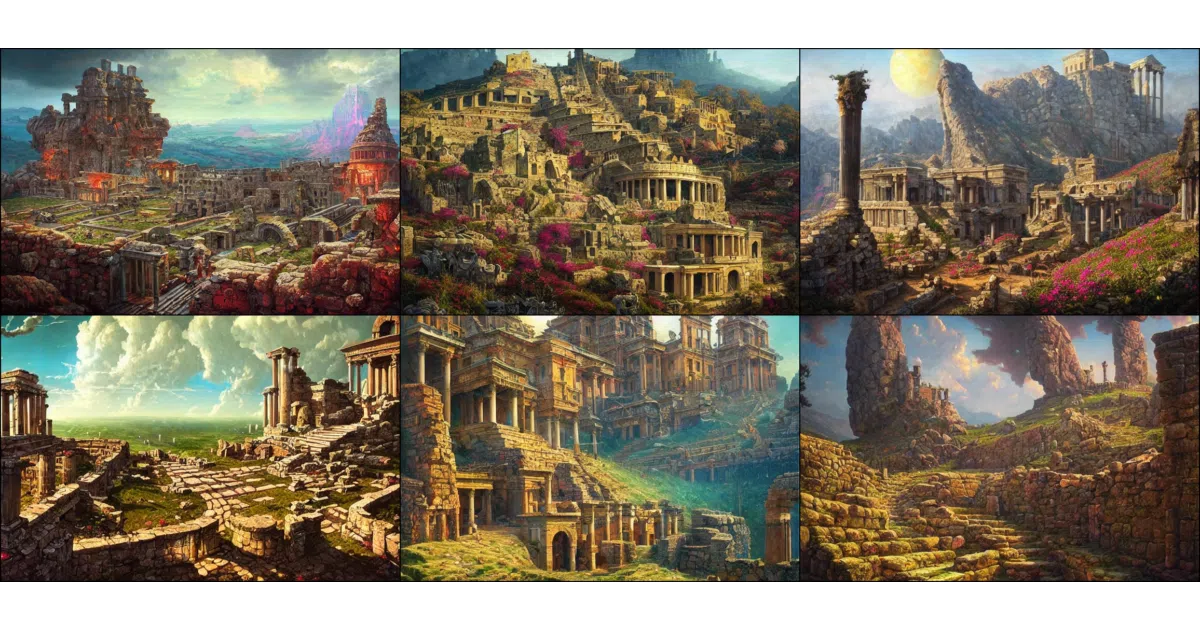
The project treats style as a gradient optimization problem during generation rather than a prompt-hacking problem. You can even cross the streams: put one artist in the prompt and another in the embedding, letting the diffusion model reconcile the two. The README notes that simply adding “by Aivazovsky” to a prompt produces weaker results than using an Aivazovsky-derived embedding, which suggests the technique captures something prompt text struggles to reach.
Key highlights
- Includes eight pre-baked aesthetic embeddings, from broad LAION aesthetics to niche vibes like
cloudcoreandgloomcore. - Can generate custom embeddings from your own image directories using
scripts/gen_aesthetic_embedding.py. - Works with other fine-tuned Stable Diffusion checkpoints, such as Pokémon or NovelAI models.
- A pull request for AUTOMATIC1111’s Web UI exists and is described as functional.
- The underlying method is published in an arXiv paper with qualitative and quantitative validation.
Caveats
- The Web UI integration remains an unmerged pull request.
- The effect scales aggressively with step count; the included examples show embeddings like
flower_plant.ptcan overwhelm a prompt’s original subject if pushed too far. - As a fork of the original CompVis repository, it carries the same setup baggage and does not package the aesthetic logic as a standalone, model-agnostic library.
Verdict
Worth a look if you generate images in Stable Diffusion and are tired of prompt engineering for style consistency. Skip it if you need a polished, plug-and-play tool or a model-agnostic library; this is a research fork tied to the original CompVis codebase.
Frequently asked
- What is vicgalle/stable-diffusion-aesthetic-gradients?
- This fork lets you bias Stable Diffusion toward a specific visual style by feeding it an aesthetic embedding derived from a set of reference images, bypassing the need for elaborate prompt engineering or model retraining.
- Is stable-diffusion-aesthetic-gradients open source?
- Yes — vicgalle/stable-diffusion-aesthetic-gradients is an open-source project tracked on heatdrop.
- What language is stable-diffusion-aesthetic-gradients written in?
- vicgalle/stable-diffusion-aesthetic-gradients is primarily written in Jupyter Notebook.
- How popular is stable-diffusion-aesthetic-gradients?
- vicgalle/stable-diffusion-aesthetic-gradients has 745 stars on GitHub.
- Where can I find stable-diffusion-aesthetic-gradients?
- vicgalle/stable-diffusion-aesthetic-gradients is on GitHub at https://github.com/vicgalle/stable-diffusion-aesthetic-gradients.