polyrabbit/hacker-news-digest
Hacker News, but you actually have time to read it
A static-site generator that scrapes HN, extracts article content, and feeds it to ChatGPT for summaries with auto-generated illustrations.
Not currently ranked — collecting fresh signals.
star history
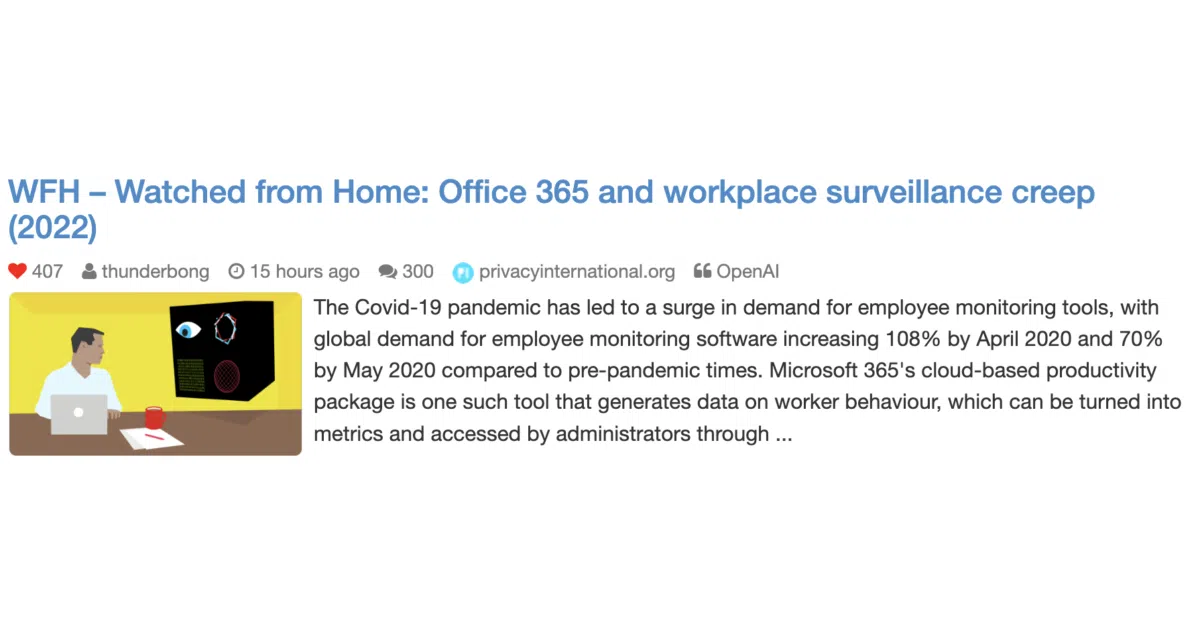
What it does This project scrapes Hacker News, pulls the main content from each linked article using a machine-learning-based extraction algorithm, generates summaries via OpenAI’s GPT-3.5-turbo API, and renders everything as a static site deployed to GitHub Pages. If OpenAI is unreachable, it falls back to a local Google T5 model. The result is a readable digest with thumbnails, embedded videos/PDFs, and RSS feeds.
The interesting bit The whole pipeline runs on GitHub Actions and publishes to GitHub Pages — no server, no database, just scheduled scraping and templated HTML. The content extraction uses a scoring algorithm rather than simple heuristics, and the project even localizes summaries into Chinese with a single prompt tweak.
Key highlights
- Static site generated entirely via GitHub Actions (badge shows it’s actively building)
- Dual-model summarization: OpenAI API with local Google T5 fallback
- Auto-extracted illustrations and embedded media (YouTube, PDFs, GitHub gists)
- Sortable and filterable by points, comments, or time; RSS fully supported
- Chinese translation available via LLM prompt modification
Caveats
- The README’s “score algorithm” for content extraction links to a Jupyter notebook tutorial, but the actual implementation details aren’t shown inline
- TODO list includes switching to the official Hacker News API and improving web scraping (currently not using headless browsers)
- “Seamless” appears twice in the README; the project itself is more pragmatic than that word suggests
Verdict Worth a look if you want a self-hosted HN digest or need a reference for building cheap, serverless content pipelines. Skip it if you need real-time comments or a polished UI — the author admits the homepage could be prettier.
Frequently asked
- What is polyrabbit/hacker-news-digest?
- A static-site generator that scrapes HN, extracts article content, and feeds it to ChatGPT for summaries with auto-generated illustrations.
- Is hacker-news-digest open source?
- Yes — polyrabbit/hacker-news-digest is open source, released under the LGPL-3.0 license.
- What language is hacker-news-digest written in?
- polyrabbit/hacker-news-digest is primarily written in Python.
- How popular is hacker-news-digest?
- polyrabbit/hacker-news-digest has 754 stars on GitHub.
- Where can I find hacker-news-digest?
- polyrabbit/hacker-news-digest is on GitHub at https://github.com/polyrabbit/hacker-news-digest.