openai/pixel-cnn
OpenAI's 2017 generative model, frozen in TensorFlow amber
A reference implementation of PixelCNN++ that squeezes better image density out of autoregressive pixels—if you can still run TensorFlow 1.x.
Not currently ranked — collecting fresh signals.
star history
What it does
PixelCNN++ generates images one pixel at a time, left-to-right, top-to-bottom, by predicting a probability distribution for each pixel conditioned on everything that came before. This repo is OpenAI’s official TensorFlow implementation of the 2017 ICLR paper, with support for training on CIFAR-10 and Small ImageNet across multiple GPUs.
The interesting bit
The “++” isn’t marketing fluff—it swaps the original softmax-over-intensities for a discretized logistic mixture likelihood, which is how they shaved the bits-per-dimension from 3.03 down to 2.92 on CIFAR-10. The README is admirably blunt about hardware requirements: 8 Maxwell TITAN Xs, 10 hours to hit 3.0 bpd, five days to converge to 2.92.
Key highlights
- Ships with a pretrained checkpoint (656MB) that hits the paper’s 2.92 bpd number
- Multi-GPU training via
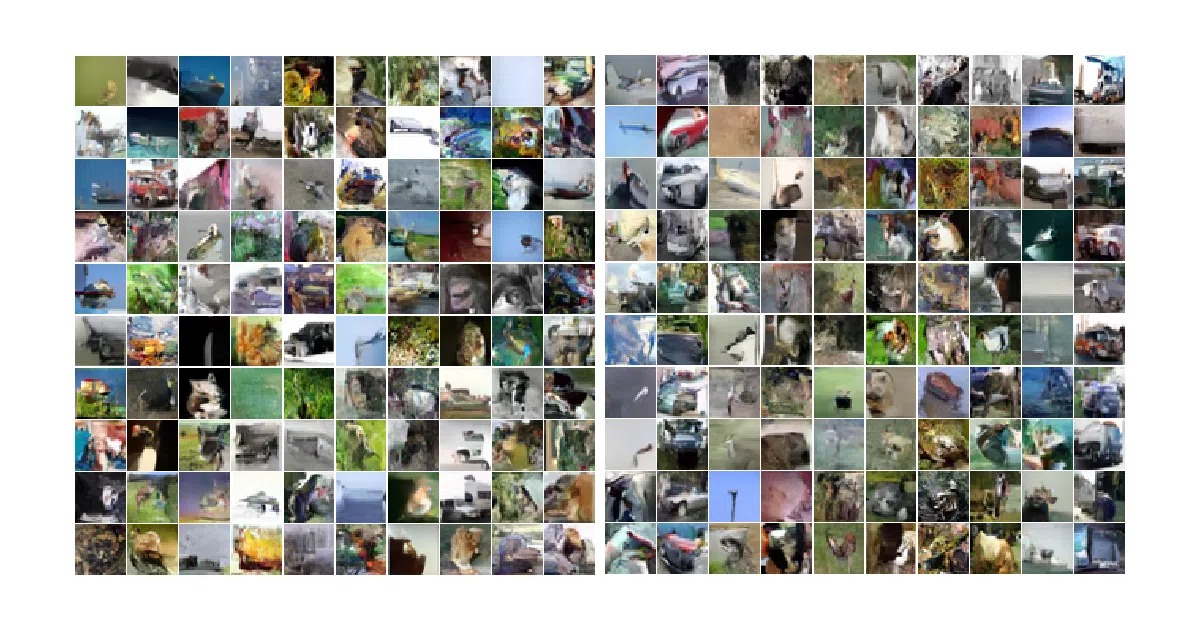
train.pywithCUDA_VISIBLE_DEVICESand--nr_gpuflags DataLoaderclasses indata/are meant to be cloned for custom datasets- Includes class-conditional sampling (the right-hand column of the sample image)
Caveats
- Explicitly archived: “code is provided as-is, no updates expected”
- Requires
tensorflow-gpu, which pins you to TensorFlow 1.x and Python 3 versions that are increasingly archaeological - The “pixel-cnn-rotations” section at the bottom of the README is unexplained—possibly a stub, possibly a copy-paste ghost
Verdict
Worth a look if you’re reproducing 2017 generative-model baselines or studying how autoregressive density estimation worked before diffusion ate everything. Skip it if you want maintained code, modern PyTorch, or training that doesn’t require scrounging decade-old GPUs.
Frequently asked
- What is openai/pixel-cnn?
- A reference implementation of PixelCNN++ that squeezes better image density out of autoregressive pixels—if you can still run TensorFlow 1.x.
- Is pixel-cnn open source?
- Yes — openai/pixel-cnn is an open-source project tracked on heatdrop.
- What language is pixel-cnn written in?
- openai/pixel-cnn is primarily written in Python.
- How popular is pixel-cnn?
- openai/pixel-cnn has 2k stars on GitHub.
- Where can I find pixel-cnn?
- openai/pixel-cnn is on GitHub at https://github.com/openai/pixel-cnn.