oinone/oinone-pamirs
A Java low-code backend that wants AI to read its mind
Oinone Pamirs is a metadata-driven framework trying to keep AI-generated enterprise code from becoming unmaintainable spaghetti.
Not currently ranked — collecting fresh signals.
star history
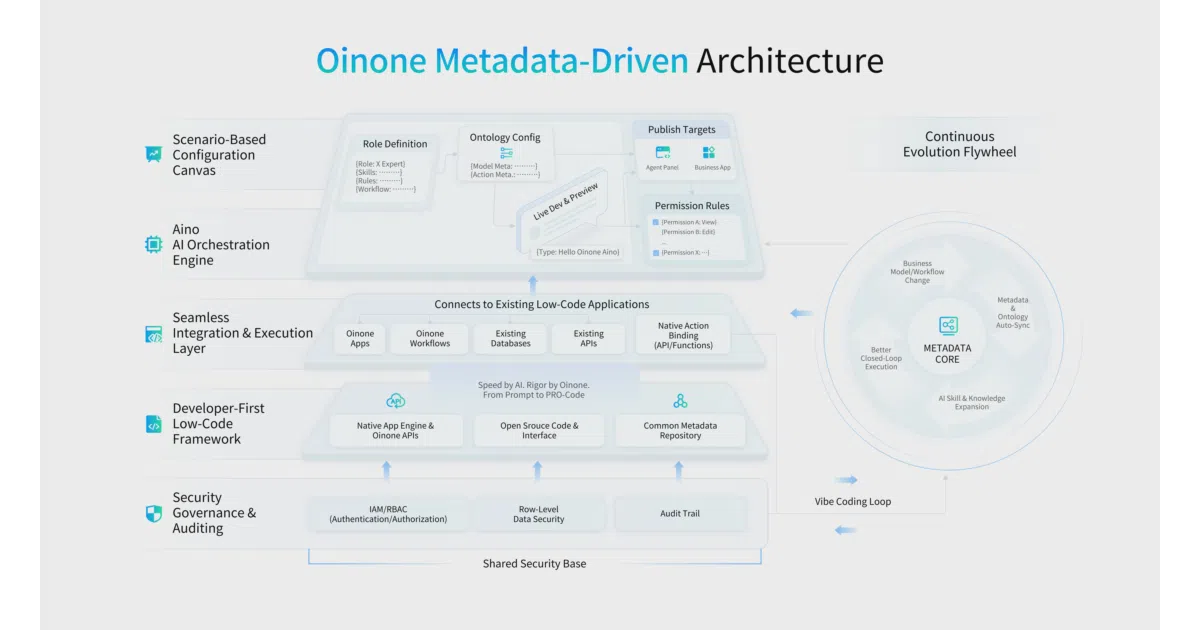
What it does Oinone Pamirs is the Java backend of a low-code platform pitched at enterprise teams building ERP, MES, HIS, and similar systems. The core bet: if the framework is 100% metadata-driven and fully open source, AI coding tools can actually understand the system’s design rules instead of hallucinating glue code. A companion frontend repo (oinone-kunlun) and an “Aino” AI agent layer round out the stack.
The interesting bit The README keeps hammering “framework discipline” — a not-so-subtle jab at vibe-coding chaos. The idea is that AI coding inside a rigid metadata model produces “deliverable enterprise software, not demos.” Whether that discipline survives real-world prompt engineering is the open question.
Key highlights
- 100% metadata-driven architecture with visual no-code design layer
- “Aino” agent platform: ontology-based, claims to go beyond chatbots into business-semantics-aware agents
- Modular Java packages: metadata core (pamirs-k2), framework core, middleware, SPI, boot, UX
- AGPL-3.0 licensed; enterprise edition exists separately
- Claims production use at Yunnan Tobacco, Deli, Jack Technology, and 100+ software firms — though no independent verification is offered
Caveats
- The 7.x demo is “coming soon,” so there’s no live code to kick the tires on yet
- README is heavy on aspirational language (“self-evolving application growth model,” “Data-Feedback Loop”) and light on concrete technical mechanisms
- Aino’s “unrestricted agent orchestration” and “next-gen enterprise interactions” are described, not demonstrated
Verdict Worth watching if you’re building enterprise low-code infrastructure and skeptical of AI-generated anarchy. Skip it if you need something proven and documented you can deploy this week.
Frequently asked
- What is oinone/oinone-pamirs?
- Oinone Pamirs is a metadata-driven framework trying to keep AI-generated enterprise code from becoming unmaintainable spaghetti.
- Is oinone-pamirs open source?
- Yes — oinone/oinone-pamirs is open source, released under the AGPL-3.0 license.
- What language is oinone-pamirs written in?
- oinone/oinone-pamirs is primarily written in Java.
- How popular is oinone-pamirs?
- oinone/oinone-pamirs has 2.3k stars on GitHub.
- Where can I find oinone-pamirs?
- oinone/oinone-pamirs is on GitHub at https://github.com/oinone/oinone-pamirs.