modelscope/facechain
One photo, ten seconds, your AI doppelgänger
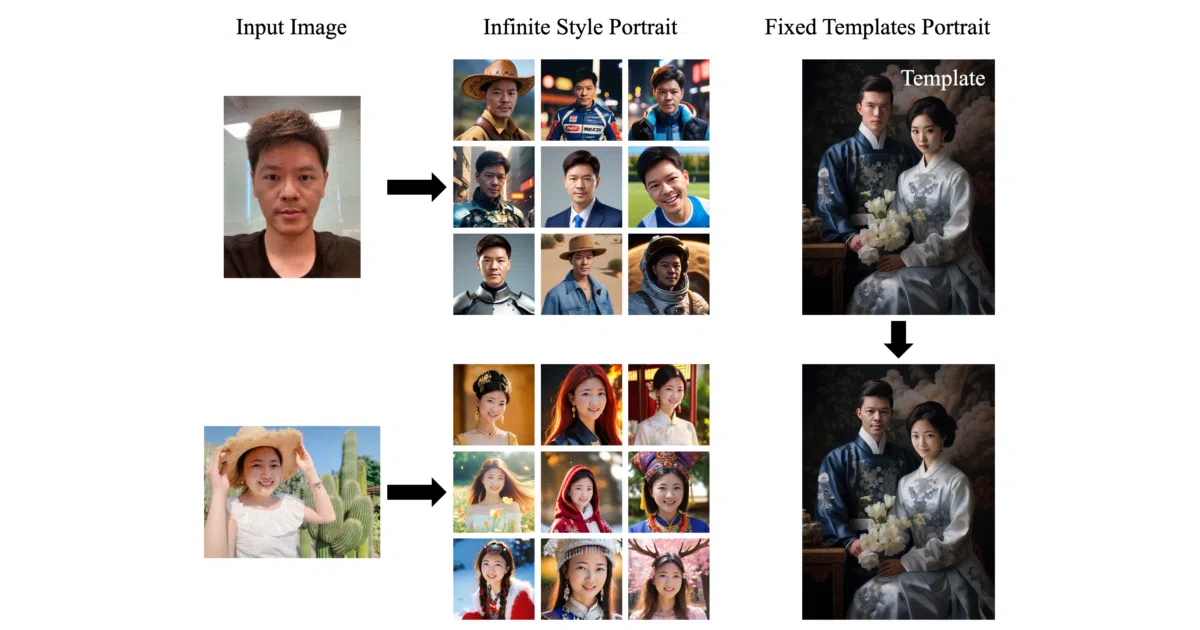
FaceChain generates identity-preserving portraits from a single image without per-user training.
Not currently ranked — collecting fresh signals.
star history
What it does FaceChain is a portrait generation framework that creates stylized images of a specific person while keeping their identity intact. The latest FACT version drops the old training-heavy approach: feed it one photo and it spits out your digital twin in about ten seconds. It works as a standalone Gradio app, a Python script, or a plug-in for Stable Diffusion WebUI.
The interesting bit The FACT update (“Face Adapter with deCoupled Training”) is the real pivot. The original FaceChain required training a LoRA per user; FACT is train-free and still plays nice with off-the-shelf LoRAs and ControlNets. That decoupling of identity encoding from the diffusion model is what buys the speedup.
Key highlights
- Train-free generation: one photo, no fine-tuning wait
- Compatible with ControlNet, LoRAs, and SDXL pipelines
- Multiple interfaces: Gradio, Python API, SD WebUI extension, HuggingFace Space, and Alibaba Cloud API
- Supports text-to-image and inpainting workflows
- Super-resolution up to 2048×2048
- Backed by peer-reviewed work: CVPR 2024, NeurIPS 2024, Pattern Recognition papers
Caveats
- Verified only on NVIDIA A10 24GB; memory can exceed 30GB without jemalloc tuning
- Single-GPU assumption; multi-GPU setups need manual
CUDA_VISIBLE_DEVICESmasking - Full-body generation is on the to-do list, not implemented
Verdict Worth a spin if you need quick, recognizable portraits for avatars, try-ons, or creative workflows. Skip it if you are GPU-poor or need full-body shots today.
Frequently asked
- What is modelscope/facechain?
- FaceChain generates identity-preserving portraits from a single image without per-user training.
- Is facechain open source?
- Yes — modelscope/facechain is open source, released under the Apache-2.0 license.
- What language is facechain written in?
- modelscope/facechain is primarily written in Jupyter Notebook.
- How popular is facechain?
- modelscope/facechain has 9.5k stars on GitHub.
- Where can I find facechain?
- modelscope/facechain is on GitHub at https://github.com/modelscope/facechain.