lucidrains/make-a-video-pytorch
Make-A-Video in PyTorch: image-first training wheels for video U-Nets
A modular PyTorch implementation of Meta’s generator that lets you pretrain spatial layers on images before flipping the temporal switch.
Not currently ranked — collecting fresh signals.
star history
What it does
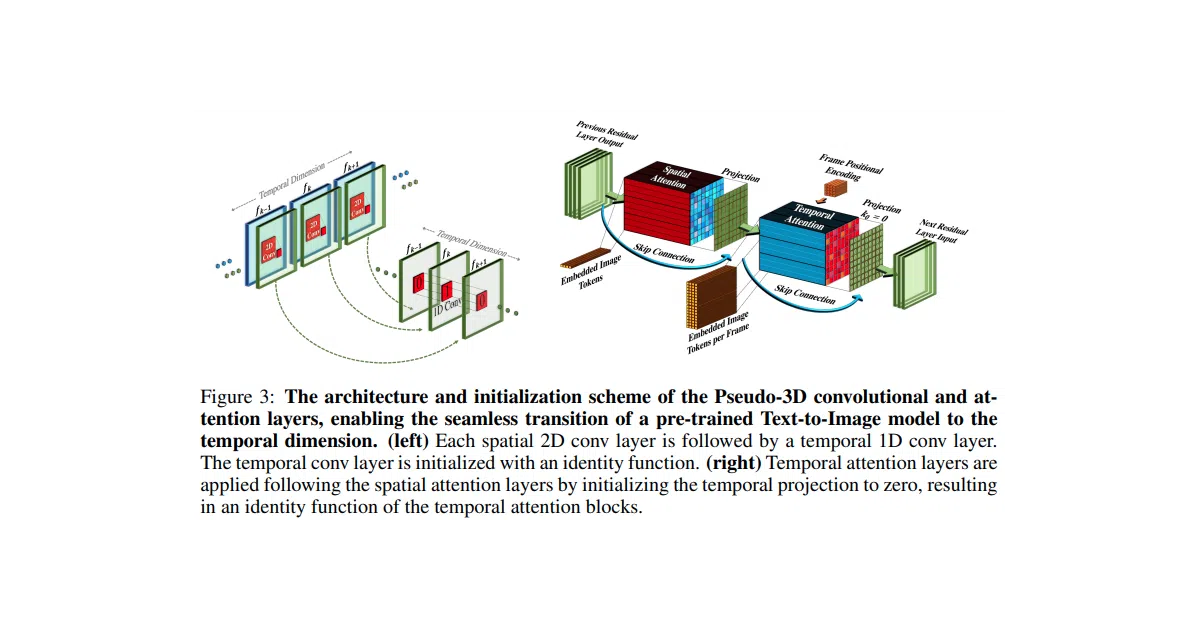
This repo implements the core building blocks of Meta AI’s Make-A-Video paper in PyTorch. It provides PseudoConv3d, SpatioTemporalAttention, and a SpaceTimeUnet that can be trained on still images and then promoted to video generation without architectural surgery. The temporal layers initialize as identity functions, so image pretraining Just Works™.
The interesting bit The insight is almost insultingly simple: instead of building a native 3D model from scratch, bolt temporal attention and pseudo-3D convolutions onto a text-to-image backbone like DALL-E 2. The README notes this “skimp on compute cost” approach has even shown up in protein contact prediction, which is a nice reminder that video and biology occasionally share math.
Key highlights
SpaceTimeUnetaccepts both 2D images and 3D video tensors, automatically skipping temporal logic when there are no frames to attend to.- Temporal modules initialize as identity, so you can pretrain on images and fine-tune on video without rewriting your pipeline.
- Includes Flash Attention support and recent positional-embedding tricks.
- Explicitly designed to slot into existing diffusion U-Nets rather than stand alone.
Caveats
- The repo is marked wip, and integration with
dalle2-pytorchfor end-to-end training is still on the todo list. - You get the Lego bricks, not the finished castle: no training loop, dataset loader, or pretrained weights are provided.
Verdict Grab this if you are building a custom diffusion video model and want a battle-tested spatial-to-temporal upgrade path. Skip it if you need a turnkey text-to-video API; this is library code, not a product.
Frequently asked
- What is lucidrains/make-a-video-pytorch?
- A modular PyTorch implementation of Meta’s generator that lets you pretrain spatial layers on images before flipping the temporal switch.
- Is make-a-video-pytorch open source?
- Yes — lucidrains/make-a-video-pytorch is open source, released under the MIT license.
- What language is make-a-video-pytorch written in?
- lucidrains/make-a-video-pytorch is primarily written in Python.
- How popular is make-a-video-pytorch?
- lucidrains/make-a-video-pytorch has 2k stars on GitHub.
- Where can I find make-a-video-pytorch?
- lucidrains/make-a-video-pytorch is on GitHub at https://github.com/lucidrains/make-a-video-pytorch.