lobehub/lobe-vidol
LLM Chat, But Your Model Wears a VRM and Dances
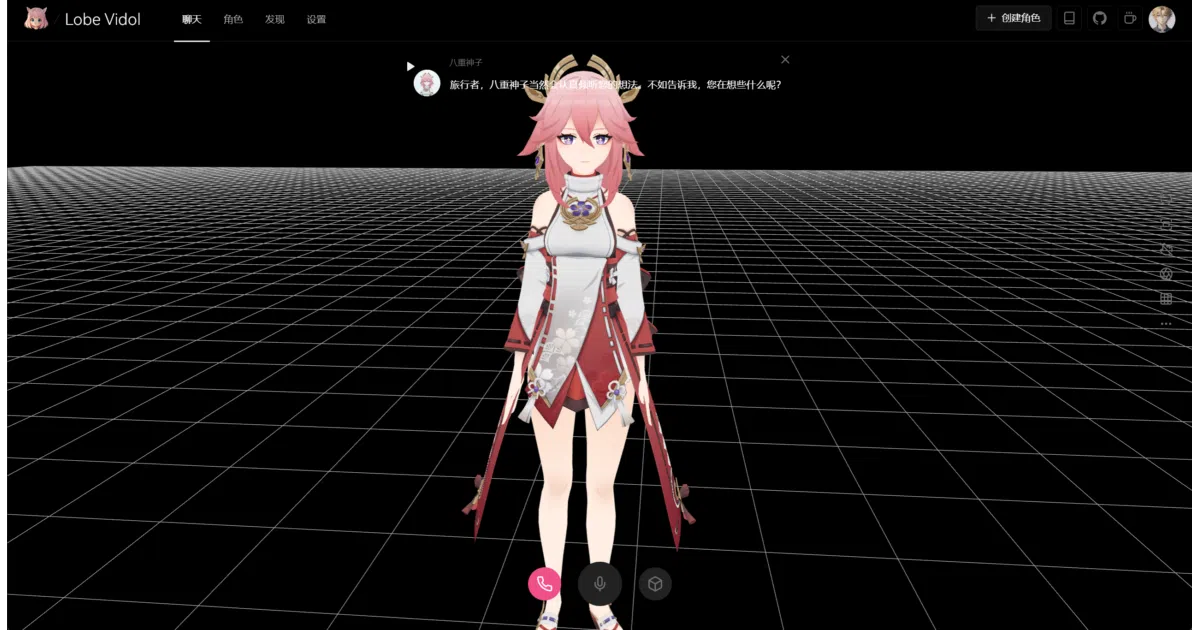
Lobe Vidol wraps LLMs in VRM avatars, giving them voices, stages, and a library of MMD dance moves to perform while they answer your questions.
Not currently ranked — collecting fresh signals.
star history
What it does
Lobe Vidol is a Next.js platform that turns LLM conversations into theatrical performances. You pick a character from a marketplace—or upload your own VRM model—choose an AI backend from over a dozen providers, and chat via text or voice. In video chat mode, the character appears on a 3D stage, strikes Mixamo poses, and can load MMD dance files while it responds.
The interesting bit
The project treats the language model as just another cast member. It bolts together a character marketplace with automated i18n, a dance marketplace for MMD resources, VRM model support, touch-response editing, and TTS/STT synthesis into a single PWA. That breadth of integration—chat infrastructure, 3D rendering pipeline, and content marketplace—is the whole point.
Key highlights
- Supports a wide roster of LLM providers (Anthropic Claude, Google Gemini, AWS Bedrock, Groq, DeepSeek, Qwen, and several others).
- Built-in character editor for VRM models with customizable touch responses and stage backgrounds.
- MMD parser integration for loading
.vmddance files and.pmxstages. - TTS and STT via OpenAI Audio and Microsoft Edge Speech.
- Character and dance marketplaces with community submissions and automated internationalization.
Caveats
- The project is explicitly in early beta, so expect rough edges and shifting APIs.
- The README lists many model providers but does not clarify which features work offline or how self-hosting affects the 3D asset pipeline.
Verdict
Worth a look if you are building VTuber tools, AI companions, or any interface where an avatar needs to emote beyond text bubbles. Skip it if you just need a headless chat API client.
Frequently asked
- What is lobehub/lobe-vidol?
- Lobe Vidol wraps LLMs in VRM avatars, giving them voices, stages, and a library of MMD dance moves to perform while they answer your questions.
- Is lobe-vidol open source?
- Yes — lobehub/lobe-vidol is open source, released under the Apache-2.0 license.
- What language is lobe-vidol written in?
- lobehub/lobe-vidol is primarily written in TypeScript.
- How popular is lobe-vidol?
- lobehub/lobe-vidol has 994 stars on GitHub.
- Where can I find lobe-vidol?
- lobehub/lobe-vidol is on GitHub at https://github.com/lobehub/lobe-vidol.