lihongxun945/gobang
Classic game AI without the neural-network hype
A browser-based Gomoku AI built from scratch with Minimax and Alpha-Beta pruning, plus a nine-part tutorial on how it actually works.
Not currently ranked — collecting fresh signals.
star history
What it does
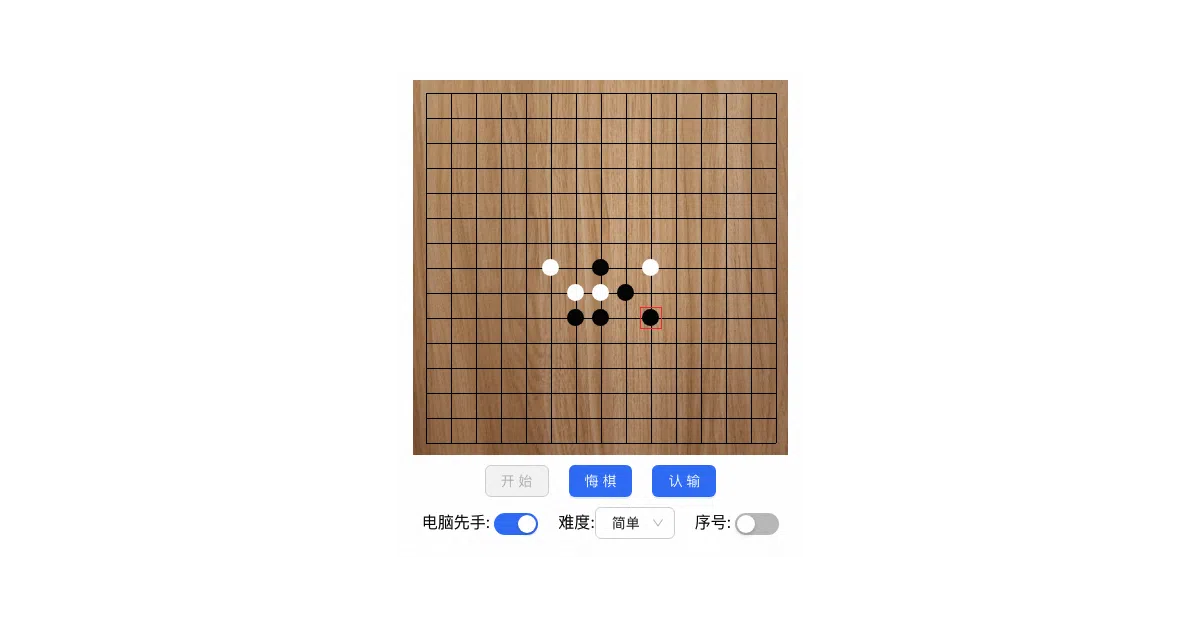
This is a pure-frontend Gomoku (five-in-a-row) AI written in JavaScript. It runs entirely in the browser, plays at adjustable difficulty levels, and ships with a React-based UI. No server-side compute, no model downloads, no TensorFlow — just search algorithms doing their thing.
The interesting bit
The author is admirably upfront: the algorithms aren’t original, the AI isn’t world-class, and the code has rough edges. What makes this project stand out is the nine-part tutorial series walking through Minimax search, Alpha-Beta pruning, heuristic evaluation, iterative deepening, Zobrist hashing, and killer-move detection — essentially a complete undergraduate AI course project, documented in public.
Key highlights
- Pure JS implementation with no neural networks or reinforcement learning
- Difficulty levels controlled by search depth (deeper = stronger but slower)
- Runs offline after initial page load
- V3 rewrite (Nov 2023) simplified the codebase and fixed occasional blundering
- Nine detailed tutorial blog posts in Chinese, from basics to performance optimization
- Companion repo exploring AlphaZero-style approach with TensorFlow for comparison
Caveats
- Search depth is intentionally shallow due to browser JS performance limits; the author explicitly warns the AI “isn’t very strong”
- Tutorial code differs from repo code (same principles, different implementation)
- Node version compatibility (v16–20) is “not thoroughly tested”
Verdict
Grab this if you want to understand classical game AI from the ground up, or need a teaching example that doesn’t hide behind abstraction libraries. Skip it if you’re looking for a competitive Gomoku engine or a plug-and-play ML demo.
Frequently asked
- What is lihongxun945/gobang?
- A browser-based Gomoku AI built from scratch with Minimax and Alpha-Beta pruning, plus a nine-part tutorial on how it actually works.
- Is gobang open source?
- Yes — lihongxun945/gobang is an open-source project tracked on heatdrop.
- What language is gobang written in?
- lihongxun945/gobang is primarily written in JavaScript.
- How popular is gobang?
- lihongxun945/gobang has 1.8k stars on GitHub.
- Where can I find gobang?
- lihongxun945/gobang is on GitHub at https://github.com/lihongxun945/gobang.