jiep/offensive-ai-compilation
A field guide to making AI models misbehave
A curated index of papers, tools, and tactics for attacking machine learning systems—plus the defenses that try to stop them.
Not currently ranked — collecting fresh signals.
star history
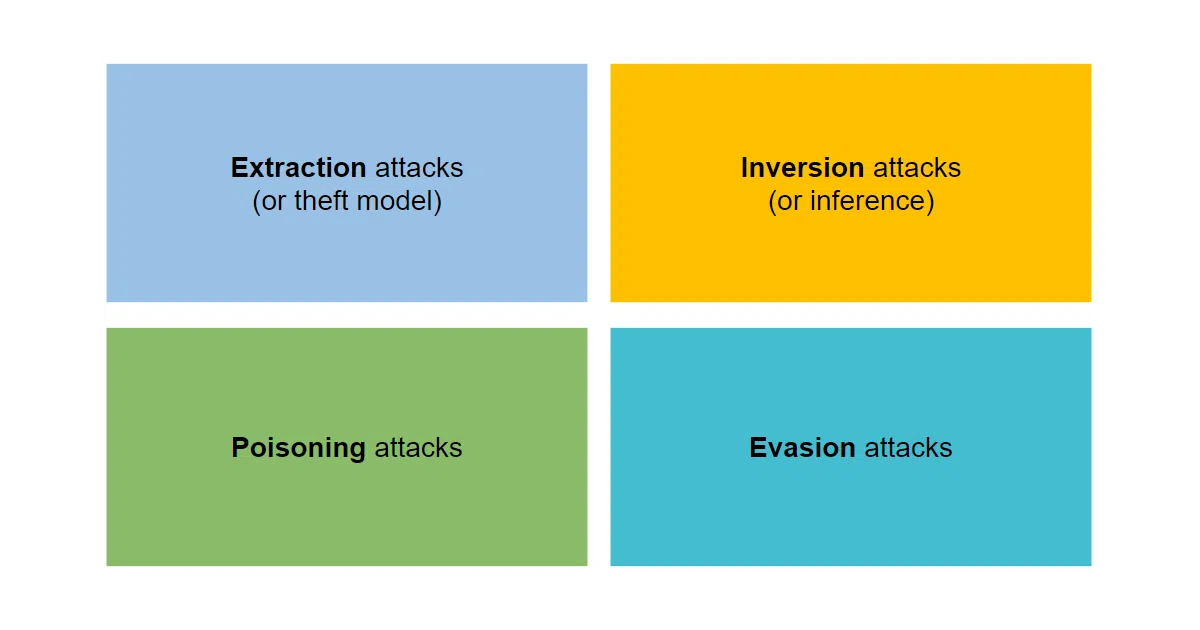
What it does This repository is a curated list of resources covering Offensive AI: adversarial machine learning attacks, generative AI abuse, and practical tooling for pentesters and researchers. It catalogs extraction, inversion, poisoning, and evasion attacks alongside defensive countermeasures, plus sections on malware, phishing, OSINT, and generative AI misuse across audio, image, video, and text modalities.
The interesting bit The README doesn’t just dump links—it taxonomizes. Each attack category (extraction, inversion, poisoning, evasion) gets its own conceptual diagram, limitations section, defensive actions, and annotated paper trail. It’s a textbook masquerading as a GitHub repo, and the generative AI section reads like a sober inventory of capabilities that sci-fi warned us about.
Key highlights
- Four core adversarial ML attack types with visual explainers: extraction, inversion, poisoning, evasion
- Generative AI misuse broken down by medium: audio deepfakes, image manipulation, video synthesis, text generation
- Practical tooling sections including ART and Cleverhans frameworks
- Each attack category paired with specific defensive actions (differential privacy, homomorphic encryption, ensemble methods)
- Extensive paper links with arXiv/ACM/IEEE sourcing, plus related GitHub repos with star counts
Caveats
- The README is heavy on emoji taxonomy; navigation requires patience
- Some sections (notably evasion and backdoors) were truncated in the provided source
- No code in the repo itself—this is purely a reference compilation
Verdict Security researchers, red teamers, and ML engineers building threat models should bookmark this. If you’re looking for runnable exploits, look elsewhere; this is the map, not the territory.
Frequently asked
- What is jiep/offensive-ai-compilation?
- A curated index of papers, tools, and tactics for attacking machine learning systems—plus the defenses that try to stop them.
- Is offensive-ai-compilation open source?
- Yes — jiep/offensive-ai-compilation is open source, released under the CC-BY-SA-4.0 license.
- What language is offensive-ai-compilation written in?
- jiep/offensive-ai-compilation is primarily written in HTML.
- How popular is offensive-ai-compilation?
- jiep/offensive-ai-compilation has 1.4k stars on GitHub.
- Where can I find offensive-ai-compilation?
- jiep/offensive-ai-compilation is on GitHub at https://github.com/jiep/offensive-ai-compilation.