jianchang512/stt
Self-hosted speech-to-text that mimics OpenAI’s API
Wraps faster-whisper in a local web UI and OpenAI-compatible API so you can transcribe audio without cloud bills.
Not currently ranked — collecting fresh signals.
star history
What it does
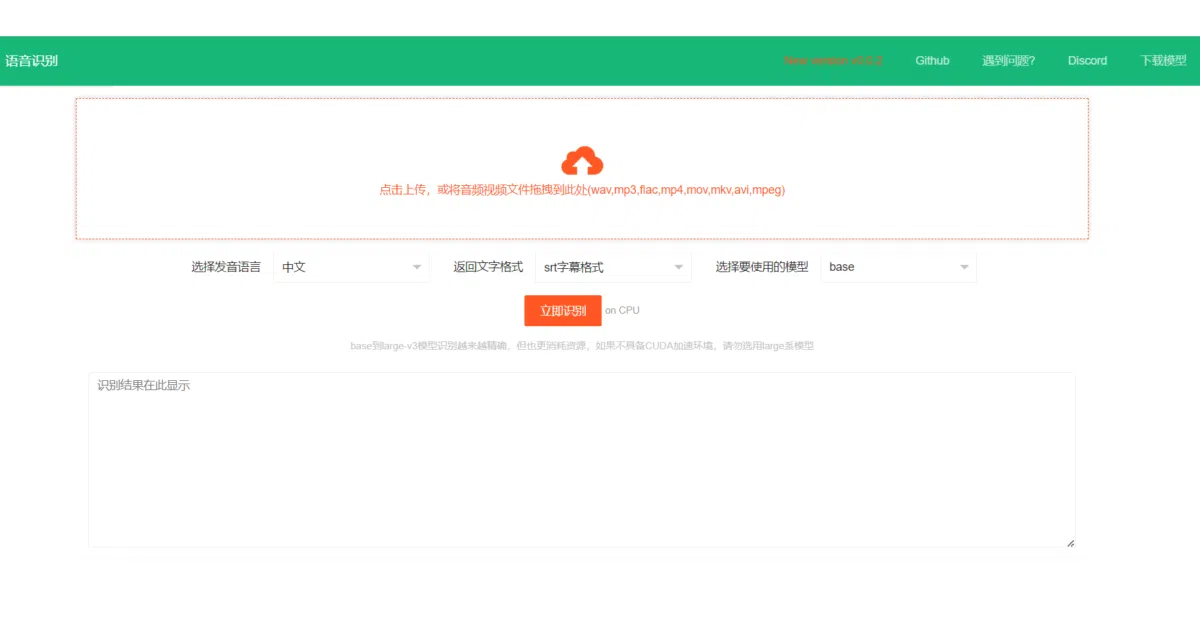
This is a local, offline transcription tool that wraps the faster-whisper inference engine in a web interface and API layer. You upload audio or video through a browser tab, and it returns plain text, JSON, or timestamped SRT subtitles. It is designed as a drop-in substitute for OpenAI’s transcription API or Baidu’s speech service, running entirely on your own hardware.
The interesting bit
Instead of exposing a generic REST endpoint, it mimics OpenAI’s API format at http://127.0.0.1:9977/v1, so existing client code can switch to local hosting with a one-line URL change. For Windows users, a precompiled binary is available that launches the server and opens the UI automatically.
Key highlights
- Runs fully offline using faster-whisper models from tiny up to large-v3
- Browser-based drag-and-drop UI plus a local REST API on port 9977
- OpenAI-compatible transcription endpoint for easy client migration
- Outputs plain text, JSON, or SRT subtitles with timestamps
- Supports 15 languages including Chinese, English, Japanese, and Arabic
Caveats
- Large models can exhaust RAM or GPU VRAM; the README warns against using
large-v3without proper NVIDIA hardware and CUDA setup, and notes that sub-8 GB cards should avoid large models on files over 20 MB - Chinese transcription may occasionally output traditional characters instead of simplified
- Windows CUDA setup is fragile: missing
cuBLASDLLs or misconfiguredcudnncan cause silent crashes or “cublasxx.dll not found” errors
Verdict
Best for developers who need a private, offline replacement for cloud transcription APIs without rewriting client code. Look elsewhere if you want managed autoscaling or a polished SaaS experience; this is a local tool that demands manual model management and careful VRAM budgeting.
Frequently asked
- What is jianchang512/stt?
- Wraps faster-whisper in a local web UI and OpenAI-compatible API so you can transcribe audio without cloud bills.
- Is stt open source?
- Yes — jianchang512/stt is open source, released under the GPL-3.0 license.
- What language is stt written in?
- jianchang512/stt is primarily written in Python.
- How popular is stt?
- jianchang512/stt has 4.8k stars on GitHub.
- Where can I find stt?
- jianchang512/stt is on GitHub at https://github.com/jianchang512/stt.