interstellard/chatgpt-advanced
A local browser patch for ChatGPT's missing web access
It feeds ChatGPT live web results so it can answer beyond its training cutoff, without phoning home to a backend.
Not currently ranked — collecting fresh signals.
star history
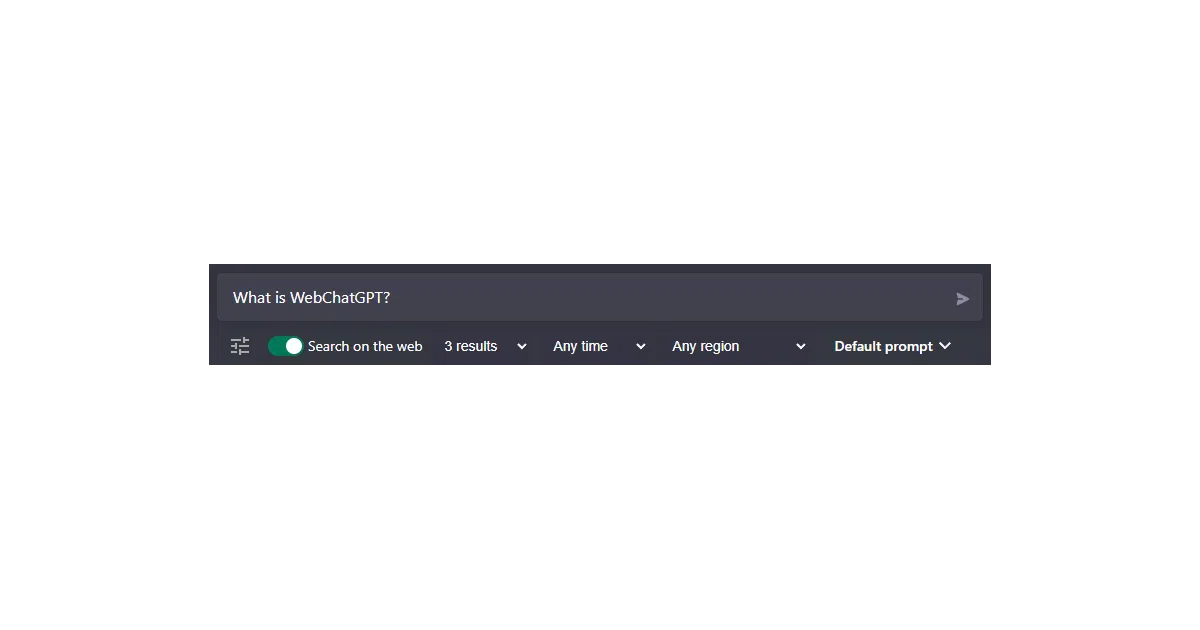
What it does WebChatGPT is a browser extension for Chrome, Firefox, and Edge that appends live web search results to your ChatGPT prompts. It can also pull text from specific URLs you paste in. The idea is to paper over the model’s knowledge cutoff by injecting current information directly into the conversation. All the search and scraping logic stays in your browser; there is no remote backend.
The interesting bit Because everything runs client-side, the extension needs permission to touch any website—not for data harvesting, but because it must query search engines and fetch arbitrary pages on its own. That local-only architecture is the boring part that actually matters: it is the reason the authors can credibly claim the extension collects no user data.
Key highlights
- Operates entirely inside the browser with no backend server or analytics.
- Supports Chrome, Firefox, and Microsoft Edge.
- Two modes: broad web search and targeted webpage text extraction.
- Explicitly claims no user data collection; all requests originate from the local extension.
- The GitHub repository stopped receiving updates after June 30, 2023, as the authors shifted to server-side features requiring user credentials.
Caveats
- The codebase is frozen; the authors moved development to a closed product that relies on server-side logic and user accounts.
- Requires broad
access to all websitespermissions, which the README defends as necessary for local search and URL fetching but which will still raise eyebrows. - Known to conflict with other ChatGPT browser extensions, sometimes causing its toolbar to vanish completely.
Verdict A decent choice if you want a purely client-side stopgap for ChatGPT’s stale knowledge, provided you can tolerate unmaintained code and wide permission grants. If you prefer actively supported tools or a narrower security footprint, keep looking.
Frequently asked
- What is interstellard/chatgpt-advanced?
- It feeds ChatGPT live web results so it can answer beyond its training cutoff, without phoning home to a backend.
- Is chatgpt-advanced open source?
- Yes — interstellard/chatgpt-advanced is open source, released under the MIT license.
- What language is chatgpt-advanced written in?
- interstellard/chatgpt-advanced is primarily written in TypeScript.
- How popular is chatgpt-advanced?
- interstellard/chatgpt-advanced has 6.4k stars on GitHub.
- Where can I find chatgpt-advanced?
- interstellard/chatgpt-advanced is on GitHub at https://github.com/interstellard/chatgpt-advanced.