imhuso/cunzhi
An MCP server that refuses to let your AI ghost you
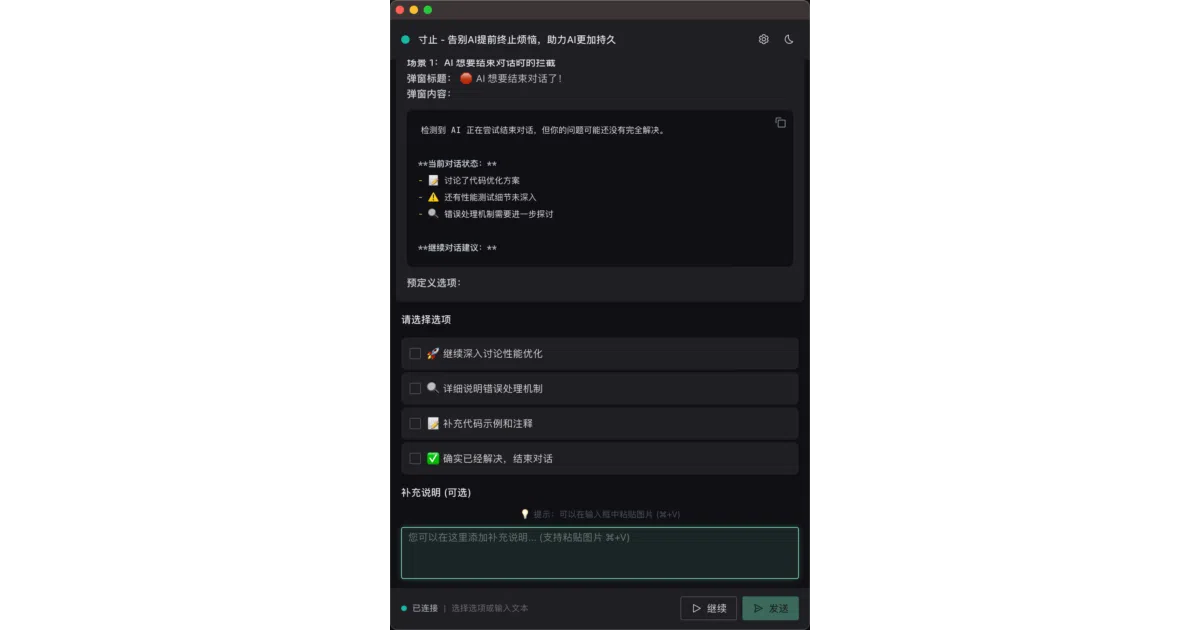
When your assistant tries to sign off with "anything else?", this Rust MCP server pops up to ask if you're actually done.
Not currently ranked — collecting fresh signals.
star history
What it does 寸止 is a Rust/Tauri MCP server that steps in when your AI assistant tries to end a conversation early. It triggers a native popup asking whether you are actually finished, and also provides per-project memory storage and a semantic code search tool so the assistant has fewer excuses to bow out in the first place.
The interesting bit The README embraces a memorable, slightly blush-inducing metaphor about “premature” conversation endings. The technical trick is using MCP to interrupt the chat flow: instead of letting the AI sign off with a passive “anything else?”, the server forces a binary GUI decision—continue or stop—right at the moment of attempted escape.
Key highlights
- Intercepts AI exit attempts via MCP tool calls that spawn native continuation popups
- Remembers per-project development preferences and specifications across sessions
- Includes a semantic code search tool, rewritten in Rust from the
acemcpproject, to help AI parse codebase structure - Ships as cross-platform desktop binaries (
寸止for the MCP server,等一下for the settings GUI) - Supports Markdown rendering and multiple input methods in its popups and settings
Caveats
- The README documents Homebrew 404 errors caused by mismatched version caches, suggesting release hygiene is still being worked out
- Requires an MCP-compatible client such as Claude Desktop; it is not a standalone chat interface
- The project’s explicit branding metaphor may not travel well into all workplace contexts
Verdict Give it a spin if you already run an MCP-compatible AI client and are tired of assistants copping out mid-task. Everyone else—including the command-line purists and the easily embarrassed—can probably sit this one out.
Frequently asked
- What is imhuso/cunzhi?
- When your assistant tries to sign off with "anything else?", this Rust MCP server pops up to ask if you're actually done.
- Is cunzhi open source?
- Yes — imhuso/cunzhi is open source, released under the MIT license.
- What language is cunzhi written in?
- imhuso/cunzhi is primarily written in Rust.
- How popular is cunzhi?
- imhuso/cunzhi has 1.4k stars on GitHub.
- Where can I find cunzhi?
- imhuso/cunzhi is on GitHub at https://github.com/imhuso/cunzhi.