guardrails-ai/guardrails
LLM output validation that actually enforces structure, not just hopes
A Python framework for intercepting, validating, and structuring LLM inputs and outputs before they reach production.
Not currently ranked — collecting fresh signals.
star history
What it does
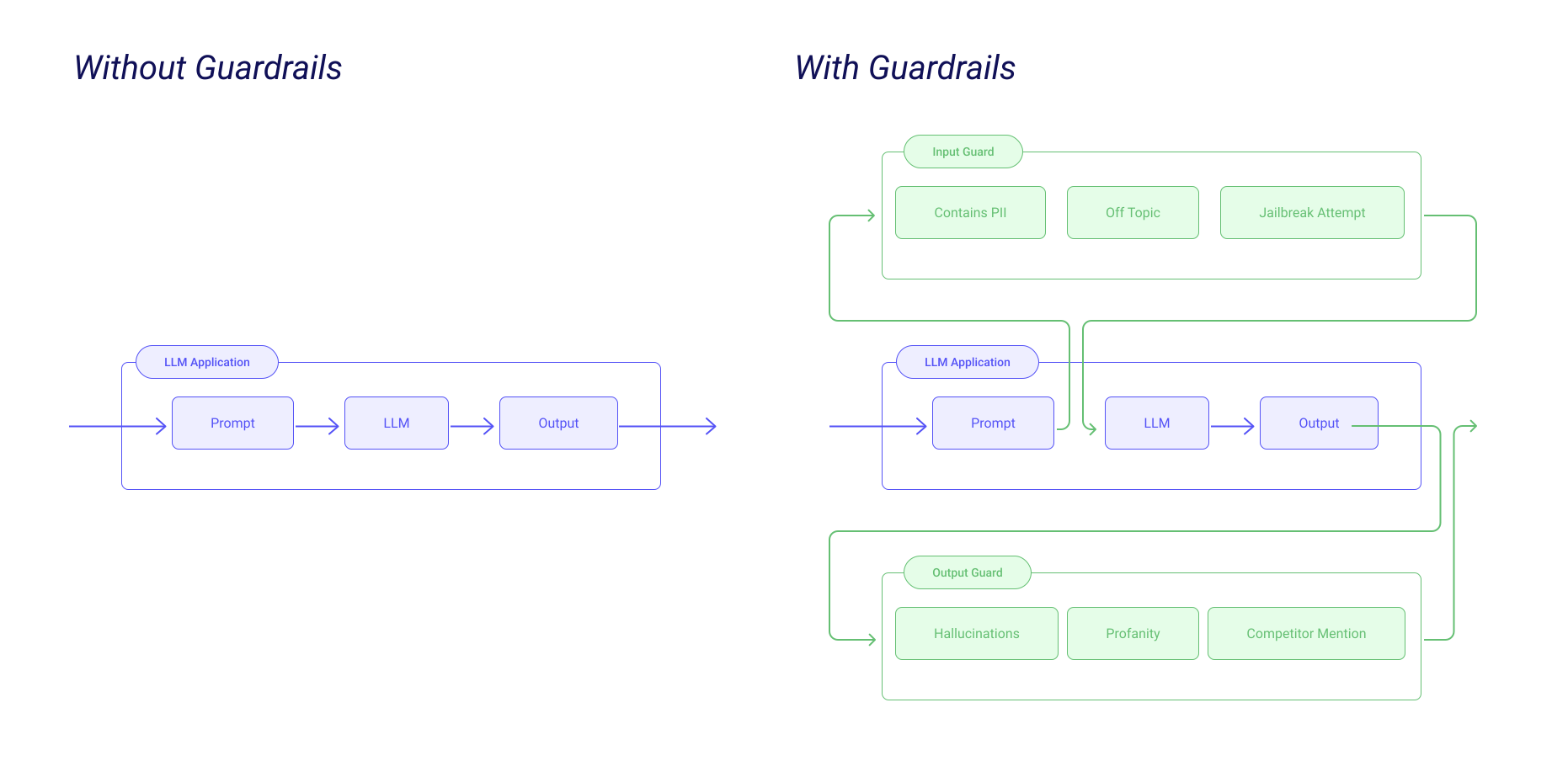
Guardrails wraps your LLM calls with composable validators that check inputs and outputs for specific risks—toxicity, competitor mentions, regex mismatches, whatever you install from their Hub. It also coerces unstructured LLM responses into Pydantic models, falling back to prompt engineering when function calling isn’t available.
The interesting bit
The dual personality: it’s both a bouncer (rejecting bad outputs) and a translator (forcing structure on reluctant models). The Guard abstraction lets you stack multiple validators and fail with exceptions, corrections, or whatever action you define. There’s even a Flask server mode so you can proxy OpenAI calls through it without touching client code.
Key highlights
- Validator ecosystem via Guardrails Hub—24+ pre-built checks across 6 risk categories, per their self-published benchmark
- Pydantic-native structured output with automatic fallback from function calling to prompt optimization
- Composable
Guardobjects that run multiple validators in one pass - Standalone server mode with OpenAI-compatible API proxying
- JavaScript client support alongside Python
Caveats
- The “Guardrails Index” benchmark is self-published by the project authors, not independent
- Server mode documentation leans heavily on development setup; production deployment guidance is brief (Docker + Gunicorn mentioned, details elsewhere)
- Custom validators require buying into the Hub CLI workflow
Verdict
Worth a look if you’re shipping LLM features to production and need more than optimistic parsing. Skip if your LLM usage is casual or you already have a validation layer you’re happy with.
Frequently asked
- What is guardrails-ai/guardrails?
- A Python framework for intercepting, validating, and structuring LLM inputs and outputs before they reach production.
- Is guardrails open source?
- Yes — guardrails-ai/guardrails is open source, released under the Apache-2.0 license.
- What language is guardrails written in?
- guardrails-ai/guardrails is primarily written in Python.
- How popular is guardrails?
- guardrails-ai/guardrails has 7.6k stars on GitHub.
- Where can I find guardrails?
- guardrails-ai/guardrails is on GitHub at https://github.com/guardrails-ai/guardrails.