cure-lab/MagicDrive
Diffusion models learn to read maps and check mirrors
Synthetic street-view generator that turns bird's-eye-view maps, 3D bounding boxes, and text prompts into multiview driving footage for perception training.
Not currently ranked — collecting fresh signals.
star history
What it does
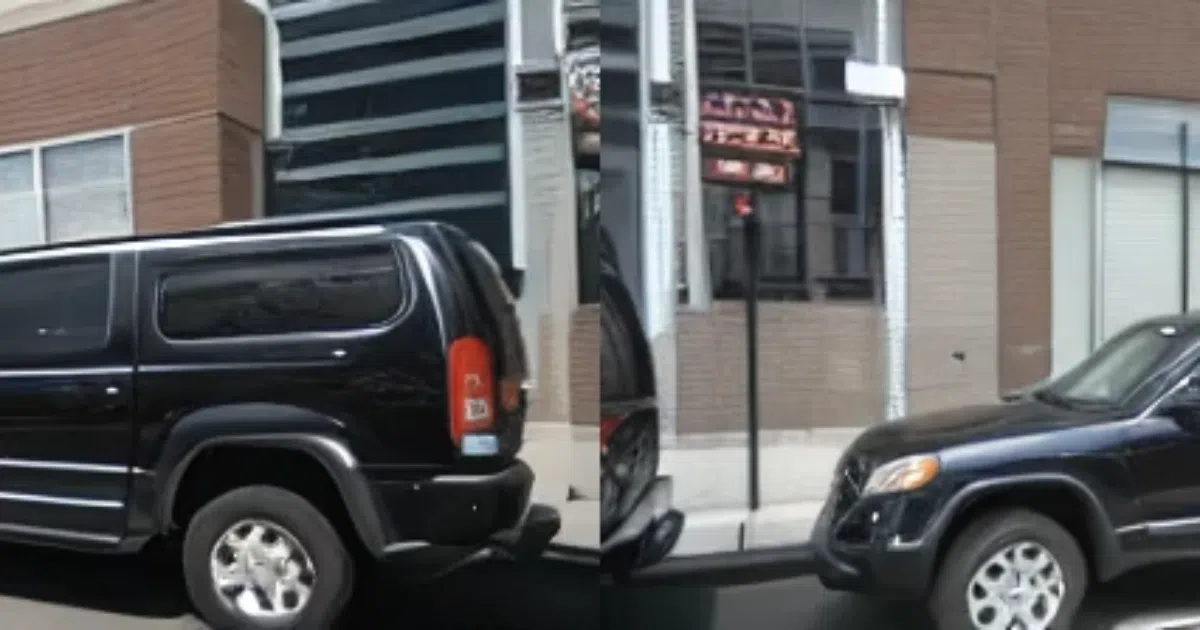
MagicDrive is a diffusion framework built atop Stable Diffusion v1.5 that synthesizes street-view images and videos from nuScenes driving data. It accepts Bird’s-Eye View road maps, 3D bounding boxes, camera poses, and text prompts as conditioning, then generates multiview outputs designed to train or augment BEV segmentation and 3D object detection pipelines. The project also ships an interactive Gradio GUI for fiddling with bounding boxes without touching code.
The interesting bit
The trick is injecting rigid 3D structure into a 2D diffusion model without letting geometry collapse. The authors use tailored encoders and a cross-view attention module to keep multiple camera perspectives consistent—useful when you’re generating training data for multi-camera vehicle rigs rather than art projects.
Key highlights
- Generates both images and up to 60-frame videos (on the
videobranch) at resolutions up to 424×800 - Conditions on 3D bounding boxes, BEV road maps, camera poses, and text via cross-attention and additive encoder branches
- Includes an interactive GUI for editing bounding boxes and prompts in a browser
- Provides pretrained checkpoints and training configs for multiple resolutions
- Built as a research artifact with third-party dependencies including
BEVFusionanddiffusers
Caveats
- Training expects eight V100s and a full nuScenes setup, so reproducing from scratch is hardware-hungry
- The environment pins older PyTorch and CUDA versions (1.10.2 / 10.2), which may clash with modern stacks
- Video generation and its checkpoints live on a separate
videobranch, not the default
Verdict
Perception researchers and autonomous-driving teams starved for diverse, structured training data should take a look. If you just want pretty car pictures without metric accuracy, standard Stable Diffusion is less work.
Frequently asked
- What is cure-lab/MagicDrive?
- Synthetic street-view generator that turns bird's-eye-view maps, 3D bounding boxes, and text prompts into multiview driving footage for perception training.
- Is MagicDrive open source?
- Yes — cure-lab/MagicDrive is open source, released under the Apache-2.0 license.
- What language is MagicDrive written in?
- cure-lab/MagicDrive is primarily written in Python.
- How popular is MagicDrive?
- cure-lab/MagicDrive has 1.2k stars on GitHub.
- Where can I find MagicDrive?
- cure-lab/MagicDrive is on GitHub at https://github.com/cure-lab/MagicDrive.