buaacyw/MeshAnythingV2
Autoregressive retopology: teaching transformers mesh grammar
Turn dense 3D blobs and point clouds into clean, artist-retopologized meshes with an autoregressive transformer.
Not currently ranked — collecting fresh signals.
star history
What it does
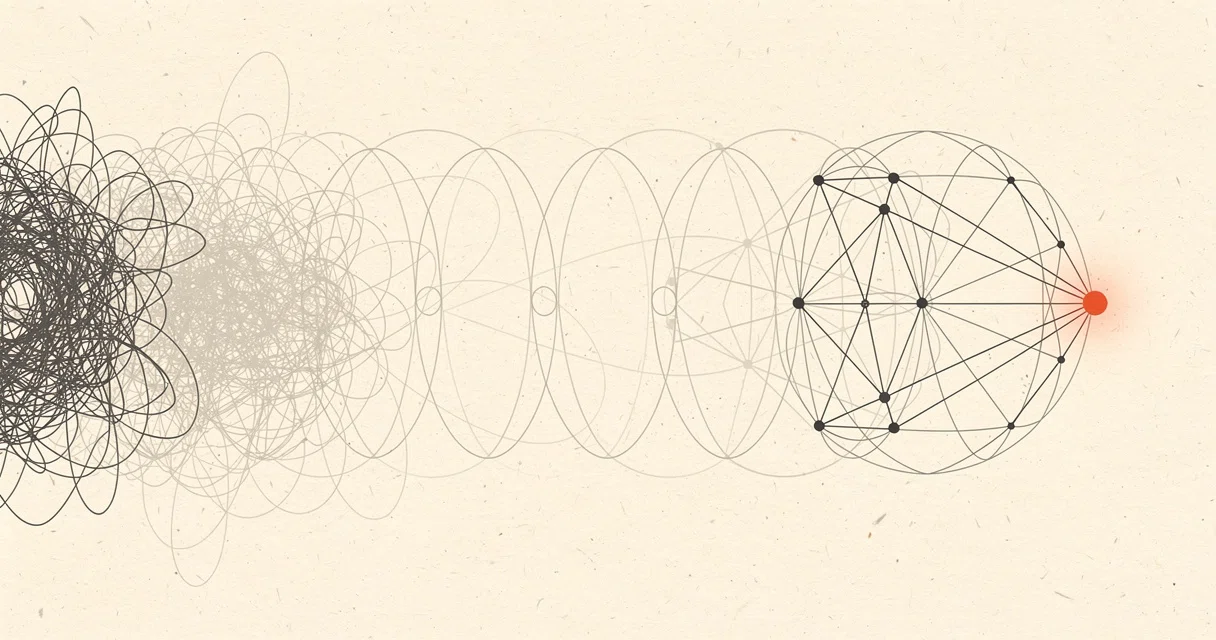
MeshAnything V2 is a retopology engine disguised as a generative model. Feed it a dense mesh, a point cloud with normals, or the output of a text-to-3D pipeline like Rodin, and it spits out a clean, artist-style mesh capped at 1,600 faces. It is essentially a specialized translator: it takes geometric soup and rewrites it in the structured grammar of human-made topology.
The interesting bit
The trick is “adjacent mesh tokenization”—the authors turned mesh faces into a vocabulary that an autoregressive transformer can predict sequentially, like sentence completion but for triangles. This lets the model reason about local mesh structure while generating the whole surface, rather than just warping vertices in place.
Key highlights
- Converts dense meshes or point clouds into clean, artist-created meshes with ≤1,600 faces
- Built on an autoregressive transformer with a custom adjacent mesh tokenization scheme
- Suggested workflow pairs with text/image-to-3D tools (e.g., Rodin) for a full generative pipeline
- Requires about 8 GB VRAM and roughly 45 seconds per mesh on an A6000 GPU
- Ships with a local Gradio demo, training scripts, and Objaverse-derived training data
Caveats
- Hard ceiling of 1,600 faces: the model was trained only on simpler meshes and cannot represent complex shapes needing more detail
- Demands sharp, high-quality input; the authors warn that feed-forward 3D generation methods often produce bad results
- Point cloud inputs must include normals in a specific
.npyformat; mesh inputs should be +Y-up and ideally preprocessed with Marching Cubes
Verdict
Worth a look if you need automated retopology for scanned or dense-generated assets and can live within a 1,600-face budget. Skip it if you are looking for a direct text-to-mesh solution or need high-poly detail preservation.
Frequently asked
- What is buaacyw/MeshAnythingV2?
- Turn dense 3D blobs and point clouds into clean, artist-retopologized meshes with an autoregressive transformer.
- Is MeshAnythingV2 open source?
- Yes — buaacyw/MeshAnythingV2 is an open-source project tracked on heatdrop.
- What language is MeshAnythingV2 written in?
- buaacyw/MeshAnythingV2 is primarily written in Python.
- How popular is MeshAnythingV2?
- buaacyw/MeshAnythingV2 has 1k stars on GitHub.
- Where can I find MeshAnythingV2?
- buaacyw/MeshAnythingV2 is on GitHub at https://github.com/buaacyw/MeshAnythingV2.