Zephery/weiboanalysis
A Chinese student's thesis: sentiment analysis with SVM, Bayes, and AdaBoost
An undergraduate project that pipelines three classic classifiers to judge Weibo post sentiment, warts and all.
Not currently ranked — collecting fresh signals.
star history
What it does
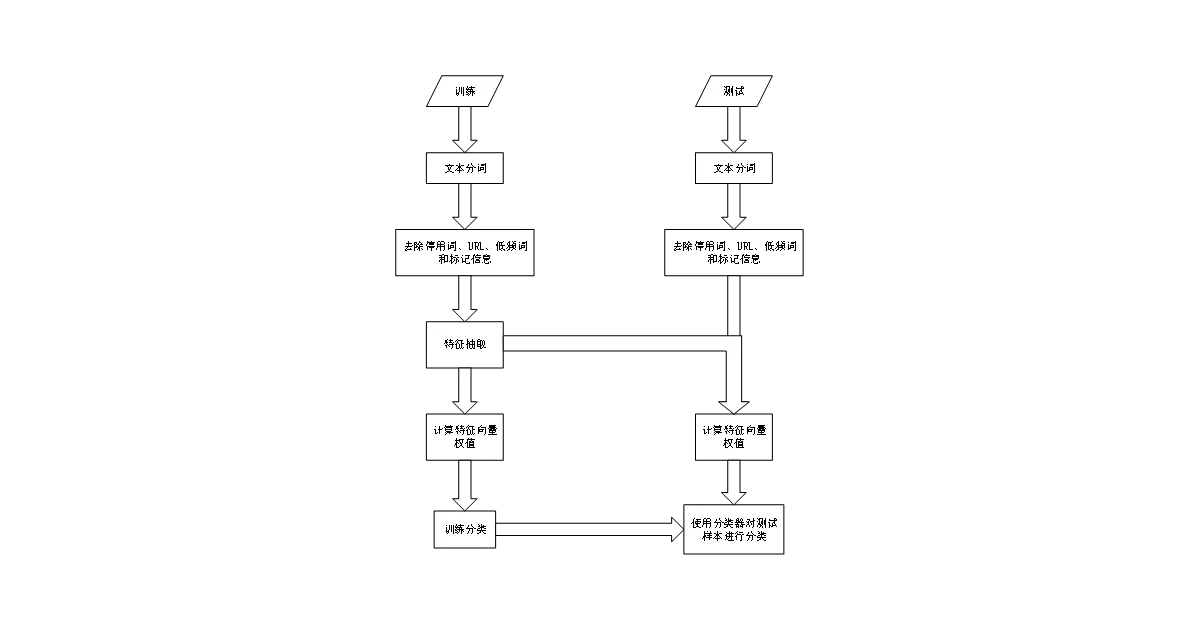
This repo implements a full text-classification pipeline for Chinese Weibo posts: fetch posts via a companion scraper, run SVM for initial classification, apply Naive Bayes for sentiment scoring, then boost everything with AdaBoost (both binary and multiclass SAMME variants). It is explicitly framed as a graduation thesis project.
The interesting bit
The author is refreshingly honest: “the article and code have many errors, just borrow the ideas.” That candor is rarer than the algorithms themselves. The project also serves as a time capsule of 2017-era ML pedagogy — Anaconda 3.5+, hand-rolled ensemble methods, and no deep learning in sight.
Key highlights
- Three-classifier stack: SVM → Naive Bayes → AdaBoost
- Includes both binary and multiclass AdaBoost (SAMME, SAMME.R)
- Companion repo
weibo_gethandles data collection - Full Chinese-language documentation in
/doc - 1,085 stars despite the author’s self-deprecating warnings
Caveats
- Author explicitly states code contains errors and is no longer maintained
- “Mostly referenced from others” — unclear how much is original implementation vs. glue code
- No benchmarks, tests, or reproducibility instructions provided
Verdict
Worth a quick browse if you’re teaching or learning classic ensemble methods and want a realistic example of undergraduate ML work. Skip it if you need production sentiment analysis or modern tooling.
Frequently asked
- What is Zephery/weiboanalysis?
- An undergraduate project that pipelines three classic classifiers to judge Weibo post sentiment, warts and all.
- Is weiboanalysis open source?
- Yes — Zephery/weiboanalysis is open source, released under the Apache-2.0 license.
- What language is weiboanalysis written in?
- Zephery/weiboanalysis is primarily written in Python.
- How popular is weiboanalysis?
- Zephery/weiboanalysis has 1.1k stars on GitHub.
- Where can I find weiboanalysis?
- Zephery/weiboanalysis is on GitHub at https://github.com/Zephery/weiboanalysis.