QwenLM/Qwen-Image-Layered
Diffusion model that reverse-engineers image layers
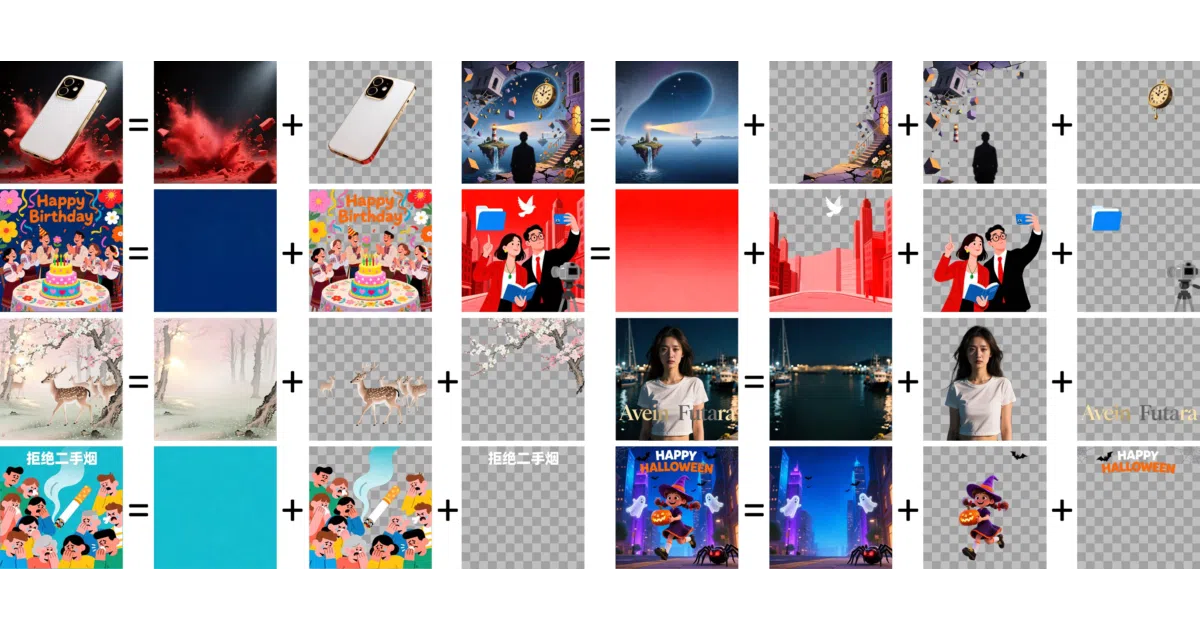
Qwen-Image-Layered decomposes a single image into independent RGBA layers so you can resize, recolor, or delete objects without touching the rest of the scene.
Not currently ranked — collecting fresh signals.
star history
What it does
Qwen-Image-Layered takes a flat image and tears it into multiple RGBA layers—objects, text, background—each with its own transparency mask. Instead of generating pixels from scratch, it reverse-engineers a layered file you can manipulate independently: recolor one element, delete another, or move it without leaving a smudge. The model runs as a diffusers pipeline built on Qwen2.5-VL and exports to standard PNGs, PSDs, or even PowerPoint files.
The interesting bit The model infers structure behind occlusions and supports variable-depth decomposition: you can ask for three layers or eight, then recursively split any layer further. That means you aren’t stuck with a fixed stack; you can keep drilling down until the granularity suits your edit.
Key highlights
- Decomposes a single image into RGBA layers, enabling independent resize, reposition, and recolor operations
- Supports variable-layer decomposition and recursive splitting of any layer into finer sub-layers
- Text prompts describe the overall scene including occluded objects, but do not explicitly control the semantic content of individual layers
- Released under Apache 2.0 and integrates with
diffusers, with vLLM-Omni support for inference - Ships with a Gradio interface that exports decomposed layers to PSD, PPTX, and ZIP formats
Caveats
- Text prompts describe the full scene, not individual layers; you cannot explicitly dictate what each layer contains
- The released weights are tuned for image-to-layer decomposition, so text-to-multi-RGBA generation from scratch is limited
Verdict Worth a look if you build image editing tools, design automation pipelines, or just want to stop manually cutting out objects. Skip it if you need a text-to-layer generator from scratch—the model is trained to decompose existing images, not hallucinate layered scenes from a blank canvas.
Frequently asked
- What is QwenLM/Qwen-Image-Layered?
- Qwen-Image-Layered decomposes a single image into independent RGBA layers so you can resize, recolor, or delete objects without touching the rest of the scene.
- Is Qwen-Image-Layered open source?
- Yes — QwenLM/Qwen-Image-Layered is open source, released under the Apache-2.0 license.
- What language is Qwen-Image-Layered written in?
- QwenLM/Qwen-Image-Layered is primarily written in Python.
- How popular is Qwen-Image-Layered?
- QwenLM/Qwen-Image-Layered has 2k stars on GitHub.
- Where can I find Qwen-Image-Layered?
- QwenLM/Qwen-Image-Layered is on GitHub at https://github.com/QwenLM/Qwen-Image-Layered.