QwenLM/Qwen-Image
Alibaba's 20B image model actually reads the text you give it
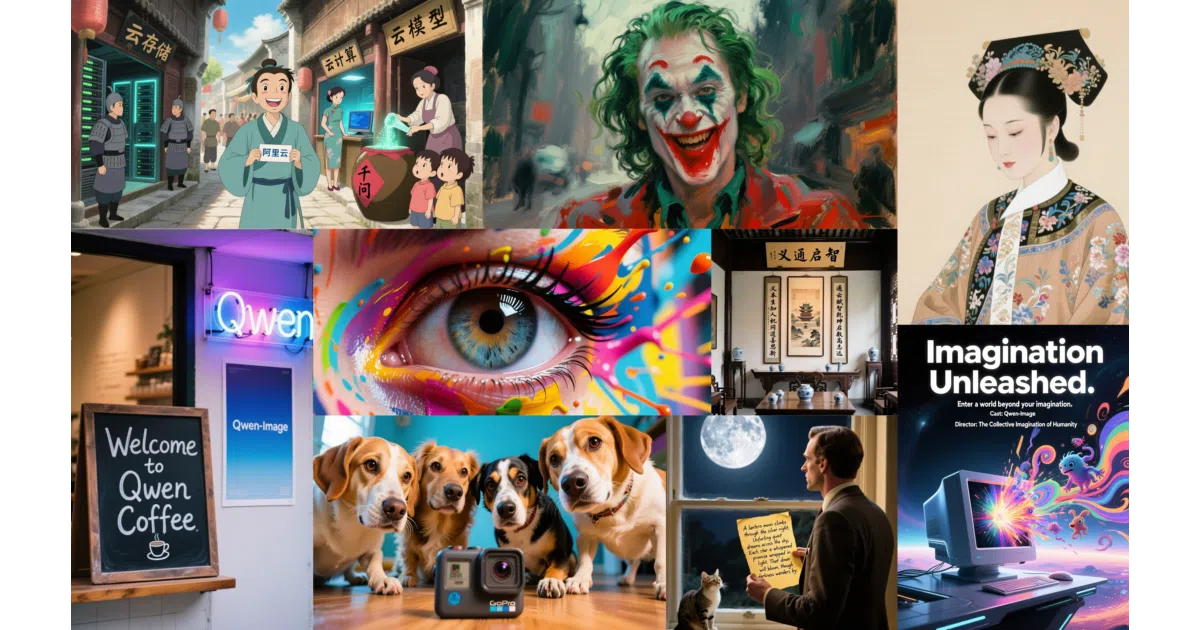
An open-source diffusion model that renders Chinese and English text accurately enough to generate posters, comics, and infographics from prompts.
Not currently ranked — collecting fresh signals.
star history
What it does
Qwen-Image is a 20-billion-parameter MMDiT foundation model for text-to-image generation and image editing. It comes in several variants: the base model for generation, monthly-tuned versions (2512, 2.0), an editing pipeline (Edit-2511), and a layered composition model. The project provides HuggingFace diffusers pipelines, ComfyUI nodes, and online demos through Qwen Chat.
The interesting bit
Most diffusion models mangle text like a bad tattoo artist. Qwen-Image’s unusual strength is rendering complex text—especially Chinese—with correct typography and layout. The 2.0 version claims 1k-token instruction support for direct infographic generation (PPTs, posters, comics), effectively turning prompt engineering into page layout. The edit variant accepts multiple input images and instruction-following prompts for consistent modifications.
Key highlights
- Native 2K resolution support in recent versions; aspect-ratio presets baked into the pipeline API
- Day-0 inference acceleration from multiple projects: vLLM-Omni, LightX2V (claiming 42.55× speedup via distillation), SGLang-Diffusion, and LeMiCa
- Broad hardware support beyond NVIDIA: Hygon, Metax, Ascend, and Cambricon accelerators
- LoRA ecosystem emerging (e.g., MajicBeauty) with ModelScope hosting
- Benchmark claims on T2I-CoreBench and AI Arena, though specific scores aren’t listed in the README
Caveats
- The README warns of “performance misalignments” in earlier Edit versions; identity preservation and instruction following depend on using the latest
diffuserscommit - Requires bleeding-edge dependencies:
transformers>=4.51.3and a git install ofdiffusersfrom source - The 20B parameter count and 2K resolution imply substantial VRAM requirements; CPU fallback exists but is likely impractical for serious use
Verdict
Worth a look if you generate images with embedded text, work with Chinese-language content, or need open-source alternatives to closed editing APIs. Skip if you’re GPU-poor or need a lightweight, stable dependency chain—this is a research-grade model with research-grade setup friction.
Frequently asked
- What is QwenLM/Qwen-Image?
- An open-source diffusion model that renders Chinese and English text accurately enough to generate posters, comics, and infographics from prompts.
- Is Qwen-Image open source?
- Yes — QwenLM/Qwen-Image is open source, released under the Apache-2.0 license.
- What language is Qwen-Image written in?
- QwenLM/Qwen-Image is primarily written in Python.
- How popular is Qwen-Image?
- QwenLM/Qwen-Image has 8k stars on GitHub.
- Where can I find Qwen-Image?
- QwenLM/Qwen-Image is on GitHub at https://github.com/QwenLM/Qwen-Image.