NVIDIA/DeepRecommender
Deep autoencoders that re-feed their own Netflix guesses
A PyTorch research reproduction that refines its own predictions to squeeze Netflix Prize RMSE below 0.91.
Not currently ranked — collecting fresh signals.
star history
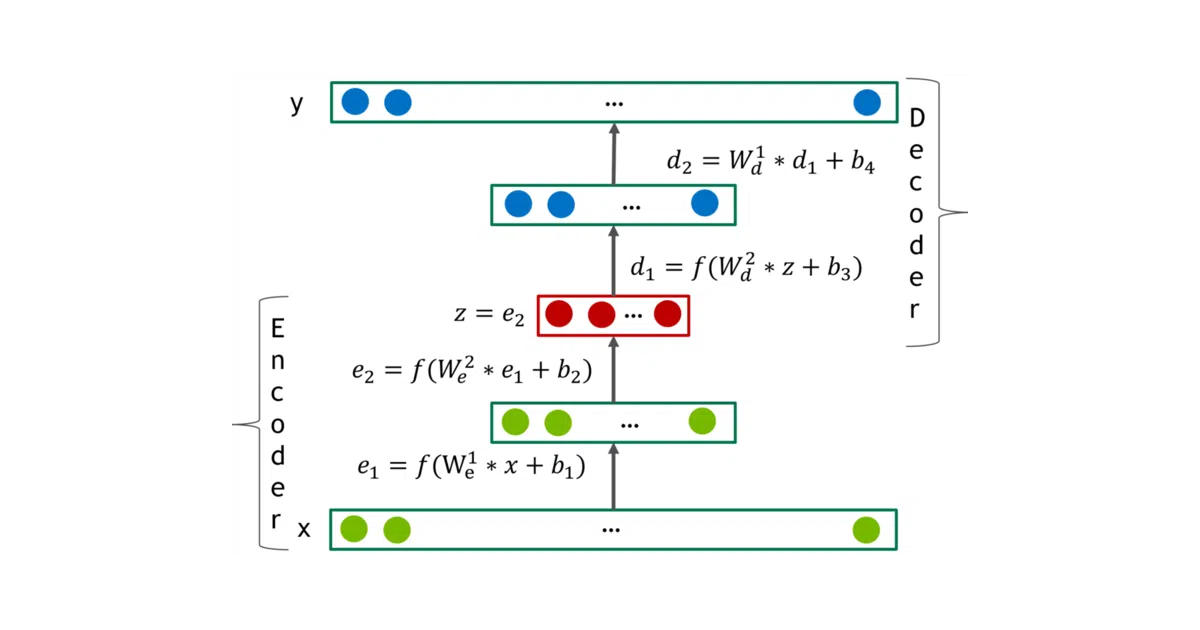
What it does This is a PyTorch implementation of deep autoencoders for collaborative filtering, built to reproduce the paper Training Deep AutoEncoders for Collaborative Filtering. It learns to reconstruct sparse user-rating vectors from the Netflix Prize dataset, predicting unseen ratings by squeezing them through a deep bottleneck and expanding them back out.
The interesting bit The model improves its guesses by applying iterative output re-feeding during training—essentially letting the autoencoder refine its reconstructions in a loop. The README notes this technique is what helps drive the full Netflix dataset RMSE down to roughly 0.9099, using architectures with heavy dropout and SELU activations.
Key highlights
- Reproduces reported results on Netflix Prize subsets, with the full dataset hitting an RMSE of ~0.9099 after sufficient epochs.
- Built on PyTorch and designed to run on NVIDIA GPUs (CUDA 8+); a separate branch adds mixed-precision training for Volta Tensor Cores.
- Provides data conversion utilities and benchmark splits ranging from three months to the complete Netflix catalog.
- Architecture stacks deep encoder-decoder layers with dropout rates as high as 0.8 and SELU nonlinearities.
Caveats
- Explicitly not an official NVIDIA product; the README is thin on design details and mostly routes you to the paper for theory.
- The code is intended to run on GPU, and the included unit tests are described as taking “a minute or two” even on hardware acceleration.
- Requires Python 3.6, which anchors the project to an older toolchain.
Verdict Grab this if you need a working, GPU-bound baseline for classical collaborative filtering with autoencoders—especially on the Netflix dataset. Skip it if you are looking for a modern, general-purpose recommendation framework or CPU-friendly training.
Frequently asked
- What is NVIDIA/DeepRecommender?
- A PyTorch research reproduction that refines its own predictions to squeeze Netflix Prize RMSE below 0.91.
- Is DeepRecommender open source?
- Yes — NVIDIA/DeepRecommender is open source, released under the MIT license.
- What language is DeepRecommender written in?
- NVIDIA/DeepRecommender is primarily written in Python.
- How popular is DeepRecommender?
- NVIDIA/DeepRecommender has 1.7k stars on GitHub.
- Where can I find DeepRecommender?
- NVIDIA/DeepRecommender is on GitHub at https://github.com/NVIDIA/DeepRecommender.