MrGiovanni/ModelsGenesis
Pre-training for 3D medical scans before it was trendy
Self-supervised 3D models that learned to bootstrap themselves when labeled medical data was scarce.
Not currently ranked — collecting fresh signals.
star history
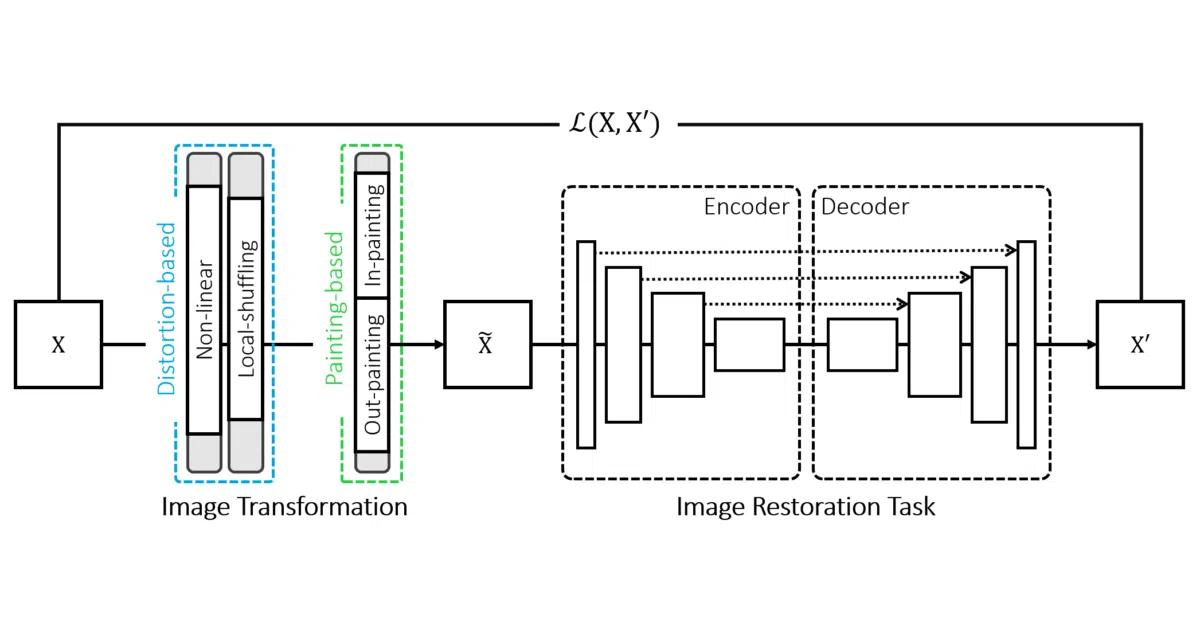
What it does Models Genesis trains 3D convolutional networks on unlabeled CT and MRI volumes using self-supervised proxy tasks—think reconstructing corrupted patches, restoring original orientations, and similar “make the model teach itself” tricks. The resulting weights then transfer to downstream tasks like segmentation and classification, aiming to beat training from scratch when annotated data is thin.
The interesting bit This is 2019 work, so it predates the “foundation model” branding that now dominates the field. The authors explicitly call these “Generic Autodidactic Models”—created ex nihilo, self-taught, and intended as a generic source for generating task-specific descendants. The framework diagram shows the classic self-supervised pipeline: patch generation, transformation, reconstruction, and downstream fine-tuning.
Key highlights
- Both Keras and PyTorch implementations available
- Claims to outperform 3D models trained from scratch and top any 2D approaches including ImageNet transfer
- Incorporated with nnU-Net and ranked #1 on Medical Decathlon for liver/tumor and hippocampus segmentation (per the README)
- Won MICCAI 2019 Young Scientist Award and MedIA 2020 Best Paper Award
- Patent-pending technology, per the acknowledgements
Caveats
- The README is light on implementation details: no clear usage examples, no quickstart, no dependency list
- The “rank #1” claim links to a leaderboard but lacks context on when that was achieved or current standing
- Results figure is a static image with no reproducible numbers or error bars visible in the source
Verdict Worth a look if you’re working with 3D medical imaging and need pre-trained weights as a starting point. Skip if you want a polished, documented library with clear APIs—this is research code with papers attached.
Frequently asked
- What is MrGiovanni/ModelsGenesis?
- Self-supervised 3D models that learned to bootstrap themselves when labeled medical data was scarce.
- Is ModelsGenesis open source?
- Yes — MrGiovanni/ModelsGenesis is an open-source project tracked on heatdrop.
- What language is ModelsGenesis written in?
- MrGiovanni/ModelsGenesis is primarily written in Jupyter Notebook.
- How popular is ModelsGenesis?
- MrGiovanni/ModelsGenesis has 796 stars on GitHub.
- Where can I find ModelsGenesis?
- MrGiovanni/ModelsGenesis is on GitHub at https://github.com/MrGiovanni/ModelsGenesis.