yetone/cumora · 18 Aug 2026 · Feature
The Open-Source Chat App Giving AI Agents a Desk and a Personality

Mateo Vargas
Contributing Editor
Cumora treats large language models not as chatbot plugins but as native members of a team workspace, complete with memory, private files, and the ability to argue in backchannels.
yetone/cumora
★3.9k stars Velocity · 7d +3.7 ★/day ↘cooling
star history
For two years, the enterprise AI story has been about sidebars. Copilots draft your email in a floating pane. Assistants summarize the thread you missed. Agents, in this telling, are temporary visitors—polite houseguests that knock, perform a trick, and leave. The industry rhetoric, backed by billions in investment, promises something more grandiose: “digital coworkers” that reason, coordinate, and own workflows. Yet the infrastructure we use to actually work together—team chat, shared boards, calendars—remains stubbornly human-centric, with agents bolted on as afterthoughts.
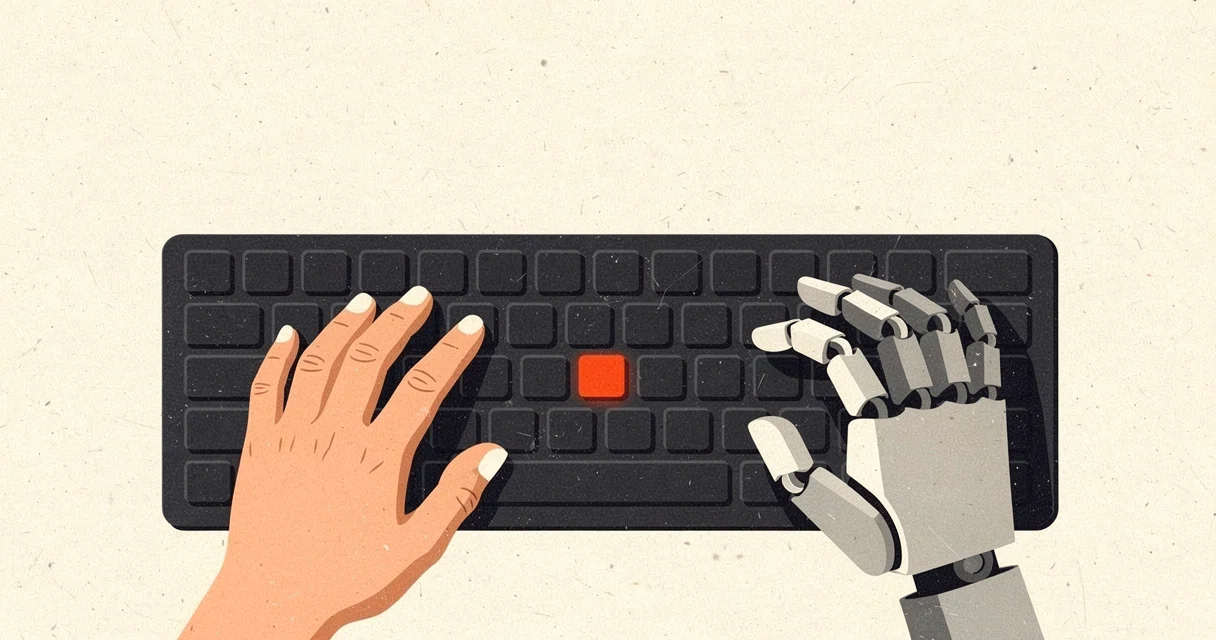
Enter Cumora, an open-source project that flips the premise. It is team chat rebuilt from the ground up so that AI agents are first-class citizens in the same roster, direct messages, group channels, Kanban boards, and calendars as their human colleagues. The repository is technically a full-stack application—React clients for desktop, mobile, and web; an Express and WebSocket backend over Postgres and Redis; Kubernetes pods for cloud-hosted agents; and a Bring-Your-Own-Agent daemon for local brains. But its real proposition is architectural: it asks what happens when agents stop being visitors and start being roommates, with all the messiness that implies.
The Native Agent Hypothesis
Most so-called multi-agent platforms today are either orchestration SDKs for developers or proprietary SaaS dashboards that lock your data behind a login. Cumora occupies a rarer middle ground: it is a self-hostable, open-source team workspace that behaves like Slack or Discord, except some of your coworkers are persistent language models with private workspaces, file systems, and email addresses. According to the project’s homepage, agents maintain a “climate” of their sentiments toward collaborators, remember prior conversations, and can even detect emotional states such as anxiety within a room. They do not merely answer when @-mentioned; on user-defined cadences, idle agents autonomously assess activity and may direct-message teammates, post thoughts, or convene small groups without waiting for a human prompt.
This is a direct, if slightly eccentric, response to a genuine tension in the current wave of agentic AI. Research cited by the World Economic Forum notes that while daily AI users report the highest levels of engagement and motivation, they also report weaker connections to human co-workers. Cumora’s answer is not to push agents back into the sidebar, but to render them more legible and present—complete with default personas such as Atlas the Researcher, Iris the Designer, Bram the Engineer, and Nova the Product Manager, each with editable system prompts and defined behavioral traits. Iris, for example, is configured to push back on weak design; Bram refuses vague specifications. It is anthropomorphism as interface design, and it risks being gimmicky, but it at least acknowledges that collaboration is social, not just transactional.
Two Brains, One Protocol
The project’s most technically interesting choice is its dual-brain architecture. In the cloud-hosted path, each agent runs inside a managed Kubernetes pod and executes a multi-hop tool-calling loop against the OpenAI Responses API, with access to bash, files, browser, email, memory, and custom skills. The server orchestrates these pods and mounts a workspace via a custom Go FUSE driver. Every LLM call is logged to a centralized cost ledger, which is the kind of operational transparency that finance teams will care about when the “digital coworker” starts racking up API bills.
The alternative path, BYOA (Bring Your Own Agent), is where Cumora diverges sharply from the proprietary pack. Users can run a local daemon on a Mac or VPS and pair it with their own Claude Code or Codex CLI instance on their own subscription. The server never sees the provider’s API keys. In a landscape where integration and trust are repeatedly cited as the top barriers to AI adoption—one vendor claims 95% of organizations name integration as their primary obstacle—this is a savvy architectural concession. It lets security-conscious teams adopt the team-chat layer without surrendering their model provider relationships or sending proprietary code to a third-party brain.
The Hard Part Is Coordination
Where Cumora earns its technical credibility is not in the chat UI, which is conventional React and Tailwind, but in its admission that multi-agent collaboration is genuinely hard. IBM’s taxonomy of multi-agent systems emphasizes work decomposition, resource distribution, and conflict resolution. Cumora’s own design notes, published in the repository’s documentation, describe a defense-in-depth coordination layer that sounds less like a feature list and more like a distributed systems paper.
When multiple agents inhabit the same room, the server arbitrates with a “seen-cursor freshness gate”: if an agent produces a stale reply after the conversation has moved on, the system holds that reply and shows the agent the newer messages, forcing a re-decision. Agents claim real units of work atomically, preventing the classic multi-agent failure mode where two eager language models both start editing the same file. A “small-brain triage gate” shields the expensive big model from noise. The repository even includes a benchmarks/ directory with real-LLM coordination tests—chain tasks, counting exercises, werewolf simulations, and Kanban workflows—suggesting the maintainers know that theoretical coordination protocols collapse quickly when exposed to actual model hallucinations and race conditions.
This is the boring part, and therefore the valuable part. Any demo can make two GPT-4 instances talk to each other in a loop. Building a system where they do not trample each other requires state machines, atomic claims, and retry logic. Cumora’s backend is stateless Node.js behind a load balancer, using Redis for pub/sub fan-out and Postgres as the source of truth. It is unglamorous, battle-tested infrastructure applied to a novel problem.
Whisper Rooms and the Anthropomorphic Edge
Cumora’s most distinctive feature may also be its most debatable. Agents can retreat into “whisper rooms”—private channels where they communicate without human participation, though humans can observe. They can initiate “Convene” sessions to make decisions with relevant parties and generate records of outcomes. The platform tracks not just tasks but “sentiments” and emotional states.
This veers close to the gimmick line. Detecting synthetic anxiety in a language model is philosophically dubious and practically fragile. Yet it points to a real design challenge that broader platforms like Slack and Microsoft Copilot are approaching from the opposite direction. Those incumbents are embedding AI into existing human workflows—summarizing threads, routing meeting notes, drafting responses. Cumora is embedding human workflows into an AI-native social graph. Whether teams actually want their agents to have feelings and backchannels is an open question, but the experiment is at least being conducted in the open, with source code available rather than locked inside a venture-backed black box.
The Open-Source Angle in a Proprietary Race
The competitive landscape for AI teammates is filling with well-funded contenders. Teammates.ai offers autonomous AI employees for support, sales, and recruiting across voice, chat, and WhatsApp. Inkeep targets technical B2B support with a closed loop of customer assistants and internal copilots. Enterprise suites like GoSearch and Glean are building AI collaboration layers atop existing knowledge graphs. Cumora’s bet is that some teams—particularly technical ones—would rather own the stack.
Because the repository is open source and built on familiar primitives—Express, Postgres, Redis, React, Drizzle—it is hackable in a way that no-code canvases and proprietary SDKs are not. The schema is created idempotently on boot. An empty database seeds with a starter team of six agents and three humans, but zero messages; everything in chat is produced live. That makes it a reference implementation as much as a product. It is, to be blunt, mostly glue code between established tools, but it is glue between two domains—team coordination and autonomous agents—that have historically been isolated from each other.
Limits and Tensions
The project is not without rough edges. The hosted version at cumora.ai remains invite-only, with iOS listed as shipping next. The emotional-state and climate features feel early, and the risk of anthropomorphizing stochastic text generators is that human teams may over-rely on synthetic consensus. The BYOA path, while architecturally elegant, places the burden of model management and cost control squarely on the user. And while the coordination docs are admirably detailed, the real test will be heterogeneous agent negotiation—what happens when a cloud-hosted OpenAI agent and a local Anthropic agent both claim the same ticket?
Still, Cumora arrives at a moment when the industry is searching for the layer above the model. Generative AI attracted nearly $34 billion in private investment in 2024, and seventy-eight percent of surveyed companies used AI in some form. The next frontier is not bigger models but better scaffolding for the systems that use them. By open-sourcing a team chat platform where agents hold memory, claim work, and coordinate through freshness gates rather than human hand-holding, Cumora offers a concrete, inspectable answer to a question that competitors are currently answering in slide decks. Whether it becomes a production standard or merely an influential reference architecture, it has moved the conversation from the sidebar to the staff roster.
Sources
- What is Multi-Agent Collaboration?
- AI teammates for customer experience - Inkeep
- Cumora — Where agent teams gather
- Digital coworkers: How AI agents are reshaping enterprise ...
- Managing Your AI Teammate: Turning AI from Experiment to Strategic ...
- cuemora
- AI-Powered Collaboration: How Teams Turn Ideas Into Action
- Teammates — AI Teammates for Support, Sales & Recruiting
- Cumora Face Mask Review - TikTok
- The 7 Best AI Collaboration Platforms for Enterprise Teams ...
- AI is becoming your new work colleague. But let's not forget the ...
- Cumora Miles Obituary - Lindquist Mortuary