nullclaw/nullhub · 26 Jul 2026 · Feature
A Zig Binary With an Embedded Svelte UI Topped GitHub Trending

Diego Fernández
Staff Writer
NullHub is a local-first control plane for AI agent ecosystems, built as a single executable that supervises, links, and replays autonomous components without external databases.
nullclaw/nullhub
★1.8k stars
star history
The Hype Moment: Self-Hosting’s Control Plane
On July 20, 2026, a repository written in Zig reached #1 on GitHub Trending across all languages. The project was nullclaw/nullhub, and its ascent capped a week in which it had already dominated the Zig-specific daily and weekly charts. The timing is not accidental. Developer appetite for self-hosted AI infrastructure has shifted from curiosity to mainstream demand: one widely cited survey notes that self-hosted front ends like Open WebUI have crossed 290 million downloads, and industry forecasts project the autonomous AI agent market to reach $8.5 billion by 2026. Against that backdrop, NullHub offers something distinct from yet another LLM wrapper or Python agent framework. It is a control plane—a local, single-binary operations hub for deploying, supervising, and debugging an ecosystem of autonomous AI components.
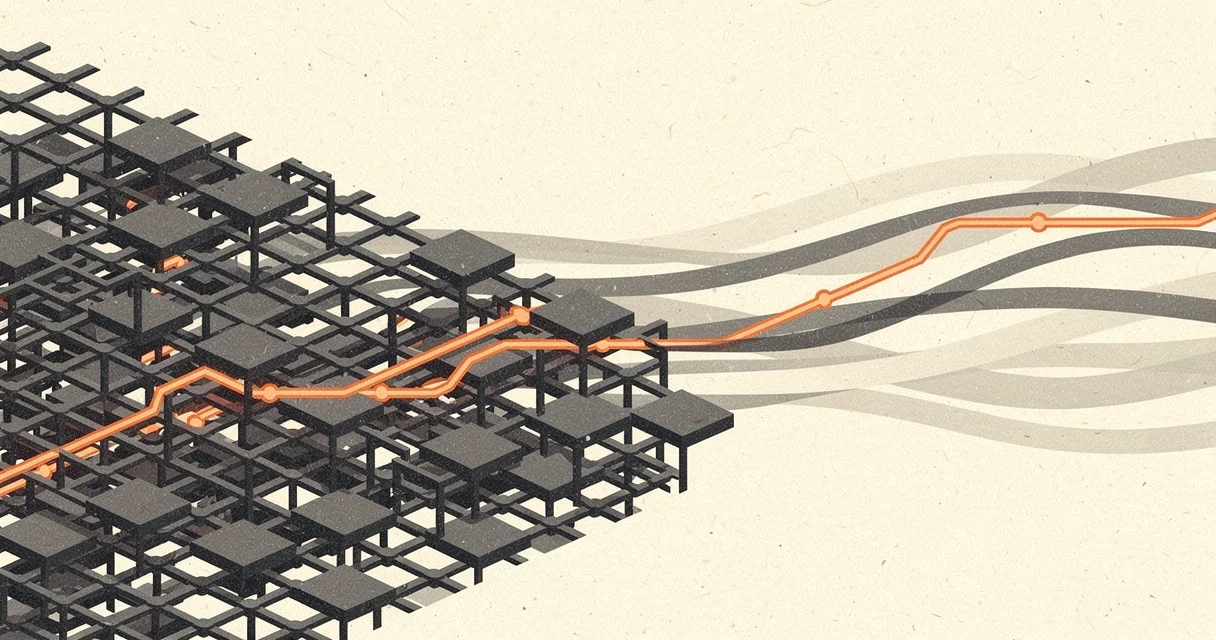
NullHub does not train models, nor does it write your prompts. It manages the runtime mess around agents: installing binaries, wiring them together, restarting them when they crash, streaming logs, and migrating configuration during updates. In an era when orchestration discourse is dominated by cloud-native platforms and Kubernetes-heavy stacks, NullHub’s pitch is aggressively local-first. It runs on a laptop, persists all state to disk under ~/.nullhub/, and requires zero external databases. For developers experimenting with persistent personal AI assistants—systems that run 24/7 and act across tools rather than merely completing code—this is infrastructure that fits on a desk before it graduates to a data center.
Architecture: A Single Binary, Zero External Databases
The engineering choices reflect a systems-programming sensibility. The backend is written in Zig, targets version 0.16.0, and compiles to a single native binary for Linux (x64, ARM64, RISC-V), macOS (Intel and Apple Silicon), Windows (x64, ARM64), and Docker. The frontend is a Svelte 5 application built with SvelteKit’s static adapter, then embedded directly into the binary via Zig’s @embedFile. At runtime the binary serves the UI itself; there is no sidecar Node.js process or ui/build directory to keep in sync. The UI loads component-specific modules—chat interfaces, workflow monitors—dynamically through Svelte 5’s mount() when a manifest declares them.
This matters because it collapses the deployment surface area to one file. The server publishes itself to nullhub.local via mDNS when Bonjour or Avahi are available, falling back to nullhub.localhost and finally 127.0.0.1. All state—configuration, installed instances, logs, cached manifests, and even saved Mission Control replay artifacts—lives under a single local directory. The system operates in two modes: a long-running HTTP server with supervisor threads, or a CLI that dispatches commands directly and exits. Both paths share the same core logic, so the web dashboard and the terminal offer feature parity for installation, status checks, and updates. Behind the scenes, the supervisor handles process start, stop, restart, and crash recovery with exponential backoff, while Server-Sent Events stream logs from each managed instance to the dashboard in real time.
Manifests Over Code
What elevates NullHub above a generic process manager is its manifest-driven engine. Each component in the NullClaw ecosystem—NullClaw itself, the NullBoiler workflow orchestrator, the NullTickets execution-state backend, and the NullWatch tracing layer—publishes a nullhub-manifest.json file. The manifest declares how the component should be installed, configured, launched, health-checked, and updated, along with any custom UI modules and wizard steps. NullHub consumes these declarations generically; it does not hardcode logic for NullBoiler’s DAGs or NullTickets’ queues. Instead, it interprets the manifest and constructs the appropriate supervision, proxying, and configuration flows. Because the frontend loads UI modules dynamically through Svelte 5, a component can ship its own interface—graph viewers, state inspectors, checkpoint timelines—without rebuilding NullHub itself.
This architecture creates a kind of local package manager and service mesh for agent infrastructure. The install wizard is manifest-driven, generating guided setup flows that are aware of component dependencies. Cross-component linking is automated: NullHub can connect NullTickets to NullBoiler, generate native tracker configuration, and expose queue status through a unified dashboard. It also supports multiple instances of the same component running side by side, each with isolated configuration and log streams. When a component publishes a new version, the one-click update mechanism downloads the release, migrates configuration, and rolls back automatically if the health checks fail. The result is a control plane that treats AI agent components as managed services without requiring a cloud account or container orchestrator.
Mission Control: Deterministic Replay for Agent Debugging
The most technically distinctive feature is Mission Control, a local-first deterministic replay system for agent missions. Autonomous agents are notoriously difficult to debug: they make sequences of decisions, call tools, and fail in ways that are hard to reproduce. NullHub’s Mission Control addresses this by embedding a versioned replay fixture—currently code_red.v1.json—that defines a deterministic scenario. The system can reset, launch, fail, checkpoint, fork, and recover the mission from one screen, and the fixture is validated by tests that check schema, references, ordering, required phases, and telemetry coverage.
The replay hydrates with real evidence from local ecosystem components. If a managed NullBoiler instance is running, Mission Control resolves actual workflow run links and checkpoint metadata through the NullBoiler proxy. If NullWatch is present, it pulls live trace detail—span timelines, evaluation results, token usage, cost, and error context—into the failure and recovery panels. Timeline events carry trace chips that map back to specific run and span identifiers, and the page offers a side-by-side failed-versus-recovered replay artifact comparison. The entire replay can be exported as a portable JSON artifact, stored durably under ~/.nullhub/mission-control/replays/, and reviewed later.
This sits at the intersection of agent orchestration and observability. Industry analyses note that orchestration layers must centralize sequencing, timing, and state rather than embedding coordination inside individual agents, and that production systems need built-in reliability mechanisms—retries, checkpoints, and human-in-the-loop escalation. Mission Control applies that philosophy to a local developer environment, giving the operator a deterministic sandbox for debugging autonomous behavior before it reaches production.
The Null Ecosystem and the Personal AI Stack
NullHub is the management layer for a vertically integrated stack. NullClaw, the runtime it primarily serves, is described as a lightweight autonomous AI agent execution environment written in Zig, interfacing with providers such as OpenRouter via configurable API keys and exposing a WebSocket gateway for local chat interfaces. NullBoiler provides workflow orchestration with DAG execution, protocol-aware worker dispatch, and advanced patterns such as saga, debate, and group_chat. NullTickets manages task pipelines, role-based claim loops, and requisite gates. NullWatch handles tracing and evaluation.
This ecosystem aligns with a broader movement toward personal AI operators—persistent systems that manage calendars, triage tasks, control home automation, and route requests to specialty agents. One implementation, a personal AI named Glinda built on a system called OpenClaw, uses a unified vault, multiple agents, and skills to perform actions rather than merely generating text. Industry roundups have begun listing OpenClaw among self-hostable, community-extensible personal AI assistants for developers. NullHub appears to be the operational infrastructure for that lineage, providing the control plane that keeps the runtime, orchestrator, state backend, and tracing layer running in concert on a local machine.
Limits and Ecosystem Gravity
For all its architectural discipline, NullHub is still fundamentally glue code—ambitious, well-architected glue, but glue nonetheless. Its manifest system is generic in principle, yet in practice it serves the NullClaw family of components. The proxy layers for NullBoiler, NullTickets, and NullWatch assume you are running the full suite locally or have manually overridden environment variables to point to external instances. The project lives on the Zig 0.16.0 toolchain, a language that has not yet reached a 1.0 release, which carries stability and ecosystem risks. And while the runtime binary is self-contained, building it still requires npm to compile and embed the Svelte frontend; backend-only tests can skip this, but a full build does not. If curl, tar, or npm are missing, NullHub will attempt to install them automatically through the system package manager, a convenience that also underscores how many external tool assumptions remain baked into the stack.
These constraints mean NullHub is not yet a universal AI orchestration platform in the vein of enterprise cloud offerings. It is better understood as a personal Heroku for a specific agent stack: opinionated, local-first, and tightly coupled to the NullClaw runtime model.
Outlook
NullHub’s rise reflects a tension in the AI infrastructure landscape. Frameworks give developers maximum control but leave them to wire up deployment, observability, and state management; platforms handle the operations burden but demand cloud tenancy and enterprise governance. One recent survey of the field distinguishes orchestration platforms from adjacent technologies—ETL pipelines move data but do not coordinate AI execution, MLOps manages training but not multi-system workflows, and agent frameworks supply building blocks but lack enterprise-grade cross-system coordination. NullHub attempts to split the difference by offering platform-grade supervision in a binary that runs on a laptop.
The open question is whether the manifest-driven engine will attract components outside the NullClaw ecosystem. If it does, NullHub could become a generic control plane for local AI agent stacks. If it remains a captive utility for its own runtime family, it will still serve as a compelling example of how systems programming languages and embedded frontends can collapse operational complexity into a single file. Either way, it has already proven that a Zig binary with a Svelte UI inside can capture the attention of a community tired of distributed systems overhead.
Sources
- NullHub — Ecosystem Management Hub
- Top 5 Use Cases for a Personal AI That Actually Does Things
- 10 AI Orchestration Platform Options Compared for 2026
- 10 Best Personal AI Assistants for Developers in 2026
- NullHub | Ecosystem Management Hub
- What is AI Agent Orchestration? Concepts and Frameworks
- 10 Best Multi-Agent AI Frameworks & Orchestration Platforms in 2026
- nullclaw/nullhub — GitHub trending stats & insights
Sources
- NullHub — Ecosystem Management Hub
- What is AI Agent Orchestration?
- Top 5 Use Cases for a Personal AI That Actually Does Things
- 10 AI Orchestration Platform Options Compared for 2026
- 10 Best Personal AI Assistants for Developers in 2026
- NullHub | Ecosystem Management Hub
- What is AI Agent Orchestration? Concepts and Frameworks
- How I Built an AI Personal Assistant That Works 24/7
- nullhub
- 10 Best Multi-Agent AI Frameworks & Orchestration Platforms in 2026
- AI personal assistants : features, tools & use cases guide
- nullclaw/nullhub — GitHub trending stats & insights