muxuuu/serenity-skill · 18 Jun 2026 · Feature
A Supply Chain Skeptic’s Agent Skill for LLM Research

Rachel Stein
Contributing Editor
Serenity.skill encodes a public equity research methodology into a portable agent framework, forcing language models to decompose industry chains, identify bottlenecks, and validate claims against regulatory filings rather than social media narrative.
muxuuu/serenity-skill
★4k stars Velocity · 7d +2.7 ★/day ↘cooling
star history
From Twitter Thread to Agent Skill
Most AI trading tools promise automation. Serenity.skill promises homework. The project distills the public research methodology of Serenity—an analyst known on X as @aleabitoreddit—into a set of portable agent skills for Codex, Claude Code, Hermes, and compatible clients. Instead of generating buy signals, it generates a research agenda. That distinction has earned the broader repository over 500 stars on GitHub and a small constellation of related tools, including serenity-alpha, bayesian-intrinsic-growth-valuation, and a buy-side equity research memo generator. The appeal is not automation; it is the formalization of a human skeptic’s workflow.
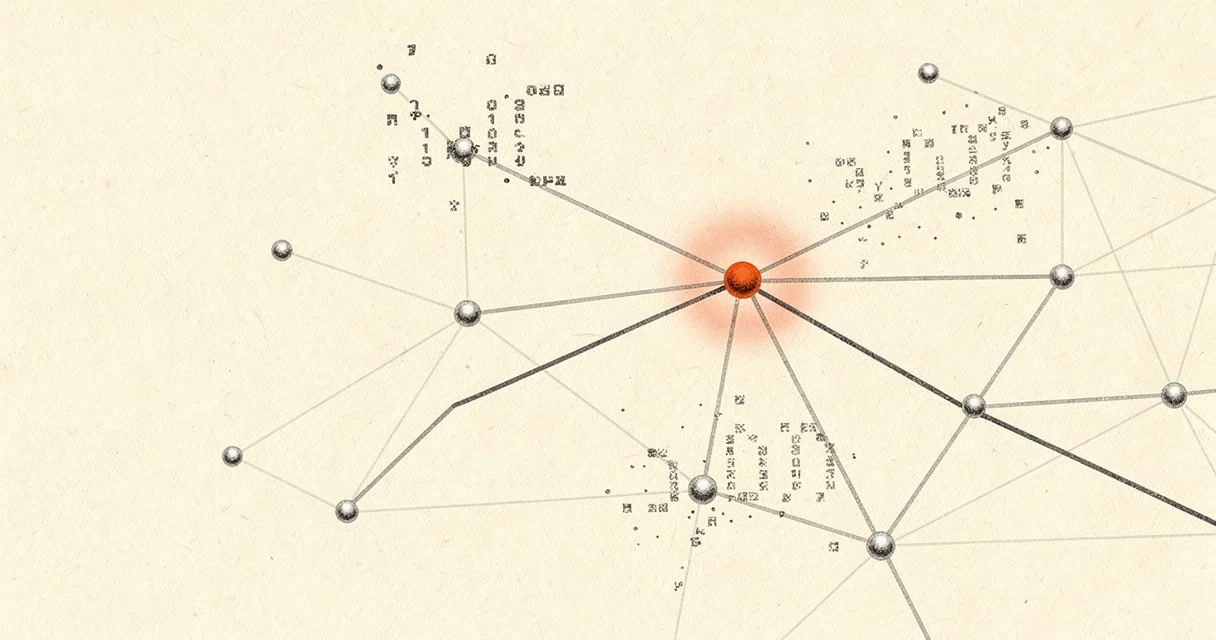
The origin story is straightforward. Serenity’s public writing on AI semiconductors, robotics, and optical communication supply chains attracted a following because it ignored narrative heat and focused on chokepoints: which node in a chain has the fewest suppliers, the longest validation cycle, and the hardest capacity ramp. The repository turns that intuition into a structured reasoning path that an LLM can follow. Users invoke the skill with natural language prompts—asking, for example, which link in the robot supply chain is actually constrained—and the agent responds by decomposing the theme, ranking nodes by bottleneck severity, and mapping candidates back to exchange filings and earnings transcripts. It is, in essence, a personality prompt with a bibliography and a scoring rubric.
The Bottleneck Epistemology
The core technical idea is disarmingly simple: in a thematic bull market, the money does not flow to the loudest story but to the hardest-to-replace component. Serenity.skill operationalizes this by forcing the model to traverse a fixed hierarchy. It begins with a hot theme—say, A-share AI semiconductors, robotics, co-packaged optics, or innovative medicine—and immediately disaggregates it into downstream demand, system integration, chips, devices, equipment, materials, packaging, and infrastructure. At each layer, the model is instructed to look for low supplier counts, long customer certification timelines, difficult capacity expansion, stringent client qualification, and high material purity requirements. Only after identifying these chokepoints does it surface stock or fund candidates.
This decomposition is the boring part, and it is where the value hides. A standard language model asked for “top AI semiconductor stocks” will likely return a list of familiar large-caps drawn from training data popularity. Serenity.skill constrains the output by requiring evidence of a company’s proximity to a verified bottleneck. The model must check announcements, financial reports, exchange inquiry letters, interactive platform disclosures, bidding documents, environmental and energy assessments, patents, and customer certifications. Social media content is explicitly demoted to “clue status”; final judgment must rest on primary sources. The methodology amounts to an epistemological guardrail: it makes the LLM expensive to fool by forcing it to cite hard documents before it ranks a stock.
The approach has macro-level echoes. Researchers at the Federal Reserve have used natural language processing to extract supply chain bottleneck sentiment from the Beige Books, treating narrative frequency as a leading indicator for economic stress. Serenity.skill applies a similar documentary discipline to micro equity research, though it replaces macro aggregates with company-specific filings. Meanwhile, a 2025 study in Nature found that global supply chain pressure transmits negative shocks to Chinese equity sectors, particularly utilities and telecom. The implication is that supply chain structure is not merely an operational detail for manufacturers; it is a pricing factor for investors. Serenity.skill attempts to make that factor legible to retail investors who lack a buy-side research department.
Evidence as a Ladder, Not a Suggestion
The project’s most quietly radical feature is its evidence ladder. The framework states plainly that social media is suitable as a clue source, but final judgment must return to stronger evidence. This is a direct rebuke to the broader AI-agent-for-trading hype, where models often ingest Twitter sentiment and output position sizing. Serenity.skill instead treats the LLM as a research associate that must produce a memo, not a trade ticket.
That memo follows a strict template. The model ranks candidates by supply chain position, evidence strength, valuation pressure, and risk exposure. It flags directions that are merely riding the theme without structural exposure, and demotes them. The output does not say “buy.” It says: “I will look at direction A first, then B and C. If you want stock clues, I will prioritize company A because it sits closest to the bottleneck, while company C offers more elasticity but requires confirmation of a missing customer certification.” It also generates a “next three checks” list: specific filings, customer announcements, or margin trends to verify before a human makes a decision. The repository even includes a Python scorecard script for local bottleneck grading, though the real product is the reasoning template.
This restraint is strategically wise. Portfolio managers at AllianceBernstein have argued that evaluating supply chain resilience requires deep fundamental research, data science, and direct engagement with management to understand vulnerabilities that standard reports omit. Serenity.skill can handle the first two by structuring document retrieval and quantitative health checks, but it wisely does not pretend to replace the third. It stops at the edge of what an LLM can plausibly do: read faster, structure better, and ask sharper questions. It leaves the answers—and the buy decisions—to the human.
A Research Stack, Not a Trading Stack
The broader haskaomni repository reveals that Serenity.skill is not an isolated experiment. It sits alongside serenity-alpha, which maps news narratives to demand changes and small-cap elasticity; a Bayesian intrinsic growth valuation skill; a trend-health index that scores valuation support from fundamental growth and DMA speed; a TAM-adjusted PEG calculator; and a buy-side equity research memo generator. Together, they form a modular research pipeline: thematic idea generation, bottleneck verification, growth estimation, valuation sanity check, and finally a formatted memo. The architecture suggests an emerging “AI investment committee” model, where specialized agents debate a thesis before a human pulls the trigger.
There is also a commercial layer. The repository notes a hosted version available via subscription at app.k2ai.dev, operated by @iamai_omni. This creates a familiar open-core dynamic: the skill files, prompt packs, and scorecards are public, but the managed runtime and additional features are gated. For technically literate users, the open-source release is sufficient; the skill is, after all, a collection of markdown references, JSON scorecards, and agent YAML files. For others, the hosted version removes the friction of installing skills into local agent directories.
The Limits of Structured Reasoning
Serenity.skill is explicit about its boundaries, and those boundaries are worth respecting. It does not execute trades, promise returns, or even guarantee that its cited documents are real. An LLM hallucinating a non-existent exchange inquiry letter or misreading a patent claim would corrupt the entire scorecard. The evidence ladder is a procedure, not a proof. The local scorecard generator turns criteria into a JSON rubric that can be filled and rendered into markdown, but the script is a formatter, not an oracle.
The methodology is also heavily tuned for A-share thematic investing—AI, semiconductors, robotics, power equipment, innovative medicine. Its transferability to Western markets or non-tech sectors is untested. And while the skill format is portable across Codex, Claude Code, Hermes, and OpenClaw, the ecosystem is fragmented; there is no universal agent-skill standard, and maintenance depends on the host client’s evolution. The hosted subscription may solve fragmentation for paying users, but at the cost of openness.
Yet within those limits, the project is genuinely special. It does not try to make AI a trader. It tries to make AI a skeptical analyst, one that knows the difference between a hot theme and a hard bottleneck. In a landscape crowded with algorithmic hype machines promising 24/7 companions, that modesty is the point.
Sources
- haskaomni/serenity-skill - GitHub
- I built a 9-agent AI investment committee, the debate every stock ...
- Supply Chain 'Bottlenecks' May Be An Investment Opportunity
- Serenity is its own tier of broken. : r/Palworld - Reddit
- AI Agent for Stock Market: Enhance Your Trading Strategy - Lyzr
- The impact of global supply chain pressure on the stock market
- Serenity - The Palworld Wiki
- Kavout | AI Financial Research Agents & Investing Tools for Smarter ...
- Measurement and Effects of Supply Chain Bottlenecks Using ...
- Query on SERENITY skill, google/reddit is half worthless *ANSWERED
- Optimizing AI-Agent Collaboration in Financial Research
- Reimagining Supply Chains: The Investing Challenge | AB