deepseek-ai/deepseek-harness · 16 Aug 2026 · Feature
DeepSeek Bets the Future of Agents Is a Box of Swappable Parts

Christopher Nash
Contributing Editor
The Chinese lab’s open-source harness treats models, tools, sandboxes, and even the UI as hot-swappable plugins, staking a claim in the emerging agent infrastructure layer.
deepseek-ai/deepseek-harness
★245.2k stars Velocity · 7d +727 ★/day ↘cooling
star history
A Harness, Not a Hero
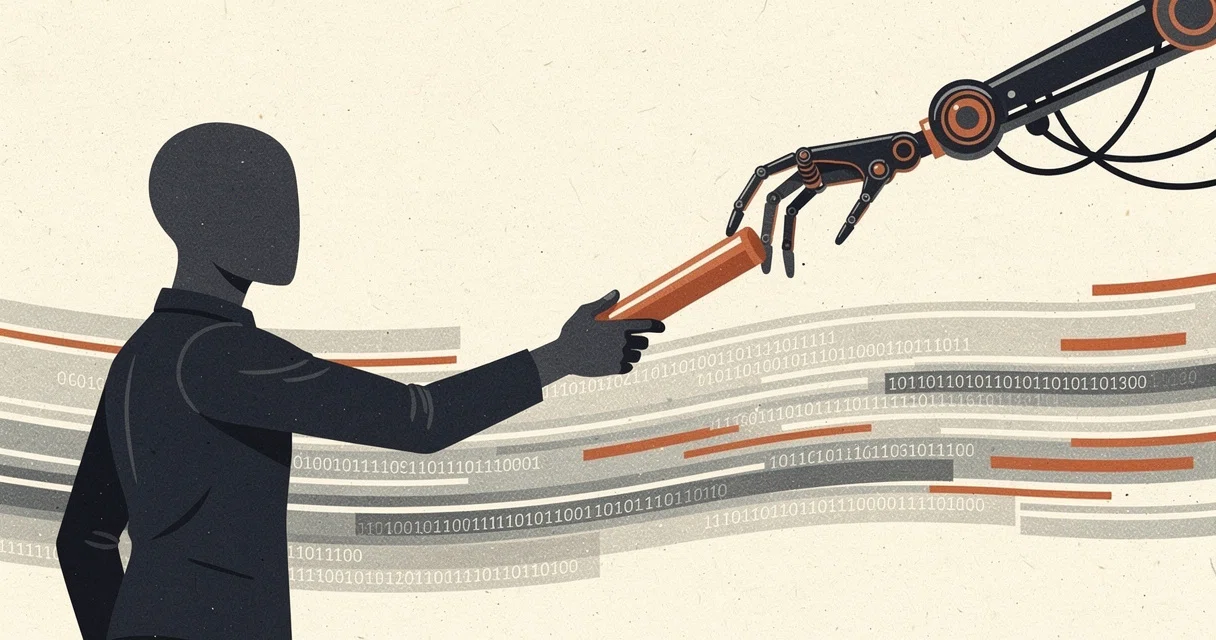
DeepSeek became a household name in AI by training foundation models that punched above their weight class. Now the lab is releasing infrastructure. DeepSeek Harness (dsh) is an open-source agent framework in developer preview, distributed with full source code, and it represents a strategic pivot from model weights to orchestration plumbing. The message is clear: DeepSeek believes the next battleground is not merely the scale of the model, but the architecture of the cage around it.
The release lands in an industry suffering from a production crisis. Enterprise AI adoption has reached 55 percent of organizations in at least one business function, yet only 22 percent of AI projects graduate from pilot to production. A majority of enterprises still lack formal AI governance, creating compliance exposure under regulations like the EU AI Act. Into this gap, DeepSeek Harness arrives less as a polished product and more as a research instrument. The documentation warns, in all caps, that “THERE WILL BE COMPATIBILITY-BREAKING CHANGES.” It is positioned as “reusable, composable open-source infrastructure for exploring the limits of intelligence”—a phrase that manages to be both grandiose and candid. Grandiose because it assumes the limits are still unknown; candid because it admits the framework itself is an experiment.
The project is released under an MIT license, with third-party dependencies explicitly documented. That licensing choice matters. While enterprise vendors build vertically integrated stacks with proprietary marketplaces and governance modules, DeepSeek Harness is betting that the infrastructure layer will commoditize faster than the models themselves. Open-sourcing the harness is a bid to make DeepSeek not just a model provider, but a platform setter.
Everything Is a Plugin, Including the Kernel’s Periphery
The technical signature of DeepSeek Harness is architectural maximalism: every capability is a plugin. Models, tools, skills, sessions, sandboxes, storage, loops, scheduling, and the web interface are all implemented as discrete, swappable modules. The system is built atop Cordis, a plugin system whose design is rooted in an academic paper on “spatiotemporal composability.” In practical terms, Cordis treats plugins not as static libraries linked at build time, but as dynamic entities that can be mounted, unmounted, and reconfigured while the system is running. The kernel manages dependency graphs, and inter-plugin communication happens through services and events rather than direct coupling. A sandbox plugin can emit an event that a logging plugin consumes without either knowing about the other at compile time.
This is a deliberate rejection of the monolithic agent stack. Monolithic architectures force every new capability into the same codebase, bloating system prompts, expanding the security blast radius, and requiring retesting of the entire core whenever a single skill changes. Plugin architectures draw a hard boundary between the orchestration kernel and the capability modules. DeepSeek Harness pushes that boundary further than most: even the UI is a plugin. If you want to replace the default web interface with a headless API or a voice channel, the framework does not merely tolerate the swap; it expects it. Developers can reconfigure, extend, or replace capabilities without modifying the framework’s source code.
The philosophy extends to observability. The framework records everything a model sees in an append-only session log: system prompts, reasoning traces, tool calls and their results, subagent scheduling decisions, and context injections. This is not a chat transcript. It is a forensic record of the model’s entire perceptual field. Through the Trajectory view, users can inspect records by source, then resume, fork, search, or replay sessions from the same event stream. In a discipline where reproducibility is often an afterthought, the append-only log is a statement of intent. If you are going to claim you are exploring the limits of intelligence, you had better keep the lab notebooks.
Four Modes, Four Theories of Mind
DeepSeek Harness ships with four runtime modes that function as competing answers to the question, “What is an agent for?”
Standard mode is the familiar coding assistant: file editing, shell access, search, skills, planning, goals, subagents, and workflows. It is the full-stack experience, designed for human supervision and iterative refinement.
Code mode exposes the same tooling through a TypeScript SDK, allowing the model to orchestrate multi-step operations by generating and executing code rather than engaging in chat-style turn-taking. This shifts the agent from a conversational partner to a programmatic executor, blurring the line between agent and script.
Minimal mode strips the system down to a persistent bash shell and a file editor. There are no skills, no planning layer, no UI flourishes. It exists for benchmarking in constrained environments, where the goal is to isolate raw capability from scaffolding.
Creator mode is the meta-layer: runtime inspection, in-memory plugin testing, and preset-authoring tools for building custom modes. It turns the harness into a factory for itself.
The plurality is unusual. Most frameworks bet on a single interaction model—chat, or code, or API—and force users to contort their workflows around it. DeepSeek Harness offers four native personalities and invites a fifth. The Creator mode suggests the project is less a product than a platform for constructing bespoke agents tailored to specific research questions, benchmark suites, or deployment topologies.
The Plugin Wars and the Politics of Portability
DeepSeek Harness is not the only actor betting on plugins. The industry is simultaneously racing to define the standard container for agent capabilities. By 2025–2026, manifest-driven discovery became a de-facto standard across the ecosystem, adopted by Claude Code Skills, MCP servers, Semantic Kernel plugins, and VS Code extensions. Agent Plugins 1.0.0, published by a Technical Steering Committee drawn from Amazon, Cursor, Microsoft, OpenAI, Vercel, and now Google, attempts to formalize this into a vendor-neutral format for bundling Agent Skills and MCP servers. A compliant plugin is a directory with a fixed layout: a plugin.json manifest, a skills/ directory, an mcp.json file typed for stdio or HTTP transports, and a reverse-domain namespace for client-specific extensions.
The specification solves a real problem. Before it, skill authors had to maintain separate forks for differing directory layouts, metadata formats, and transport configurations. But the spec is deliberately minimal. It defines the package format and nothing else: no installation mechanism, no distribution protocol, no permission model, no sandboxing, no provenance verification. Those are documented as “future considerations,” which is either prudent scope control or a strategic vacuum waiting to be filled.
Skepticism is already visible. One developer in the OpenAI community characterized the initiative as a potential “embrace, extend, extinguish” maneuver, noting that several steering committee members have deep financial or infrastructure ties to OpenAI. Cursor received seed and Series A funding from the OpenAI startup fund; Vercel is an OpenAI supplier and customer; Amazon hosts OpenAI services; Microsoft products such as GitHub and VS Code power much of OpenAI’s inference through Azure. Anthropic, notably, is steering its own course with enterprise-focused Cowork and Plugins integrations, while the open-source ecosystem fragments across Claude Code Skills, Semantic Kernel plugins, and MCP servers.
DeepSeek Harness sidesteps this standards scrum by open-sourcing the entire harness layer. It does not ask developers to package their plugins for a committee-approved manifest; it lets them reconfigure the kernel itself. The bet is that composability at the operating-system level will prove more durable than portability at the zip-file level. Whether that is true depends on whether the industry values an open kernel over a vendor-neutral box.
The Laboratory and the Chasm
For all its architectural ambition, DeepSeek Harness is explicitly unfinished. The developer preview status is not a disclaimer to be ignored; it is a structural feature. Core plugins and APIs are in active development, and the maintainers promise breakage. That makes the project a laboratory, not a production foundation.
The timing is therefore awkward. Enterprise demand for agents is real—Gartner predicts that by 2027, one-third of enterprise AI implementations will combine autonomous agents with diverse skills. Yet the enterprise landscape is dominated by platforms that offer pre-built industry applications, governance controls, and quality assurance modules. DeepSeek Harness offers none of these. It gives you a bash shell, a session log, and a plugin kernel.
The gap between experiment and production is where most AI projects die. Despite 92 percent of large companies reporting positive AI ROI, the median success comes from starting with high-value, low-risk use cases that yield 3–5x returns within fourteen months. DeepSeek Harness, with its minimal mode and append-only logs, is clearly designed for the high-value, high-risk end of the spectrum—research and benchmarking—where breakage is expected and reproducibility is paramount. It is not yet clear how the framework will cross the chasm to enterprise reliability without acquiring the governance and sandboxing features it currently eschews.
The broader literature on plugin architectures warns that registries and manifests are necessary but insufficient. Production security has hardened around the principle that you “never trust plugin code with core credentials.” Credential proxies and capability-scoped tokens are becoming the norm. DeepSeek Harness’s Cordis kernel manages plugin dependencies, but the available sources do not describe how—or whether—it isolates a compromised plugin from the filesystem, the network, or the model’s context window. Until those guardrails are visible, the harness remains a promising cage with the door still open.
Sources
- DeepSeek Harness developer preview: Everything is a plugin
- Agent Plugins package your skills, tools, and more
- A Practical Guide to Using Anthropic Knowledge Work Plugins ...
- My First Impressions of Deepseek Harness - Reddit
- AI Agent Plugin and Extension Architecture | Zylos Research
- 7 best enterprise AI platforms in 2026 | Market guide
- DeepSeek open sources an agent harness where everything is a plugin
- Agent Plugins for AI Coding Agents
- AI in Enterprise Software: What's Real, What's Hype, and What to
- DeepSeek's New AI Harness Changes Everything - YouTube
- "Agents Plugins" by OpenAI, Vercel, et. al. - thoughts? - API
- Anthropic Enterprise Agents: Cowork & Plugins for Business