chaitanyagiri/munder-difflin · 23 Aug 2026 · Feature
When AI Agents Need an Office, a Hive, and a GOD

Jordan Ellis
Senior Editor
Munder Difflin wraps existing terminal coding agents into a self-coordinating local team with persistent memory, inter-agent mail, and a visual supervisor—because autonomous CLIs need more than a shell to scale.
chaitanyagiri/munder-difflin
★3.7k stars Velocity · 7d +430 ★/day ↗accelerating
star history
The Hype Moment Is a Harness Moment
Munder Difflin did not materialize from nowhere. It arrived in mid-2026 as the term “harness engineering” completed its takeover of the agentic AI conversation. According to CoddyKit, the repository crossed 2,500 GitHub stars, with nearly 800 added in a single day on GitHub Trending. That velocity is less about novelty than about timing. In the same window, Martin Fowler published a long-form treatment on harness engineering for coding agents; LangChain offered its anatomy of an agent harness; OpenAI and Augment Code released their own harness engineering guides; and an awesome list appeared to curate the growing tooling landscape. The consensus across these sources is that an agent equals a model plus a harness—the state, tools, feedback loops, and constraints that turn a token predictor into a worker. Munder Difflin is the contrarian’s physical proof: a local Electron desktop app that treats Claude Code, Antigravity, and OpenAI Codex not as endpoints, but as employees who need a floor, a mailbox, and a boss.
The README wears its maturity honestly. It carries a working prototype badge. It does not promise enterprise resilience. Yet the star count suggests developers are hungry for exactly this kind of bounded, local experiment—a harness they can run on their own machine without surrendering their code to a cloud orchestrator.
Wrapping Real Terminals in a Fake Office
The project’s central architectural bet is to wrap rather than reimplement. It spawns Claude Code, Antigravity via the agy CLI, and OpenAI Codex as genuine child processes inside node-pty pseudo-terminals, streaming authentic byte-for-byte output through xterm.js panes. Each session is a real, killable operating system process. Claude integrates through native hooks; Antigravity bridges via a dedicated agy-hook; Codex receives the hive protocol as an initial prompt and participates through inbox and outbox routing. Providers that lack hook support still receive hive mail, though less elegantly: the system injects a work-order message directly into their terminal stream, and if the renderer is unavailable, the message bounces to the GOD agent rather than vanishing.
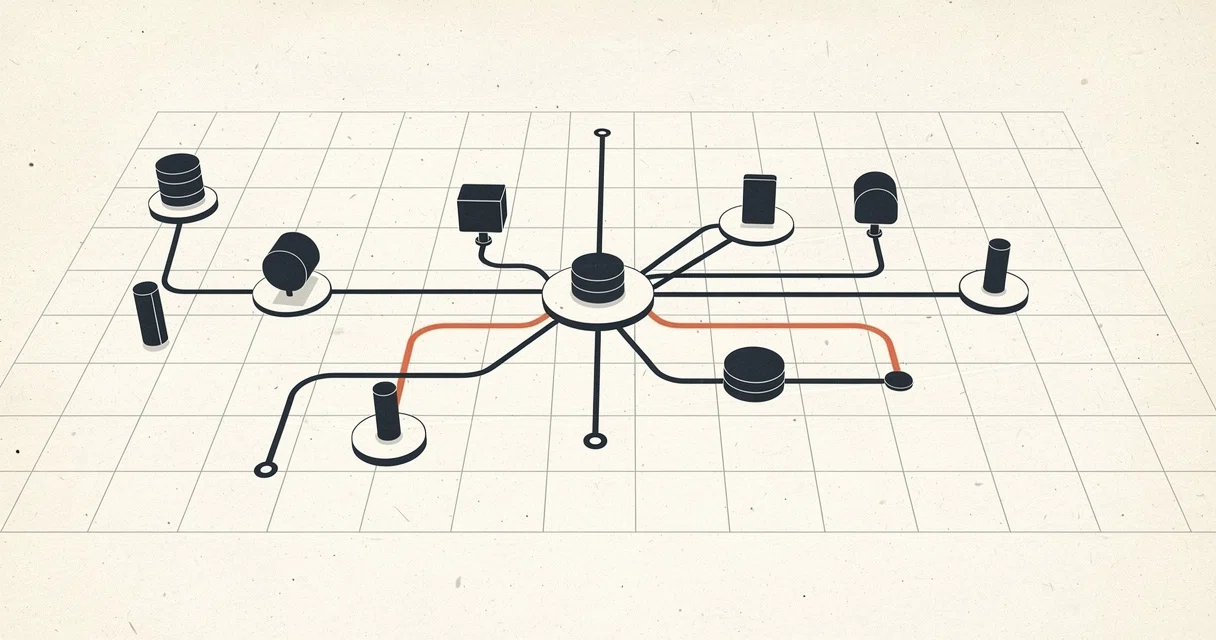
Around these terminals sits a coordination layer called the hive. It is not a message broker in the traditional sense; it is a local git repository of plain files. Every agent gets an inbox, an outbox, a markdown memory store, and a seat on a Pixi.js office floor. The avatars walk between stations. Envelope sprites fly desk-to-desk, tinted by speech act, when the router moves messages. The aesthetic is an affectionate parody of The Office—down to the Dunder Mifflin maroon and gold palette—but the visualization is functional. Avatars reflect real states, including new conditions for context compaction and circuit-breaker intervention, so a glance at the floor tells you whether an agent is working, stuck, or being throttled.
At the center is the GOD agent, nicknamed Michael, stationed in the corner office. It runs the roster, dispatches tasks, selects models per agent, monitors the live fleet, and adjudicates the shared blackboard. When you issue a request, Michael resolves routine items autonomously and escalates only critical matters—spend thresholds, destructive operations, scope changes—into a human approval queue. You can talk to Michael directly, or press Talk and run the floor by voice. The Command Center surfaces this through dedicated tabs for Terminal, Floor, Memory, Activity, Tasks, and Schedules, giving the human supervisor a control surface that most terminal CLIs simply do not possess.
Harness Engineering, Localized
LangChain’s widely cited definition holds that a harness is every piece of code, configuration, and execution logic that is not the model itself. Martin Fowler refines this for coding agents by distinguishing feedforward controls, which steer before action, from feedback controls, which sense and correct afterward. Munder Difflin implements both in a single desktop stack.
Feedforward guidance arrives through the markdown-first memory layer, the semantic recall index, the dependency-aware task kanban, and scheduled missions with an adaptive heartbeat. These structures prime the agent with context, constraints, and intent before it writes a line of code. Feedback arrives through the cost and runaway circuit breaker, which climbs a steer-constrain-stop ladder when it detects looping, error storms, or budget overruns. Live token telemetry is scraped from Claude Code JSONL transcripts and paired with per-model cost attribution inside an OpenTelemetry collector. Each agent card carries a context-window gauge, so you can see how much of the model’s capacity has been consumed without opening a log file. A human-in-the-loop gate intercepts dangerous operations through hook returns, allowing mid-run steering without killing the session.
This is the outer harness that Fowler argues users must build for their own systems. Munder Difflin simply ships one opinionated version of it, pre-integrated with the terminal agents developers already use.
The Boring Part That Matters
The most technically valuable layer is the easiest to overlook because it resembles plumbing. The hive is an on-disk multi-agent plane built inside a git repository. Agents write to their outbox directories; a router delivers files into recipient inboxes. A single-committer design prevents the index.lock corruption that would occur if every agent tried to commit concurrently. The memory layer stores plain markdown files—grep-able, readable in Obsidian, and degrading gracefully to text search when the optional semantic index is absent. A MemoryReflector periodically condenses per-agent memory so the store does not grow without bound.
Persistence is SQLite-backed. Window bounds, history, a durable cost ledger, and session IDs survive restarts. A one-click Restore Team rebuilds the previous session’s workers after a crash or reboot. Per-agent git worktrees isolate branches so multiple agents never collide on the same checkout. The filesystem is treated as the natural collaboration surface, on the theory that language models are already profoundly familiar with file trees. It is slower than a pure in-memory bus, but it is inspectable, auditable, and immune to the volatility of a renderer crash.
Rough Edges and Real Limits
For all its charm, the project is explicitly a prototype. The most immediate rough edge is legal, not technical. The bundled pixel art—tilesets, maps, and the base character sheets recolored into the Office cast—derives from LimeZu’s free assets and a vendored tileset under a non-commercial license. The MIT grant on the source code explicitly carves this out; anyone wanting to commercialize must replace the sprites or obtain a paid license. The stack also demands a local C/C++ toolchain to compile the node-pty native addon, plus at least one supported CLI on the system path. It is not a managed service, and the Electron-plus-native-addon architecture carries the usual cross-platform build fragility.
Provider integration is uneven. Claude Code enjoys native hooks; Antigravity gets a custom bridge; Codex relies on protocol injection and file-based routing; hookless providers receive typed terminal handoffs. This hierarchy of integration quality means the multi-provider floor is real, but not all participants are equally graceful.
Outlook
The roadmap points toward Telegram and richer chat bridges, additional provider CLIs, a low-latency realtime channel for Michael, and fuller avatar coverage driven entirely by real hook events rather than synthetic states. Whether the 2D office floor and flying envelopes are essential infrastructure or simply a delightful control layer is an open question. What seems less debatable is the underlying premise: as coding agents proliferate, they need memory, routing, observability, and kill switches. Munder Difflin supplies all four, wrapped in an affectionate parody of a paper company. The joke is in the branding. The engineering is in the harness.
Sources
- Awesome list for AI agent harness engineering: tools ... - GitHub
- Harness engineering for coding agent users - Martin Fowler
- Munder Difflin - AI Tool For Vibe coding
- Harness engineering: leveraging Codex in an agent-first world | OpenAI
- The Anatomy of an Agent Harness - LangChain
- Munder Difflin Explained: Build a Local Office for Coding Agents
- Harness Engineering: What Separates Top Agentic Engineers Right Now
- Munder Difflin the coolest claude code and codex wrapper - Reddit
- Harness Engineering for AI Coding Agents: Constraints That Ship ...
- Munder Difflin: The Open-Source Multi-Agent Harness With ... - CoddyKit
- What's your preferred harness for local coding agents? : r/LocalLLM - Reddit
- A lot of conversation around Harness Engineering, What does that even ...