Yuan1z0825/nature-skills · 10 Jul 2026 · Feature
When Nature-Style Publishing Became a Prompt Engineering Problem

Sanne de Vries
Contributing Editor
A medical-AI researcher at Shanghai Jiao Tong University has packaged the unwritten rules of high-impact journal publishing into reusable agent skills, attracting over 26,000 stars from scientists who would rather automate the bureaucracy than endure it.
Yuan1z0825/nature-skills
★46.4k stars Velocity · 7d +142 ★/day ↘cooling
star history
The Star Count Nobody Expected
According to OSSInsight analytics, the GitHub repository nature-skills has accumulated more than 26,500 stars and over 1,600 forks. The figure is striking because the project is not a foundation model, a training framework, or even a conventional software library in the usual sense. Its primary language is Python, yet its substance is overwhelmingly Markdown, YAML, and institutional knowledge. What Yuan Yizhe, a PhD candidate at Shanghai Jiao Tong University working on medical AI, has built is a collection of reusable instruction bundles — “skills” — designed for AI agents such as OpenAI Codex and Claude Code. The popularity signals a shift in where researchers feel the bottleneck lies: less in generating results, and more in formatting, presenting, and defending them according to the exacting conventions of top-tier journals.
Skills as Executable Editorial Policy
The basic unit of the repository is the skill directory, each built around a SKILL.md file that functions as a governing workflow. Supporting files — references, static assets, manifest metadata, and shared resources — travel with the skill so that an agent has everything it needs to execute a domain-specific task without drifting into generic behavior. The design philosophy is explicit: rules must be grounded in published Nature content or official journal guidelines, stated with rationale rather than asserted, and sensitive to the section of a manuscript being handled. The result is a curious hybrid of style manual and prompt engineering, turning the kind of guidance typically found in ICMJE recommendations or Springer Nature manuscript guidelines into structured, agent-readable specifications.
This is, in essence, an attempt to make editorial standards executable. Where a human author might consult a checklist for Data Availability statements or reviewer response letters, the nature-data and nature-response skills encode those checklists as conditional logic for an agent. The repository does not run standalone; it runs inside other agents, functioning as a professional layer atop general-purpose reasoning models.
From Figures to Rebuttals: The Manuscript Lifecycle in Markdown
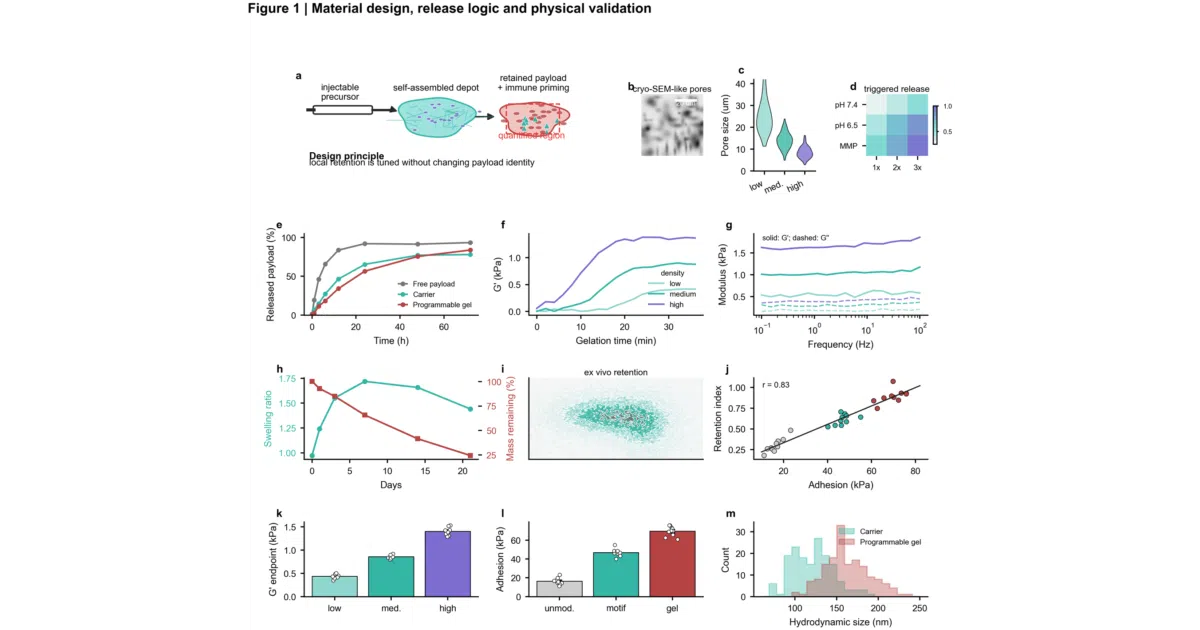
The breadth of the skill library covers nearly the entire arc of manuscript preparation. The nature-figure skill is perhaps the most technically concrete, built from production scripts used in Nature Machine Intelligence and related venues. It enforces a specific visual grammar: sans-serif typography, SVG output in which text remains editable rather than converted to vector paths, and 300-dpi raster previews only as secondary artifacts. Multi-panel figures must obey a three-level information hierarchy — overview, deviation, relationship — with no redundant panels. Ten chart families are supported, from grouped bars to radar plots to 3D sphere illustrations, each governed by a chart-type atlas and design theory documents bundled in the skill directory.
On the prose side, nature-polishing subjects draft text to a twelve-step workflow that includes sentence-length audits, hedging calibration, section-aware tense checks, and British English enforcement. The nature-writing skill handles argument construction, enforcing an evidence-first rule that forbids inventing data, mechanisms, or novelty claims. For the submission process itself, nature-reviewer simulates three distinct referee reports plus a cross-review synthesis, while nature-response structures point-by-point rebuttals with formal action mapping — tagging each reply as ACCEPT_TEXT, SOFTEN_CLAIM, or AUTHOR_INPUT_NEEDED to maintain traceability.
Less glamorous but equally meticulous skills handle citation hygiene and data compliance. The nature-citation skill restricts searches to the Nature Portfolio, Science family, and Cell Press, exports reference-manager files in ENW, RIS, or Zotero RDF, and grades support strength for each candidate source. The nature-data skill translates vague Chinese author notes such as “data available upon reasonable request” into precise, submission-ready English aligned with Springer Nature research data policy and FAIR principles. A nature-academic-search skill even includes a local MCP server with adapters for PubMed E-utilities, CrossRef REST metadata, and arXiv Atom feeds, turning literature search into a tool-call interface rather than a browser tab.
The Medical AI Founder Behind the Prompts
Yuan’s biography, embedded in the repository’s introduction, explains the urgency. He is a medical AI researcher planning startup ventures in Shanghai’s Zhangjiang high-tech zone, focused on pathology and pan-cancer cohorts at scale. Medical AI is a field where massive clinical datasets must be presented to clinicians, reviewers, and regulators with extreme precision. A figure that misrepresents a histology pipeline or a Data Availability statement that omits a persistent identifier is not merely a style error; it is a credibility risk. The repository reflects firsthand experience with the gap between raw tensor outputs and publication-grade narratives. It is infrastructure built by someone who has personally endured the friction of preparing high-stakes biomedical manuscripts.
The Agent-Native Layer
The distribution model is as telling as the content. The repository is packaged for the Codex plugin marketplace and wrapped as Claude Code subagents, with thin frontmatter files that tell the host agent to treat the local SKILL.md as governing law. This is not a web application or a LaTeX package; it is a skill bundle, distributed like a browser extension for reasoning engines. The nature-academic-search skill’s MCP server is particularly notable because it adopts the Model Context Protocol to expose literature search, citation formatting, and MeSH term lookup as native agent tools. The bet is that as AI agents become standard lab equipment, the scarce resource will not be compute cycles but domain-specific instruction sets that keep the agent from hallucinating journal conventions.
Drafts, Betas, and the Limits of Instruction
The repository is candid about its maturity. Of the ten indexed skills, only two — nature-figure and nature-polishing — are marked Stable. The rest range from Draft to Beta, meaning they have defined rules but have not yet been fully validated on real academic content. This is worth remembering when interpreting the star count: the number reflects intense demand and clever packaging more than proven robustness across every workflow. Moreover, the project is fundamentally glue code — very valuable glue, but glue nonetheless. Its efficacy depends entirely on the host agent’s willingness to follow instructions, read supporting files, and resist the temptation to replace a specialized workflow with a generic summary. If the agent drifts, the skill cannot enforce compliance; it can only document what compliance should look like.
The Publishing Policy Tightrope
The repository lands in the middle of a broader institutional anxiety. A recent arXiv survey of publisher policies on AI-generated figures documents a patchwork of stances: Nature Portfolio requires documentation in Methods and prohibits misrepresentation; Cell Press mandates clear labeling; Science and AAAS follow general integrity guidelines with partial restrictions. The policies are inconsistent, and researchers are uncertain where the lines are. Yuan’s skills attempt to draw those lines in advance by encoding the journals’ own standards into the generation process. A nature-figure plot that uses the prescribed sans-serif fonts, exports editable SVG, and avoids redundant panels is less likely to trigger editorial rejection than an ad-hoc visualization produced by a generalist model. The repository is a practical response to the policy chaos that the arXiv paper describes — not by lobbying for rules, but by automating compliance with the ones that already exist.
Sources
- nature-skills - Claude Code Skills Plugin | ClaudePluginHub
- Journal Manuscript Preparation Guidelines - APA Publishing
- Principles of Beautiful Figures for Research Papers - YouTube
- Preparing a Manuscript for Submission to a Medical Journal - ICMJE
- AI-Generated Figures in Academic Publishing: Policies, Tools ... - arXiv
- nature-skills download | SourceForge.net
- Manuscript Guidelines | Publish your research - Springer Nature
- How do you make those nice figures in journal papers? - Reddit
- Analyze Yuan1z0825/nature-skills - OSSInsight
- Manuscript Preparation - The Chicago Manual of Style
- Tools for creating figures in research papers without drawing
- Nature skills for kids (2 book series) Kindle Edition - Amazon.com