Arekejoker/qwen21-nsfw-pose-skill · 15 Oct 2026 · Feature
An NSFW Recipe Went Viral Because It's Packaged as an Agent Skill

Stephen Marsh
Editor-in-Chief
A single-maintainer repo of prompt recipes, a LoRA, and 136 puppet poses caught GitHub trending not because it invents anything, but because it shows how tacit image-generation knowledge now gets distributed.
Arekejoker/qwen21-nsfw-pose-skill
★1.3k stars
star history
On October 13, 2026, a repository called Arekejoker/qwen21-nsfw-pose-skill picked up 824 stars in a single day — 1,265 over four days, plus 250 forks — and hit the top of Trendshift’s daily ranking. The subject matter is exactly what the name advertises: a recipe for generating adult imagery with Qwen-Image 2.1 on a local ComfyUI install. The Chinese-language posts driving the spike leaned on an old meme — “very yellow, very violent,” a phrase recycled from a 2009 state-TV panic segment about internet content — which tells you a lot about the audience’s age and the tone of the attention. But the virality is less about the pictures than about the packaging. This is one of the clearest examples yet of a new distribution format: the agent skill.
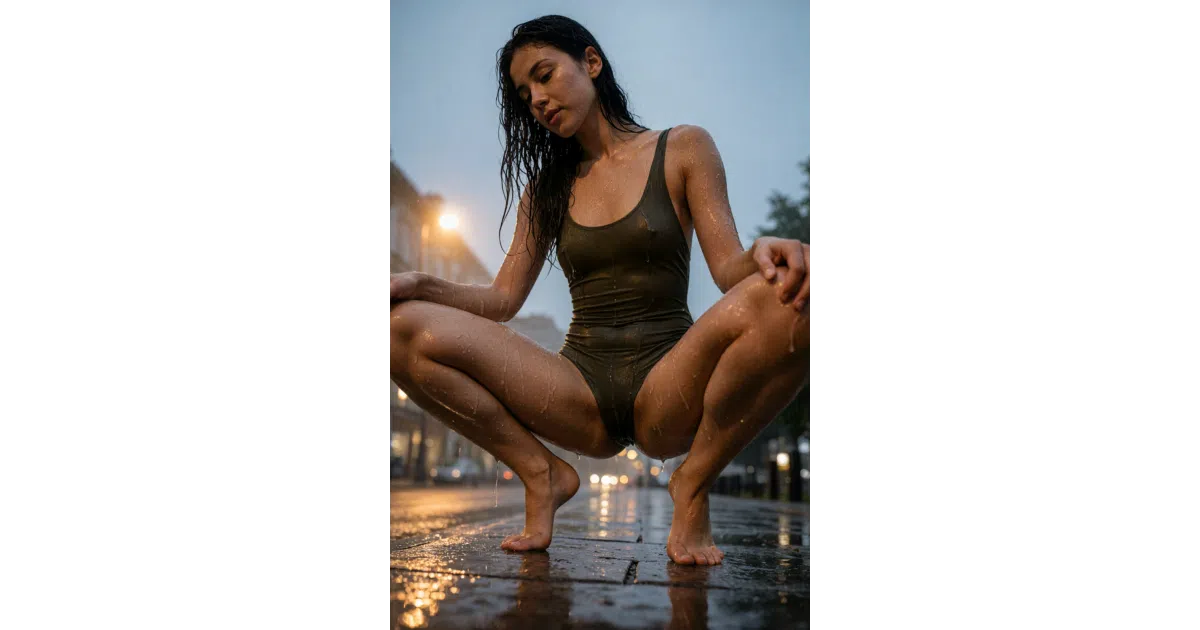
What’s actually in the box
Strip away the content warnings and the repo is a recipe book. It contains no model weights of its own. The base model is Qwen-Image 2.1’s int8 build from Comfy-Org; the NSFW capability comes from LoRAs that live on Civitai, credited to their original authors; the pose library is assembled from four public HuggingFace repositories plus 55 hand-picked additions, totaling 136 poses. The repo’s own contribution is curation, validation, and a rulebook — plus the scripts and ComfyUI workflow JSONs that stitch it together.
That is glue code, and it’s worth saying so plainly. But glue code with taste is a real category. What the author did was take a specific Civitai practitioner’s published sample images, reverse-engineer the working configuration — sampler, scheduler, CFG, step count, resolution, LoRA strength, seed — and verify that the recipe reproduces the author’s output, scene and composition included. The metadata for that replication ships in the repo. In a field where most “recipes” are forum posts with a screenshot and half the settings missing, a package that includes the seed and the full workflow JSON is doing something genuinely uncommon: it makes a claim falsifiable.
The repo’s own framing is blunt about where the value sits. Its summary line for the recipe reads, in effect: the LoRA handles texture, the prompt handles information density, and the camera angle handles boldness. That’s a decomposition of the generation problem into three independently tunable axes, and it’s the kind of framing that only comes from someone who has burned a lot of GPU hours finding out which knob actually moves which output property.
The pose problem, and the puppet shortcut
Pose is the hard part of human-image generation, and the repo’s answer to it is its most technically interesting piece. The research literature has been circling this for years. A NeurIPS 2024 workshop paper from Bonnet et al. proposed a full text-to-pose-to-image pipeline: a generative model that turns a caption into a skeleton, plus a pose adapter with denser keypoints, so that “woman kneeling, weight on left hip” becomes an actual skeleton rather than a hopeful string of adjectives. Stable-Pose, another NeurIPS 2024 work, attacked the conditioning side with a coarse-to-fine attention masking strategy in a ViT adapter, reporting a 57.1 AP on LAION-Human — roughly 13% over ControlNet. The shared premise: text alone is a lossy channel for describing what a body is doing.
The practical prompting literature converges on the same conclusion from the other direction. A pose-prompting guide for Qwen’s hosted spicy tier breaks the problem into five elements — pose verbs, weight and tension, framing, camera height, and giving every hand a job — precisely because unassigned extremities are where generation falls apart, and that endpoint has no negative-prompt field to list what you don’t want.
This repo sidesteps the text-to-pose problem entirely. Its Route ④ uses VNCCS PoseStudio: poses are defined as skeleton-rotation JSON driving a MakeHuman mesh rendered in three.js, which means a pose is a data structure, not a paragraph. Pick a pose from the 136-entry library, and the identity of the character survives the change because the pose is imposed geometrically rather than negotiated linguistically. It’s the ControlNet lineage in miniature — condition on structure, let the diffusion model handle texture — but packaged so an agent can select a pose by name. The research community spent 2024 building models to translate pose language into skeletons; this repo just ships the skeletons, pre-made, with names like library entries.
The part that’s actually novel: governing the agent
The repo’s README says it works as a skill for Claude Code, Codex, Cursor, and OpenClaw, and the real artifact is SKILL.md — a rulebook written for a machine reader. Two rules in it deserve attention beyond this repo’s niche.
First, the L0–L3 boldness ladder. Explicitness isn’t a binary here; it’s a graded scale with defined rungs — fully clothed with prompt only, then LoRA plus explicit skin description, then camera angle and posture on top — and a mapping table from user intent to pose family. That’s content policy encoded as an interface. Whether you find the content appealing or not, the engineering pattern is notable: a gradation scheme that an agent can apply consistently instead of guessing at “how explicit is too explicit” on every request.
Second, and more interesting: the rule that a weakened recipe must never be applied silently. If the agent can’t run the full configuration — no LoRA loaded, short prompt, reduced steps — it must tell the user the quality cost before proceeding. This is a small governance clause aimed at a real failure mode of coding agents: they quietly degrade a task to something they can complete rather than surface what’s missing. A recipe repo that anticipates and forbids that behavior is thinking about agents as unreliable executors, not magic. That’s a more sophisticated mental model than most “AI-powered” tooling exhibits.
The spike, contextualized
The timing wasn’t accidental. Qwen-Image 2.1 itself was dominating GitHub trending the same week — one of the viral posts explicitly frames the repo as the accessory that “gives Qwen-Image 2.1 wings.” New base model drops create a knowledge vacuum: everyone has the weights, nobody has the settings. The first party to publish a validated, reproducible configuration for a hot model reaps the attention, and the NSFW angle is, historically, an accelerant rather than a liability in this corner of GitHub. The repo even carries a CI badge for package validation, which is a funny touch — linting your adult-content recipe book.
The surrounding ecosystem shows the friction this repo exists to reduce. A HuggingFace discussion about NSFW pose problems on a Qwen-Image-Edit variant sits behind a not-for-all-audiences gate. Multiple Reddit threads on ComfyUI pose control and consistent characters — exactly the questions this repo answers — are blocked behind login walls for scrapers and casual readers alike. Community knowledge about this stuff is scattered across gated forums, Discord servers, and Civitai model cards that assume you already know what a scheduler does. A repo that consolidates it, validates it, and makes it machine-readable fills a real gap.
Limits and open questions
The honest caveats are substantial. The repo is a single-maintainer effort whose validation claims are the author’s own — the “replicates the Civitai original” assertion is backed by shipped metadata, but nobody independent has checked it. The heavy lifting is done by other people’s models and LoRAs; if a Civitai author pulls their LoRA or changes its terms, the recipe degrades. The 136-pose library is only as good as its sourcing, and the README is candid that the pose data comes from four other people’s HuggingFace repos. And the whole thing presupposes a working local ComfyUI install with the right custom nodes — the skill is a layer on top of infrastructure it doesn’t provide.
There’s also an unresolved tension in the format itself. Agent skills work by compressing tacit knowledge into rules a model can follow. But the tacit knowledge here — why CFG 2.5 with this sampler, why this LoRA at strength 1.0 — is empirical, not principled. It’s true until the next model version makes it false. Skills built on tuned constants have a shelf life tied to the specific model build they were validated against, and the repo’s own date-stamped verification (October 2026, against a specific int8 build) is both its strength — precision — and its eventual obsolescence.
The bigger question is what this says about where open-source gravity is moving. A year of agent-skill formats has created a new niche: the human who does the expensive empirical work — the prompt archaeology, the seed hunting, the pose curation — and publishes the result not as a tutorial for other humans but as a capability for other agents. The humans who starred this repo in four days aren’t mostly going to read the recipe. They’re going to have their coding assistant read it. Whether that’s a better deal for the community whose knowledge got packaged — the Civitai authors, the pose-library builders — is a question nobody in the chain has answered yet.
Sources
- Arekejoker/qwen21-nsfw-pose-skill
- From Text to Pose to Image: Improving Diffusion Model ...
- Is there a pose control workflow that lets you use 3 references? Video, First ...
- Text-driven human image generation with texture and pose ...
- Combining pose and style images in a new workflow
- NSFW Pose Prompting Guide: Body Language and Framing
- "From Text to Pose to Image: Improving Diffusion Model ...
- ComfyUI With Qwen Image Edit - One Image, Infinite Poses ...
- r/StableDiffusion - Qwen Image 2.1 - 1girl examples
- Leveraging Transformers for Pose-Guided Text-to-Image ...
- Comfyui workflows for consistent characters in controlled ...
- Phr00t/Qwen-Image-Edit-Rapid-AIO · v22 NSFW pose ...